
In brief
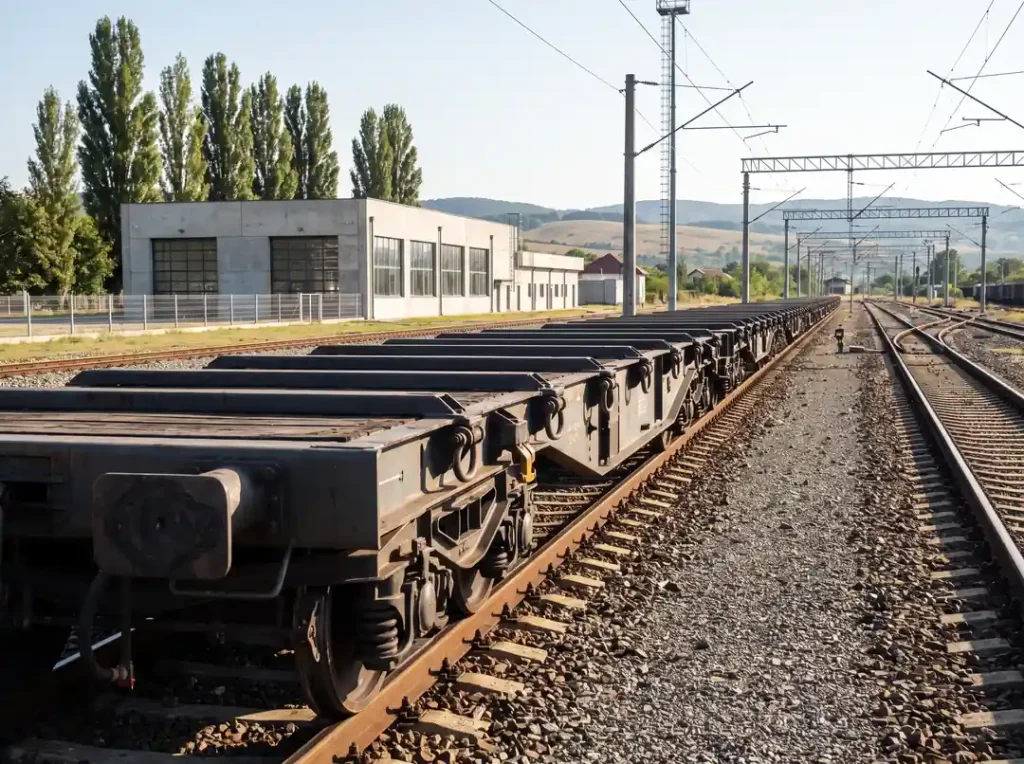
- The state-owned company Carpatica Feroviar România is given a new obligation: to provide the transport of military equipment and materiel for the Ministry of National Defence.
- The obligation applies in peacetime and is added, as a new letter, to the list of duties set out in the company’s incorporation decision.
- The decision has a single article and changes nothing else: neither the company’s share capital, nor its other obligations.
Published: Official Gazette of Romania (Monitorul Oficial) no. 695 of 21 August 2026
Adopted: 20 August 2026
The state rail company set up in 2024 will from now on also haul the army’s military equipment, not only ordinary freight. Government Decision no. 647 of 20 August 2026, published in Official Gazette of Romania no. 695 of 21 August 2026, supplements Article 9(2) of Government Decision no. 1.327/2024 on the establishment of Carpatica Feroviar România S.A. The act appears in the same edition as the budget of the state-owned enterprise operating under the authority of the Romanian Intelligence Service, on a day when the Government published several decisions concerning its own companies.
The wording added is short and unambiguous. After letter d) of the paragraph, a new letter e) is inserted, reading: „to provide transport of military equipment and materiel, in peacetime, for the Ministry of National Defence”.
The 2024 decision setting up the company had been published in Official Gazette of Romania no. 1073 of 25 October 2024 and had itself amended the allocation of certain sums from the budget reserve fund to the budget of the Ministry of Transport and Infrastructure.
What it changes in practice
The first effect is that the obligation itself comes into being. The company not only may, but must provide the transport of military equipment and materiel requested by the Ministry of National Defence. The wording „to provide” is a duty, not a commercial option.
The second effect is the limit in time. The obligation expressly covers transport in peacetime. Military transport in other circumstances, such as a state of siege or mobilisation, remains governed by the rules specific to those situations, which the decision leaves untouched.
The third effect is that a single, named institutional beneficiary appears. The transport is provided for the Ministry of National Defence, so the obligation runs towards one institution only, expressly named in the text.
The fourth effect has to do with where the amendment sits. Letter e) is added to Article 9(2) of the founding act, that is, to the list of the company’s obligations, not to its objects of activity and not to the chapter on capital.
The fifth effect is one of political signalling. The decision is countersigned, among others, by the minister of national defence, which shows that the initiative comes from the needs of the army, not only from those of the transport sector.
What has changed compared with the previous situation
Until now, the list of the company’s obligations in Article 9(2) stopped at letter d). The transport of military equipment was not among them, so the relationship with the army would have had to be built contractually, case by case.
The second change is a legal one. A duty written into the incorporation decision is not negotiated in the same way as an ordinary commercial contract. It becomes part of the very reason why the company exists.
The third change is one of context. The company was set up in 2024 with money from the budget reserve fund at the Government’s disposal, and it is now given a defence mission less than two years later.
What does not change is the rest of the framework. The decision does not amend the other letters of the paragraph, does not touch the share capital, does not change the shareholding and does not provide any additional resources for the new task.
Advantages and disadvantages
What it improves
- It gives the army a state rail freight operator it can rely on, without depending exclusively on the private market for the transport of military equipment.
- It writes the obligation into the incorporation decision, so it no longer depends on how commercially available the company happens to be at a given moment.
- It clearly confines the duty to peacetime, without mixing the ordinary regime with that of exceptional states.
- It expressly names the beneficiary, the Ministry of National Defence, so there is no room for interpretation as to who may request this transport.
What remains a problem
- The decision does not say who pays for this transport, or at what tariff, so the economic relationship between the company and the ministry remains to be settled.
- No resources, wagons or additional staff are provided for the new task, even though it may compete with the company’s day-to-day commercial activity.
- There is no deadline or procedure by which the ministry requests the transport, nor any rule of priority over the company’s other clients.
- The text does not specify what happens if the company is unable to provide the transport requested, so there is no consequence for non-performance.
- No explanatory memorandum is published, so the concrete reason for the addition remains outside the act.
Practical advice
- If you work in rail freight, bear in mind that a state operator now has a legal obligation towards the army, which may take up its capacity in certain periods.
- When you cite Decision no. 1.327/2024, use the updated version. Article 9(2) now has five letters, not four.
- Do not confuse the obligation in the incorporation decision with a contract. The decision creates the duty, but the commercial terms are set separately.
- Keep in mind the limit to peacetime. Other situations are covered by the rules specific to those states, not by this letter.
- If you follow public money, read this act together with the budgets of state-owned companies published in the same period. The new task may later show up in the company’s expenditure.
Frequently asked questions
What has changed in concrete terms?
Does it also apply in the event of war?
Who pays for this transport?
What is Carpatica Feroviar România S.A.?
When does it apply from?
Original text of the legal act
The text below is reproduced in Romanian, the official form of publication.
The full text, as published in the Official Gazette of Romania
Official Gazette of Romania no. 695 of 21 August 2026 16 pages PDF, 177 KB the act starts on page 9
Open the official PDFDownload the PDF
The viewer is not shown on small screens. Use the buttons above to open or download the file.
This article is for informational purposes only and does not constitute legal advice. For specific situations, consult a licensed attorney or tax advisor.