
In brief
- From 11 November 2026, eight new zones affected by highly pathogenic avian influenza are closed to the entry into the Union of poultry, hatching eggs and fresh meat of poultry and game birds. Three zones are in the province of Alberta in Canada, one in Scotland and four in the US states of California, Iowa, Minnesota and Wisconsin.
- The Canadian zone CA-2.340, closed on 21 September 2026, reopens, with an opening date of 1 November 2026. It is the only zone the regulation releases from restriction.
- The entry into the Union of registered horses from zone ZA-1, the Cape Town metropolitan area in South Africa, is suspended following an outbreak of African horse sickness. The closing date entered in the table is 27 October 2026, and the suspension lasts until the European Commission authorises entry again. Those concerned are importers of poultry meat and hatching eggs, breeders and organisers of competitions who bring horses from South Africa, and the veterinary services at the border.
Published: Official Journal of the European Union, L series, 2026/2523, 10 November 2026
In force from: 11 November 2026, the day following publication, under Article 2
The European Commission has closed eight more zones to poultry imports, less than two weeks after Regulation (EU) 2026/2466 closed fourteen other zones in Canada, the United Kingdom and the United States. Commission Implementing Regulation (EU) 2026/2523, published in the Official Journal of the European Union on 10 November 2026, enters into force on 11 November 2026 and amends the lists of countries and zones from which animals and products of animal origin may enter the Union.
The new zones are circles with a 10 km radius around the farms where outbreaks of highly pathogenic avian influenza have been confirmed. In Canada, all three are in Alberta: CA-2.353, in the Manning and Northern Lights area, and CA-2.354, in the Foothills and Okotoks area, both with a closing date of 20 October 2026, plus CA-2.355, in the Rimbey and Ponoka area, with a closing date of 30 October 2026. In the United Kingdom, zone GB-2.473 lies near Biggar, in Scotland, with a closing date of 2 November 2026. In the United States, the four zones are in Barron County, Wisconsin (US-2.1433, 23 October), Morrison County, Minnesota (US-2.1434, 27 October), Stanislaus County, California (US-2.1435, 28 October) and Sac County, Iowa (US-2.1436, 29 October).
The second subject of the regulation is horses. On 29 October 2026, South Africa reported to the Commission an outbreak of African horse sickness in the controlled area of the Western Cape province. As a result, the entry for South Africa in Annex IV receives a closing date of 27 October 2026 for registered horses from zone ZA-1.
What it changes in practice
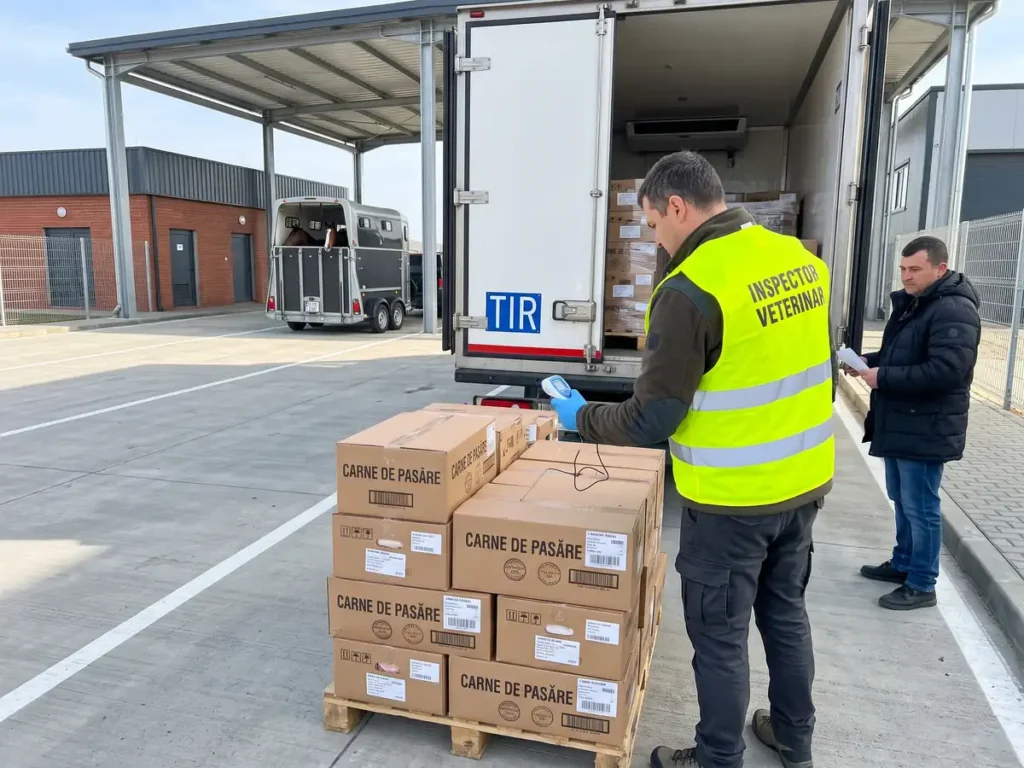
Consignments of live poultry, hatching eggs and fresh meat of poultry, ratites and game birds can no longer enter the Union from the eight new zones. In the tables, each zone receives specific condition P1, meaning the suspension of entry into the Union because of restrictions linked to an outbreak of highly pathogenic avian influenza, and a closing date equal to the date on which the outbreak was confirmed.
The restriction covers only the delimited zones. The rest of the territory of Canada, the United Kingdom and the United States remains in the previous situation, with the zones closed by earlier acts and those that have stayed open.
Zone CA-2.340 in Canada now has both dates in the table: closure on 21 September 2026 and opening on 1 November 2026. The Commission accepted the guarantees provided by Canada, which depopulated the affected farms and completed cleaning and disinfection, so consignments from this zone may resume.
For horses, the suspension covers only registered horses from zone ZA-1 and lasts until the European Commission re-authorises entry. Among the measures South Africa has had to ensure since 2024, Annex IV, Part 3, point 4(c) provides for the immediate suspension of the entry into the Union of these horses in the event of any confirmed case of African horse sickness in the controlled area.
What has changed compared with the previous situation
Until 11 November 2026, the eight zones did not appear in the restriction tables, so the farms located in them could export to the Union like any other establishment in the country concerned. The regulation adds them after the last zones closed by Regulation (EU) 2026/2466: CA-2.352, GB-2.472 and US-2.1432.
Registered horses from the Cape Town area had been able to enter the Union since 2024, when Implementing Regulation (EU) 2024/1170 re-authorised them, subject to additional measures against African horse sickness. The entry now carries a closing date again.
The Canadian zone CA-2.340 had been closed since 21 September 2026, with no opening date. The regulation replaces its row in Annexes V and XIV with one that also shows the reopening date.
Advantages and disadvantages
What it improves
- The restriction is limited to circles with a 10 km radius, so imports from the rest of these countries continue.
- Each zone has its code, closing date and coordinates in the table, so an importer can check the origin of a consignment on their own.
- The reopening of zone CA-2.340 shows that a closure is lifted once the exporting country proves depopulation and disinfection.
What remains a problem
- The list published in the Official Journal of the European Union reaches the importer 9 to 22 days after the closing date of the zone.
- In the Romanian version, the zone descriptions are left in English, and they use three different delimitation methods, depending on the country.
- The suspension of horses from Cape Town has no end date: it depends on a new decision by the Commission.
Practical advice
- Check the zone code and the address of the establishment of origin in the animal health certificate against the tables in Annexes V and XIV before contracting a consignment from Canada, the United Kingdom or the United States.
- For a consignment already in transit, ask the border control post or the county veterinary and food safety directorate for confirmation before arrival. Under point 6 of Annex I to Regulation (EU) 2021/404, the closing and opening dates are the time references of the restriction.
- If you were planning to bring a horse from South Africa for a competition or for breeding, postpone the arrangements until zone ZA-1 is authorised again.
- For the Canadian zone CA-2.340, ask the exporter for written confirmation that the consignment complies with the opening date of 1 November 2026.
- Follow the amendments to Regulation (EU) 2021/404: between 30 October and 11 November 2026, 22 zones were closed through two acts.
Frequently asked questions
Can poultry meat still be imported from Canada or the United States?
Which products are stopped from the new zones?
Since when have horses from the Cape Town area been barred from entry?
Do the Romanian authorities have to take any action?
Can a zone closed now be reopened?
Editorial analysis
The act does exactly what a listing regulation should do: it identifies each zone precisely, with code, date and coordinates, and ties the suspension to the date on which the outbreak was confirmed. The problem is the time lag. Measured against entry into force on 11 November 2026, the gap from the closing date is 22 days for zones CA-2.353 and CA-2.354, 19 days for US-2.1433 and 9 days for the zone in Scotland, with an average of almost 16 days across the eight zones. Anyone who reads only the Official Journal of the European Union learns of a closure two to three weeks after the restriction started to matter.
The pace says more than each act taken separately. Regulation (EU) 2026/2466 closed 14 zones on 30 October 2026, and this one closes 8 more on 11 November, making 22 zones in 12 days, in the same three countries. For horses, the Commission’s timing can be measured in the act: the outbreak confirmed on 27 October was reported on 29 October, and the regulation was adopted on 9 November, 11 days after the report. The condition in point 4(c) already provided for immediate suspension, and the regulation enters it in the table.
The Romanian version of the regulation contains a translation slip that does not affect the enacting terms. There, recital 17 refers to “focarele de PEA din Africa de Sud, din Canada, din Regatul Unit și din Statele Unite” (the AHS outbreaks in South Africa, Canada, the United Kingdom and the United States), whereas the English version distinguishes “the AHS outbreak in South Africa” from “the HPAI outbreaks in Canada, the United Kingdom and the United States”. The articles and the annex are correct, so the text applies without doubt, but a recital that attributes African horse sickness to Canada misleads a reader looking for the reasoning.
What should be changed
- A corrigendum to the Romanian version of recital 17. The correct wording would distinguish the outbreak of African horse sickness in South Africa from the outbreaks of highly pathogenic avian influenza in the other three countries, so that the reasoning for urgency matches the enacting terms.
- A single method for delimiting zones. Canada gives the centre and the municipalities within the 3 km and 10 km radius, the United Kingdom the centre of the circle, and the United States a “North point” of the circle. Centre coordinates written in the same way for all countries would allow automated checks of the origin of a consignment.
- Zone descriptions translated into Romanian. Texts such as “The municipalities involved are” remain in English in the official Romanian version, although the table has direct effect on Romanian importers.
- A consolidated list published by the national veterinary authority at every amendment. Importers would see the closed zones and their dates in one place, without having to follow each amending regulation.
Original text of the legal act
The text below is reproduced in Romanian, the official form of publication.
The full text, as published in the Official Gazette of Romania
Official Journal of the European Union, L series, 2026/2523, 10 November 2026, ELI: http://data.europa.eu/eli/reg_impl/2026/2523/oj 6 pages PDF, 524 KB
Open the official PDFDownload the PDF
The viewer is not shown on small screens. Use the buttons above to open or download the file.
This article is for informational purposes only and does not constitute legal advice. For specific situations, consult a licensed attorney or tax advisor.