
In brief
- Parliament approved, through Law No. 167/2026, the SAFE loan agreement between the European Union and Romania, worth 16,680,055,394 euros, meant to finance Romania’s national investment plan for the defence industry.
- The loan is disbursed in tranches, denominated exclusively in euros, with a maturity of up to 45 years for each disbursement and a 10-year grace period before principal repayment begins.
- A first amount of 2.5 billion euros is earmarked as pre-financing; the rest is released as investment-plan milestones are met, until 31 December 2030.
Published: Official Gazette of Romania (Monitorul Oficial) No. 651 of 6 August 2026 (full text of the Agreement in No. 651 bis)
In force from: 9 August 2026
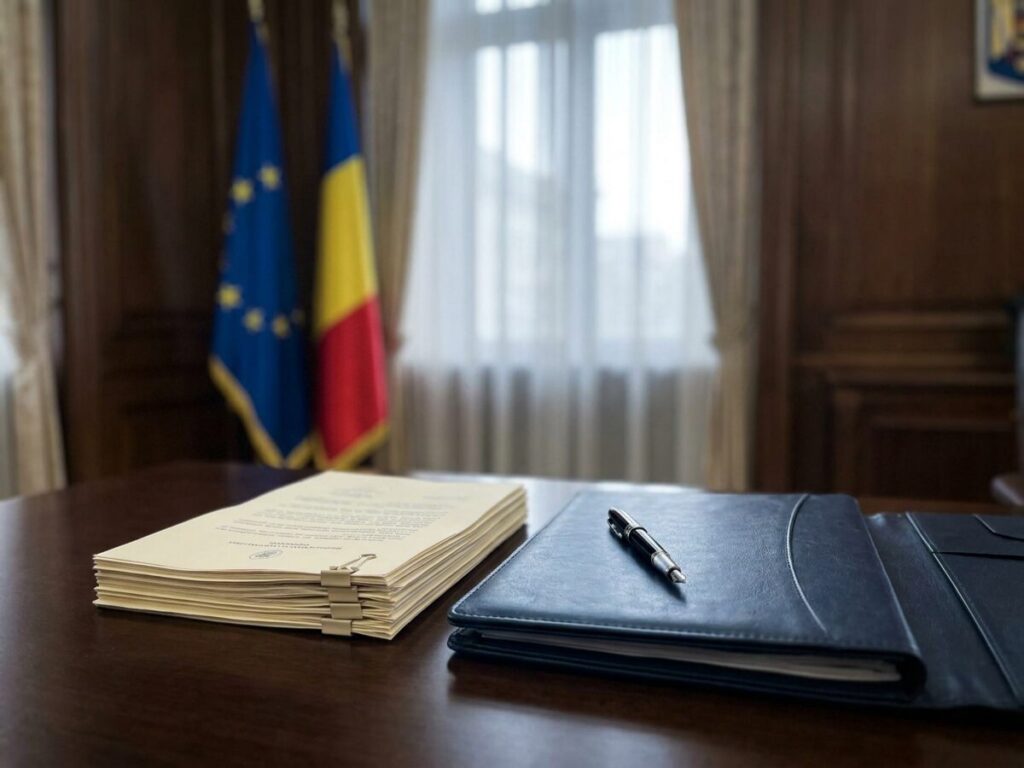
Romania has taken out the largest loan in its recent history through a single European instrument: 16.68 billion euros through SAFE, the European Union mechanism designed to finance member states’ defence-industry rearmament. Law No. 167/2026, promulgated by the President through Decree No. 718/2026 and published in Official Gazette of Romania No. 651 of 6 August 2026, approves the loan agreement signed in Bucharest on 12 May 2026 and finalised in Brussels on 20 and 21 May 2026 between the European Commission, acting on behalf of the Union, and the Ministry of Finance, representing the Romanian state.
The full text of the Agreement, 42 pages drafted in English and officially translated into Romanian, is published separately, in the bis edition of the same issue of the Official Gazette of Romania. The document sets out the legal framework of the loan: who pays what, on what timeline, what happens if Romania fails to meet its obligations, and how financing costs are calculated.
SAFE, short for “Security Action for Europe”, is the instrument established by Council Regulation (EU) 2025/1106 of 27 May 2025, through which the Union borrows money on financial markets and channels it to member states for urgent investment in the European defence industry. Romania submitted its request for financial assistance on 28 November 2025, and the Council, through an implementing decision of 11 February 2026, set the maximum support at 16,680,055,394 euros.
The loan now has a breakdown too: Government Decision no. 680/2026 splits the 16.68 billion euro, 58% to Defence and 4.2 billion to Transport.
What it changes in practice
The Romanian state gains access to a financing line of nearly 16.7 billion euros, on terms far more favourable than it could obtain alone on financial markets, because the loan is guaranteed and intermediated by the European Commission, which issues bonds on the Union’s behalf.
The money does not arrive all at once but in tranches (“disbursements”), conditional on meeting milestones set out in separate operational arrangements concluded between the Commission and the Ministry of Finance. Each disbursement has its own maturity dates and its own maturity term, of up to 45 years.
The cost of the loan is borne by the state budget, through the Ministry of Finance’s budget (“Public debt transactions and loans” chapter), separately for interest and separately for administration and overhead costs, according to the cost-allocation methodology set by the European Commission.
The Government may negotiate amendments to the Agreement through the Ministry of Finance, provided they do not increase Romania’s financial obligations; any such amendment is subsequently approved by government decision, without going back through Parliament.
What has changed compared with the previous situation
Until now, Romania financed its defence investments almost exclusively from the national budget or through loans contracted individually on financial markets, on terms negotiated directly with banks or through the country’s own government bond issues each time. SAFE introduces a third path: a collective loan, intermediated by the European Commission, at a financing cost lower than Romania could obtain on its own, because it relies on the Union’s credit rating rather than the borrowing state’s.
The legal novelty also lies in the repayment mechanism: the 10-year grace period, during which Romania pays nothing towards the principal, only current financing costs, has no equivalent in the classic bilateral loans Romania previously contracted for defence projects.
The 2.5 billion euro pre-financing amount is likewise a new mechanism: the money can reach the Ministry of Finance before concrete investment projects are fully documented, precisely to allow procurement under the defence investment plan to start quickly.
Advantages and disadvantages
What it improves
- Lower financing cost than a government’s own bond issue, because the loan relies on the European Union’s financing capacity, not just Romania’s.
- A 10-year grace period on principal repayment, giving the state budget time to absorb the cost without immediate pressure on the deficit.
- Maturity of up to 45 years, meaning a very long-term repayment schedule, comparable to financing major public infrastructure investments.
- Quick access to 2.5 billion euros of pre-financing allows investments to start before every subsequent tranche is fully negotiated.
What remains a problem
- 16.68 billion euros is added to Romania’s public debt and must be repaid in full, with interest, however favourable the terms.
- The money is strictly tied to a defence-industry investment plan; any delay in meeting the milestones set in the operational arrangements can block subsequent tranches.
- Financing costs depend on the interest rates prevailing when the European Commission issues bonds on the Union’s behalf, so they are not guaranteed fixed for the entire life of the loan.
- The law itself does not publicly detail which concrete projects are financed; these result from the national defence-industry investment plan, a separate document.
Practical advice
- If you work at a defence-industry company or a related equipment or service supplier, watch for the publication of the national defence-industry investment plan: that is where the concrete projects funded by this loan will appear, not in the text of Law No. 167/2026.
- Do not confuse the loan agreement with Romania’s ordinary defence budget. SAFE money is a separate line, with its own reporting rules towards the European Commission, distinct from the Ministry of National Defence’s annual budget execution.
- If you want to check the exact technical terms (definitions, disbursement conditions, events of default), the full text of the Agreement is available in Official Gazette of Romania No. 651 bis of 6 August 2026, officially translated from English.
- For investors in Romanian government securities, it is worth tracking how this external loan affects the public debt ratio reported by the Ministry of Finance, relevant for sovereign risk assessments.
Frequently asked questions
What is SAFE and why is Romania borrowing money through it?
How much exactly is the loan approved by Law No. 167/2026?
When and how must the loan be repaid?
Who pays the costs of the loan?
Can the Government later change the terms of the Agreement without Parliament’s consent?
Original text of the legal act
The full text, as published in the Official Gazette of Romania
Official Gazette of Romania no. 651 of 6 August 2026 (+ 651 bis) 48 pages PDF, 243 KB the act starts on page 40
Open the official PDFDownload the PDF
The viewer is not shown on small screens. Use the buttons above to open or download the file.
This article is for informational purposes only and does not constitute legal advice. For specific situations, consult a licensed attorney or tax advisor.