
In brief
- Two days of conference, 230,200 lei of public money. The Government has set how much the Permanent Electoral Authority may spend on an international conference about elections, electoral integrity and disinformation, held in Bucharest on 28 and 29 October 2026. The money comes out of the budget the institution already had for 2026, not out of a new allocation.
- Sixty participants are provided for, half of them from abroad, so 3,836 lei each. The most expensive item is accommodation for the 30 foreign guests, 54,000 lei. Meals, the welcome reception, coffee, gifts, the sightseeing trip and photography together come to 94,200 lei, that is 41% of the total.
- For the public, nothing changes. The act is an authorisation to spend, for one institution and one event. Nobody outside the Permanent Electoral Authority gains any right or obligation from it.
Published: Official Gazette of Romania, Part I, no. 803 of 22 September 2026
In force from: 22 September 2026, the very date of publication, because Article 12(3) of Law no. 24/2000 brings Government decisions into force on the day they appear in the Official Gazette of Romania (Monitorul Oficial), unless they set another date
The decision published on 22 September 2026 does one thing: it says how much the Permanent Electoral Authority may spend on a two-day international conference, and on what. The total is 230,200 lei, and the event takes place in Bucharest on 28 and 29 October 2026. It is the second act of this kind published in September 2026: on 15 September, the Government took 200,000 lei out of the reserve fund for the Economic and Social Council, which is hosting a three-day francophone forum with a cost estimate of 287,671 lei. The difference between them is where the money comes from: there, an extra allocation from the Government; here, only the budget the institution already had.
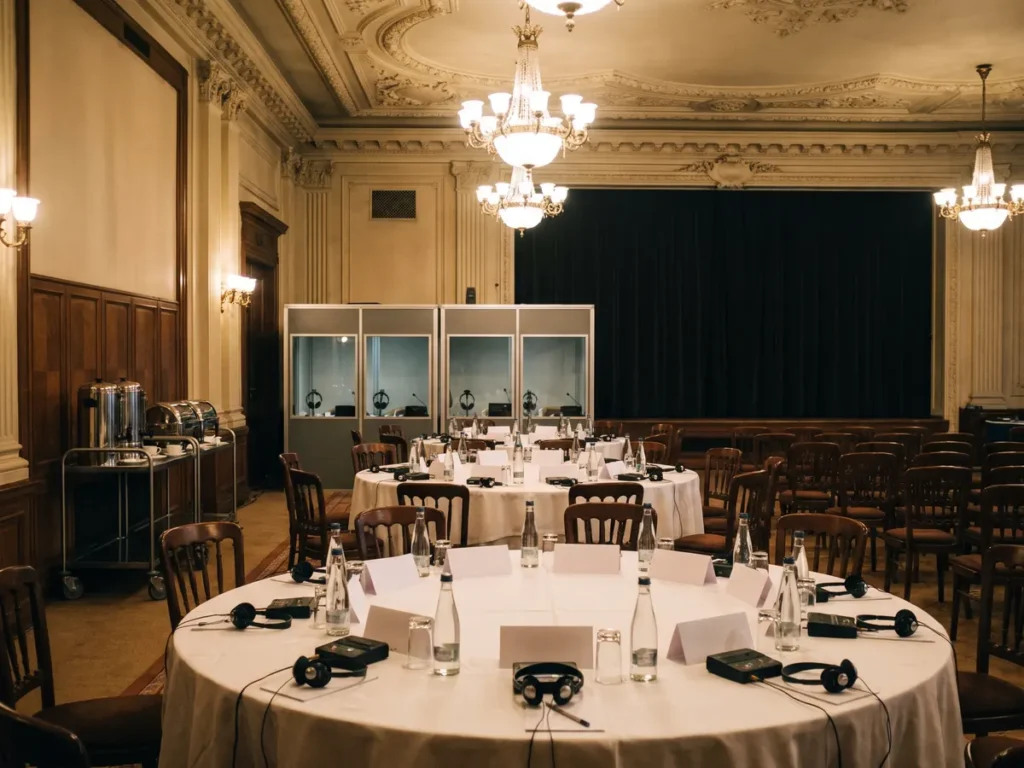
The conference brings together electoral authorities from European states, and the themes announced in its title are cooperation among them, the integrity of elections, countering disinformation and the implementation of Regulation (EU) 2024/900. That regulation deserves two sentences, because it applies directly in Romania too. It requires every political advertisement to be labelled as such and accompanied by a notice saying who paid for it, with what money and how much it cost, and it prohibits two things: selecting the target audience on the basis of sensitive data such as political or religious beliefs, and the payment for political advertising by sponsors from outside the European Union in the last three months before a vote. It was published in the Official Journal of the European Union on 20 March 2024 and has applied in full since 10 October 2025, so by the date of the conference it will have been binding for more than a year.
The reason a conference needs a Government decision lies in an act from 1991. The protocol rules approved by Government Decision no. 552/1991 say that official delegations may as a rule comprise no more than 5 people, and set ceilings for meals, accommodation and gifts in the currency of the time. The list of amendments to those rules stops in 2004, and in 2005 the leu was redenominated by four zeros, so the 1991 ceilings can no longer be applied as they stand. That is why Article 2 of the new decision derogates expressly from Chapter II point 2 and point 5(A), (B) and (C) of those rules. The legal basis is Article 4(4) of Government Ordinance no. 80/2001, which lets the Government approve by decision other expenditure norms for protocol activities of a special nature, on the basis of substantiated justification.
The power of the Permanent Electoral Authority to hold such events is not improvised: Article 103(1)(y) of Law no. 208/2015 gives it, among its tasks, precisely the organisation of national and international conferences, seminars and congresses in its field of activity. Point (ț) of the same article requires it to draw up strategies for strengthening the integrity and resilience of the electoral system, which is exactly the subject of the conference.
The money is not a new request to the budget. Article 1(2) refers to the state budget, more precisely to the budget of the Permanent Electoral Authority approved for 2026, chapter 51.01 „Public authorities and external actions”, title 20 „Goods and services”. The institution is therefore reshuffling money it already had; it is not receiving more.
What it changes in practice
The first effect is a list of ceilings. Annex no. 1 sets how much may be paid for each type of expenditure, and beyond them nothing is allowed. Per person and per day: meals 280 lei, refreshments and coffee breaks 40 lei. Per person, once only: domestic transport 300 lei, welcome reception 450 lei, promotional and working materials 300 lei, other services, meaning photography and cultural and artistic events, 210 lei, visits to tourist sites 70 lei. Accommodation has a ceiling of 600 lei per person and per night, but only for guests from abroad. Symbolic gifts are paid per delegation, 400 lei.
The remaining ceilings are calculated differently. Per event day: hire of the halls, technical and administrative services and sound systems 6,000 lei, and simultaneous interpretation booths and equipment, including 60 receivers with headsets, installation and support, 8,000 lei. Interpreters are paid 2,000 lei each, per conference day. Organisation and operational coordination, meaning the technical secretariat, the accreditation of participants and liaison with suppliers, have a single ceiling of 10,000 lei for the whole event.
The second effect is the cost estimate in Annex no. 2, which turns the ceilings into amounts. Accommodation for the foreign guests 54,000 lei, meals 33,600 lei, welcome reception 27,000 lei, materials 18,000 lei, domestic transport 18,000 lei, interpretation booths 16,000 lei, photography and cultural and artistic events 12,600 lei, halls 12,000 lei, gifts 12,000 lei, organisation 10,000 lei, interpreters 8,000 lei, coffee 4,800 lei and sightseeing visits 4,200 lei. Added together, they give exactly 230,200 lei, the sum also written into Article 1(2).
The third effect is the derogation itself. Without it, the conference would have run into the 1991 rule keeping official delegations to no more than 5 people. Article 2 approves the event with 60 participants, of whom 30 from abroad, and only within the limits in Annex no. 1. The derogation is tied to this event and to these two days; it does not become a rule for anything else.
What has changed compared with the previous situation
Until 22 September 2026, the Permanent Electoral Authority had the statutory right to organise international conferences but nothing to pay for them with at today’s prices. The general protocol rules, those of 1991, gave it ceilings expressed in old lei and a limit of 5 people per delegation. Decision no. 753/2026 gives it, for two days, a set of ceilings of its own, matched to 2026 prices and to a headcount of 60.
The change is, however, temporary by design. The decision does not amend the 1991 rules and does not replace them; it goes around them once. After 29 October 2026 the same old framework remains in place, and the next institution wanting to organise an international meeting will need a Government decision of its own. That is exactly what happened on 15 September 2026 with the Economic and Social Council.
The comparison with that act also shows a difference in method. There the Government gave extra money, 200,000 lei from the reserve fund, for a cost estimate of 287,671 lei, and the difference of 87,671 lei was left to the institution’s own budget. Here nothing extra is asked for: the whole cost estimate of 230,200 lei sits within the 2026 budget of the Permanent Electoral Authority. From the point of view of the deficit, the second act is the cheaper of the two, because it does not touch the reserve fund.
The timing has changed too. The decision was adopted on 18 September 2026 and published four days later, 36 days before the first day of the conference. The act for the francophone forum was published 13 days before the event. The difference matters in practice: a procurement of accommodation and interpreting services carried out five weeks in advance stands a better chance of attracting bids than one carried out two weeks in advance.
Advantages and disadvantages
What it improves
- The figures appear before the event, not after it. The act was published on 22 September 2026, 36 days before the conference, so anyone can see in good time how much will be spent and on what.
- Every category has its own written ceiling; there is no global sum to be divided by feel. There are 13 separate items, from accommodation to coffee breaks, and Annex no. 2 shows the amount each one leads to.
- No extra money is requested from the Government. Unlike the act of 15 September 2026, which took 200,000 lei out of the reserve fund, here the total sits within the institution’s already approved budget.
- The derogation is express and narrow. Article 2 says exactly which points of the 1991 rules are being departed from, and only for this event, so it sets no general precedent.
- All the figures close. The 13 amounts in the cost estimate add up to exactly 230,200 lei, and each of them corresponds to the ceiling in Annex no. 1 multiplied by a whole number of people, days or nights.
What remains a problem
- Annex no. 1 has no quantity column, even though its heading announces one. The result is that nowhere in the act does it say how many nights of accommodation, how many interpreters or how many delegations are being paid for. Anyone who wants to know has to divide the amounts in Annex no. 2 by the ceilings in Annex no. 1.
- The number of nights of accommodation, which drives the largest item in the estimate, emerges only from a division: 54,000 divided by 30 people and by 600 lei gives 3 nights, for a two-day conference. Nowhere in the text is that figure confirmed.
- The word „delegation” is used in two senses. The first annex pays for gifts per delegation, while Annex no. 2 counts 30 international delegations, which is exactly the number of participants from abroad set in Article 2. A delegation of one person is an odd construction, even if the amount stays capped in any case.
- The estimate applies the per-person rates to the whole headcount of 60, without distinguishing hosts from guests. Visits to tourist sites, domestic transport, working materials and the reception are counted for the 30 domestic participants as well.
- There is no obligation to publish, after the conference, how much was actually spent. The act says how much may be spent; it requires nobody to show how much was spent, even though the ceilings are maximums, not firm amounts.
Practical advice
- When reading a decision on expenditure norms, always compare the two annexes. The annex with the ceilings says how much may be paid per unit, and the cost estimate says what amount that leads to. Dividing the second by the first gives you the quantities, which are usually written nowhere.
- Do not confuse a ceiling with an expense. The amounts in the estimate are maximum estimates, not money already spent. If fewer people come to the conference, or if the hotel costs less than 600 lei a night, the actual amount falls.
- Check where the money comes from, because that is what changes the stakes. An allocation from the Government reserve fund means money on top of the year’s budget, whereas an expense from an institution’s own budget means something else in that same budget will not be done.
- If you want to follow the execution, the reference point is the budget chapter written into the act, 51.01 „Public authorities and external actions”, title 20 „Goods and services”. The budget execution published by the Ministry of Finance is read along these codes.
- For the contracts themselves, look for the institution’s notices in the public procurement electronic system. The decision approves the ceilings, but the accommodation, sound and interpreting services are bought separately, through procedures that are published.
- If you are interested in the political advertising rules discussed at the conference, go to the text of Regulation (EU) 2024/900, not to commentary. It has applied directly in Romania since 10 October 2025, so it needs no Romanian transposing law in order to concern you.
Frequently asked questions
Who pays the 230,200 lei?
How much does one participant cost?
Why does the Government have to approve the spending of a conference?
What is Regulation (EU) 2024/900?
From when does the decision take effect?
Does this mean 230,200 lei will definitely be spent?
Can we find out afterwards how much was actually spent?
Editorial analysis
On the figures, the act is one of the cleanest of its kind. All 13 amounts in the estimate are obtained by multiplying the ceiling in Annex no. 1 by a whole number of people, days or nights, and adding them gives exactly 230,200 lei, the sum written into Article 1(2). Meals: 280 lei times 60 people times 2 days, 33,600. Halls: 6,000 lei times 2 days, 12,000. Interpreters: 2,000 lei times 2 people times 2 days, 8,000. There is no rounding out of place and no item that fails to close.
The problem is not the arithmetic but the fact that every quantity has to be inferred. The first annex announces a quantity column in its heading, but that column does not exist on the page: all that is left is the name of the expenditure and the ceiling per unit. So the number of nights paid for, the number of interpreters and the number of delegations appear nowhere in the act, even though they are precisely the data that explain the total. They can be found only by division, and the result is worth stating: 54,000 lei of accommodation means 30 people times 600 lei times three nights. For a two-day conference, three hotel nights are therefore paid for, which is reasonable for guests arriving the evening before and leaving the day after the closing, but it is a spending decision the act does not state and that the reader discovers only by doing the sums.
The second observation comes from combining the estimate with Article 2. Of the 230,200 lei, two items go exclusively to the 30 foreign guests: accommodation, 54,000 lei, and gifts, 12,000 lei. That is 66,000 lei, 28.7% of the budget, for half of the participants. The remaining 164,200 lei is divided among all 60. It follows that a participant from abroad costs around 4,937 lei and one from Romania around 2,737 lei, 1.8 times less. The difference is not a criticism, foreign guests do have to be accommodated, but it explains why the average of 3,836.67 lei describes no real participant well.
The comparison with the francophone forum of 28-30 September 2026 gives the right measure of the cost, provided you compare comparable things. At first sight the electoral conference looks more expensive: 3,836.67 lei per participant, against 2,876.71 lei at the Economic and Social Council forum, and that for two days instead of three. Except that the forum estimate contained no accommodation at all, whereas here accommodation means 54,000 lei. Take accommodation out of the calculation and the Electoral Authority conference comes to 2,936.67 lei per participant, that is 2.1% above the francophone forum. The two events cost practically the same per head, and the apparent difference comes almost entirely from an expense that one act budgets and the other leaves out. The comparison also brings out a difference in restraint on the protocol side: there, food and drink made up 61% of the estimate, whereas here meals, the reception, coffee, gifts, the sightseeing trip and photography add up to 94,200 lei, that is 41%.
What should be changed
- The annex of norms should actually have the quantity column its heading announces. Three extra figures on each line, the number of people, of days and of nights, would make the estimate verifiable at a glance and spare every reader the divisions. It would show, for instance, that three nights of accommodation are paid for a two-day conference, a decision that currently has to be inferred.
- The 1991 protocol rules should be rewritten, not skirted every time. For as long as the general ceilings remain in pre-2005 currency and limit delegations to 5 people, every international meeting held by any public institution needs a Government decision of its own. A set of periodically updated ceilings, as Article 4 of Government Ordinance no. 80/2001 itself requires, would cut the number of such acts to a handful a year.
- The estimate should distinguish hosts from guests where the distinction already exists. Accommodation and gifts are counted only for the 30 foreign participants, but sightseeing visits, domestic transport and working materials are counted for all 60. If the domestic participants do not go on the trip, 2,100 lei of the estimate is a reserve with no object.
- The word „delegation” should be defined in the act or replaced. Annex no. 2 counts 30 international delegations, that is one delegation per foreign participant. Either a gift is paid per person, and then that is what should be written, or it is paid per delegation, and then their real number has to appear in the estimate.
- Decisions of this kind should provide for the publication of actual spending after the event. A single sentence obliging the institution to publish, within 30 days of the closing, the amounts paid under each item would turn an announced ceiling into a verifiable figure. It is also in keeping with the duty of transparency over spending that the law places on the Permanent Electoral Authority itself.
Original text of the legal act
The text below is reproduced in Romanian, the official form of publication.
The full text, as published in the Official Gazette of Romania
Official Gazette of Romania no. 803 of 22 September 2026 16 pages PDF, 111 KB the act starts on page 13
Open the official PDFDownload the PDF
The viewer is not shown on small screens. Use the buttons above to open or download the file.
This article is for informational purposes only and does not constitute legal advice. For specific situations, consult a licensed attorney or tax advisor.