
In brief
- The procedure that lets you correct your details in the cadastre carried out ex officio in your commune remains constitutional. The Court dismissed as unfounded the plea of unconstitutionality raised of its own motion by a district court itself.
- The key markers are confirmed: the technical cadastral documents are displayed for 60 days, the request for rectification is filed within 60 days of that display, together with supporting documents, and the official report settling it can be challenged by complaint before the district court within 15 days of being served.
- Those concerned are all owners in localities where systematic registration of properties is under way, meaning the general cadastre paid for from public funds, carried out by cadastral sector or across the entire administrative-territorial unit.
Published: Official Gazette of Romania (Monitorul Oficial) no. 596 of 21 July 2026
Delivered: 9 December 2025
A district court raised the question on its own: does an owner caught up in a cadastre carried out ex officio have real safeguards when the surface area or the location of the property is changed? The Court answered yes, and the complaint before the district court is the safeguard that counts. Decision no. 735 of 9 December 2025, published in Official Gazette of Romania no. 596 of 21 July 2026, dismisses as unfounded the plea of unconstitutionality raised of its own motion by the Buzău District Court. This is the third time in the same issue that the Court has ruled on a real estate provision, after it dismissed as inadmissible the plea concerning the land beneath the buildings of the former cooperatives.
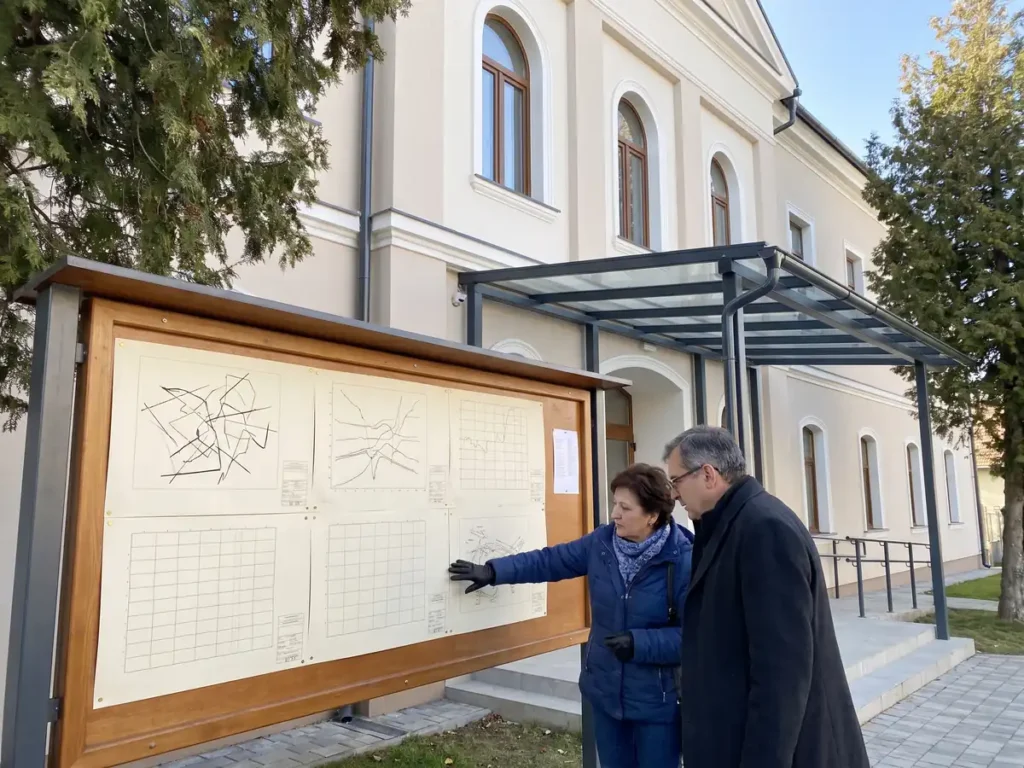
The provision at issue is Article 14(1), (3) and (4) of the Cadastre and Land Registration Law no. 7/1996. It describes what happens at the end of the systematic registration works: the technical cadastral documents, meaning the cadastral plan and the index of owners and surface areas, are displayed for 60 days by the territorial cadastre and land registration office.
Within those same 60 days, anyone who finds their details wrongly recorded may file a request for rectification, accompanied by supporting documents. The requests are settled by a mixed commission made up of representatives appointed by the mayor, representatives of the contractor carrying out the works and representatives of the cadastre office, in line with the situation on the ground and with a procedure laid down by order of the director general of the National Agency. The outcome is recorded in an official report, which is served on the petitioner and can be challenged by complaint before the district court for the place where the property lies, within 15 days.
The Buzău District Court, hearing such a complaint, took the view that the provision is too thin. It does not say what can be sought through the request for rectification, what the admissibility conditions are, what evidence has to be taken and, above all, what solutions the court may hand down on the complaint. And if updating the cadastral situation can change the location and the surface area on record, then the absence of those safeguards touches the right of property itself.
What it changes in practice
The first effect is that the procedure stays as it is, and the complaints pending before the district courts continue to be tried on the current legal basis. The Buzău case, a complaint against the official report of the territorial office, follows its course.
The second effect is a confirmation that every petitioner should make use of: the court hearing the complaint has full jurisdiction. The Court says explicitly that the existence of this complaint is a sufficient guarantee of access to justice and that the provision neither removes access to a tribunal nor strips the route of challenge of its effectiveness. The fact that the law does not list the possible solutions does not mean that the court is limited.
The third effect concerns the quality of the legislation. The Court restates a settled line in its case law: a law has to be worded clearly enough, but it cannot reach an absolute degree of precision. The essential elements are laid down here in the law itself, namely the filing deadline, the competent body, the time limit for settlement, the issuing of the official report and the route of challenge. The absence of further detail does not amount to a failure to regulate the essentials.
The fourth effect has to do with the right of property. The Court holds that the rectification procedure is technical and administrative in nature, and that any errors can be corrected in court. Where the state imposes special rules, they have to be justified, must not be arbitrary and must leave remedies in place. The cadastre law leaves remedies in place, so there can be no question of a disproportionate interference with property.
What has changed compared with the previous situation
In legislative terms, nothing. The provision stays in the form republished in 2015, and systematic registration runs on the same rules.
What does change is the position of the courts hearing complaints of this kind. Until now, a judge could take the view that, with no statutory list of solutions, it was unclear what could be ordered. The decision tells that judge the court has full jurisdiction, so it can examine the request for rectification on the merits, not merely the formal lawfulness of the official report. That was, in fact, exactly the fear of the Buzău court: that the review would remain a formal one.
The meaning of the phrase “rectification of technical documents”, challenged as unclear, also becomes clearer. The argument accepted, and supported by the prosecutor, is that such a document contains technical and mathematical data which have to match the situation on the ground. So the object of the rectification is precisely the mismatch between the document and the land.
One detail worth flagging: in its reasoning, the Court describes the commission’s time limit for settlement as 30 days after the display, whereas the legal text quoted in the same decision provides for settlement during the period of public display, but no later than 90 days from the end of the display period. For the practical calculation of time limits, the wording of the law applies, not the wording of the reasoning.
Advantages and disadvantages
What it improves
- Confirms that the complaint before the district court is a real route, not a formal one, and that the court can examine the substance of the request for rectification.
- Keeps in place a fast and free way of putting errors right, inside the cadastre works themselves, without forcing people into litigation from the outset.
- Puts on the public record the calendar markers owners miss most often: 60 days of display, 60 days to file the request, 15 days for the complaint.
- The solution was adopted unanimously, so there is no signal that the provision is constitutionally fragile.
What remains a problem
- The law genuinely does not say what solutions the court may hand down on the complaint. The Court found that this is not an essential omission, but in practice it can produce different outcomes from one district court to another.
- It is still not settled how far updating the cadastral situation affects later entries in the land register, a question put expressly by the referring court.
- The 60-day period runs from the display, not from a personal notification. Anyone who does not follow the notice board can miss the moment without ever finding out.
- The procedure rests on regulations approved by order of the director general of the National Agency, so the details that matter in practice sit below the level of the law.
Practical advice
- If systematic registration is being carried out in your commune or town, watch for the notice announcing the display of the technical cadastral documents. That is when the 60 days in which you can ask for rectification start running, and the deadline is not counted from the date you happened to find out.
- File the request for rectification with supporting documents, not just with a description of your grievance. The title deed, earlier cadastral documentation, an expert report or a location sketch carry far more weight than a bare objection.
- Check the displayed documents for the name and the surface area, but also for the location and the neighbouring plots. Errors of location are the ones that produce boundary disputes later on.
- Keep proof of when the official report was served on you. The 15 days for the complaint to the district court covering the property run from that date, and the deadline is short.
- When you draft the complaint, state expressly what you want ordered, with the correct surface area and location. The Court has confirmed that the court has full jurisdiction, so do not limit yourself to asking for the official report to be annulled.
- If you have missed the 60-day deadline, do not assume that everything is closed. Rectifying entries in the land register has its own routes, separate from the procedure that runs during the systematic registration works.
Frequently asked questions
What did the Constitutional Court decide?
What is systematic registration?
How long do I have to ask for a rectification?
Who settles the request for rectification?
What do I do if I am not satisfied with the answer?
Can the court actually change the data, or only annul the official report?
Can the procedure change my surface area without my consent?
Original text of the legal act
The text below is reproduced in Romanian, the official form of publication.
The full text, as published in the Official Gazette of Romania
Official Gazette of Romania no. 596 of 21 July 2026 16 pages PDF, 112 KB the act starts on page 14
Open the official PDFDownload the PDF
The viewer is not shown on small screens. Use the buttons above to open or download the file.
This article is for informational purposes only and does not constitute legal advice. For specific situations, consult a licensed attorney or tax advisor.