
In brief
- Three state schools receive a provisional operating authorisation from the 2026-2027 school year: a kindergarten taught in Hungarian in Baia Mare, a Waldorf group in Bucharest and a military school for warrant officers in Buzău county.
- A provisional authorisation grants the right to teach, but it carries an obligation to seek accreditation within two years of the first cohort graduating.
- The three schools remain monitored by the ministry, by ARACIP and by the school inspectorates, and the annual internal evaluation report is due by 15 October.
Published: Official Gazette of Romania (Monitorul Oficial) no. 703 of 25 August 2026
In force from: 25 August 2026
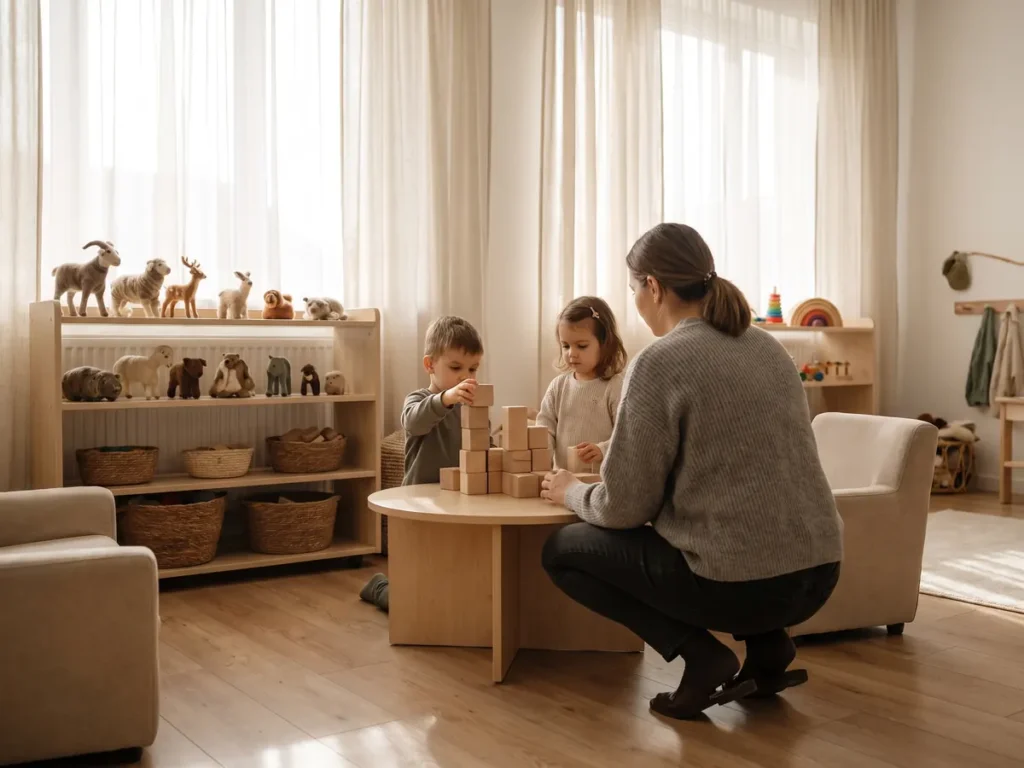
From September, Baia Mare gains a kindergarten group taught in Hungarian, Bucharest one that follows the Waldorf method, and at Boboc, in Buzău county, a military school for Air Force warrant officers begins teaching six qualifications. The three orders of the Minister of Education and Research, no. 4.510, 4.512 and 4.549/2026, were published in Official Gazette of Romania no. 703 of 25 August 2026. Provisional authorisation is the compulsory step before accreditation, and the rules under which it is granted come from the same package reorganising education and research that also covers the Romanian Agency for Quality Assurance in Pre-University Education (ARACIP).
The common legal basis is Pre-University Education Law no. 198/2023, together with the institutional evaluation methodology approved by Government Decision no. 993/2020 and the authorisation standards approved by Government Decision no. 994/2020.
In all three cases the decision was preceded by a decision of the ARACIP Council, and the authorisation takes effect from the 2026-2027 school year.
What it changes in practice
The first effect is in Baia Mare. Order no. 4.510/2026 authorises Școala Gimnazială „Nicolae Iorga” (the Nicolae Iorga lower secondary school), based at 1 Gheorghe Bilașcu Street, for pre-school education taught in Hungarian, with an extended-day programme, and for pre-school education under the Step by Step educational alternative, taught in Romanian, again with an extended-day programme. The groups are taught at the attached structure Grădinița cu Program Prelungit Nr. 9, the extended-day kindergarten no. 9.
The second effect is in Bucharest. Order no. 4.512/2026 authorises Liceul Teoretic Bilingv „Ita Wegman” (the Ita Wegman bilingual theoretical high school), based at 3 Dimitrie Pompeiu Boulevard, district 2, for pre-school education under the Waldorf educational alternative, taught in Romanian, with an extended-day programme. The maximum teaching capacity of the school is 48 study groups over two shifts, 25 in the first and 23 in the second.
The third effect is in Buzău county. Order no. 4.549/2026 authorises Școala Militară de Maiștri Militari și Subofițeri a Forțelor Aeriene „Traian Vuia” (the Traian Vuia Air Force military school for warrant officers and non-commissioned officers), based at 31 Aviatorilor Street in the village of Boboc, Cochirleanca commune, for post-secondary education in the military, security and defence field, armed forces.
The fourth effect concerns the qualifications. The school at Boboc may teach six vocational qualifications: aviation warrant officer, anti-aircraft missile and artillery warrant officer, radar warrant officer, aviation non-commissioned officer, anti-aircraft missile and artillery non-commissioned officer and radar non-commissioned officer. The mode of study is full-time, daytime, and the maximum capacity is 40 study groups over two shifts, 20 in each.
The fifth effect is a legal one. The authorisation gives the schools the status of education provider and the right to organise teaching for the levels, languages and modes of study listed. Each of them is a legal person governed by public law and part of the national education system.
The sixth effect is an obligation. Each school must hire teaching and administrative staff for the groups it teaches and must apply for accreditation within two years at most of the first cohort graduating.
The seventh effect is reporting. The annual internal quality evaluation report is drawn up and sent to ARACIP by 15 October of each year at the latest, through the agency’s official platform.
The eighth effect falls on the owner of the building. The owner has to provide the conditions for the school to operate, including obtaining and maintaining the health authorisation and the fire safety authorisation.
The ninth effect is oversight. The schools are monitored and inspected periodically by the ministry, by ARACIP and by the county school inspectorate or, as the case may be, the Bucharest Municipality School Inspectorate, to check the standards on which the authorisation rested.
What has changed compared with the previous situation
The first change is the educational offer. Until now the three schools could not run the levels and modes of study authorised here: pre-school in Hungarian and Step by Step in Baia Mare, Waldorf pre-school in Bucharest, military post-secondary education at Boboc.
The second change concerns their status. A provisional operating authorisation turns the school into a recognised education provider for those levels, but it is not the same thing as accreditation.
The third change is the timetable of obligations. The deadline for accreditation, tied to the graduation of the first cohort, and the annual reporting duty towards ARACIP both start running from the date of authorisation.
The fourth point concerns the lag before publication. Two of the orders were signed on 22 July 2026 and one on 27 July 2026, yet publication came on 25 August, less than a month before the school year begins.
What does not change is the evaluation framework. The standards for provisional authorisation remain those approved by Government Decision no. 994/2020, and the institutional evaluation methodology the one set out in Government Decision no. 993/2020.
Advantages and disadvantages
What it improves
- Families in Baia Mare who want a kindergarten taught in Hungarian now have a state option, not only a private one.
- The Step by Step alternative and the Waldorf alternative enter the public offer, with an extended-day programme.
- The Air Force can train its own warrant officers and non-commissioned officers in six qualifications, at an authorised school of its own.
- The duty to seek accreditation within two years of the first cohort graduating prevents a school from running indefinitely on a provisional footing.
- Monitoring is shared between the ministry, ARACIP and the inspectorate, so it does not rest with a single institution.
What remains a problem
- Publication on 25 August leaves little time for enrolment and for hiring teaching staff before the school year begins.
- The authorisation is provisional, so parents are enrolling their children in a school that has not yet passed the accreditation evaluation.
- The orders do not state how many groups will actually open in Baia Mare, only the levels and modes of study authorised.
- Responsibility for the health authorisation and the fire safety authorisation lies with the owner of the building, not with the school.
- The accreditation deadline runs from the graduation of the first cohort, a point that at pre-school level can be a long way off.
Practical advice
- If you are interested in the Hungarian-language kindergarten in Baia Mare, contact Grădinița cu Program Prelungit Nr. 9, the attached structure where the groups are actually taught.
- For the Waldorf group in Bucharest, the address is 3 Dimitrie Pompeiu Boulevard, district 2, at Liceul Teoretic Bilingv „Ita Wegman”.
- For the military school at Boboc, check the admission calendar for military post-secondary education. The authorisation covers six qualifications, from aviation warrant officer to radar non-commissioned officer.
- Ask the school how far along its accreditation file is. A provisional authorisation is no guarantee of continuity in the long run.
- Check whether the building holds a valid health authorisation and a valid fire safety authorisation. That duty lies with the owner of the building.
- The annual internal evaluation reports are filed on the ARACIP platform by 15 October. They are a source of information about the quality of the school.
Frequently asked questions
What does a provisional operating authorisation mean?
When does it apply from?
What is authorised in Baia Mare?
What is authorised in Bucharest?
What qualifications does the military school in Buzău award?
How long does the provisional regime last?
Who checks that the standards are met?
Editorial analysis
The problem these three orders solve is one of supply: in three different places the state moves in where until now demand was met by private schools or by nobody at all. In Baia Mare a kindergarten group taught in Hungarian and a Step by Step one appear inside a state school, in Bucharest a Waldorf group inside a public high school, and at Boboc the legal framework is set for the post-secondary education of a military school that trains warrant officers and non-commissioned officers for the Air Force. They are short acts, all three built on the same seven articles, and technically they are well made: the figures close to the decimal. The capacity in Baia Mare, 67 study groups over two shifts, breaks down correctly across the three premises, 56 plus 7 plus 4, and matches the two shifts, 43 and 24. The same check works for the 48 groups at Liceul Teoretic Bilingv „Ita Wegman” and the 40 at Boboc. Each order points to the same decision of the ARACIP Council, no. 8 of 25 June 2026, but to different approval memoranda, no. 5.607, 5.599 and 5.589, all dated 26 June 2026.
Where the act stops is at the public information. The orders say how much is possible, not how much is opening. Article 3 fixes capacity ceilings, and in Baia Mare the structure where the new groups are actually taught, Grădinița cu Program Prelungit Nr. 9, has a ceiling of 7 groups over a single shift. How many of those are groups taught in Hungarian, how many are Step by Step and how many stay occupied by the existing groups does not follow from the text. A parent reading the Official Gazette of Romania learns that the school is authorised, but does not learn whether there is still anywhere to enrol a child.
The second limitation is the accreditation deadline. Article 4(1)(b) requires the school to apply for accreditation „în termen de maximum doi ani de la absolvirea primei promoții”, within two years at most of the first cohort graduating. The wording works at Boboc, where a post-secondary cohort ends with an examination and a clear date, but at pre-school level it has no equally firm reference point, and the order does not define one. In practice, the same sentence produces a deadline that can be calculated in one case and an open-ended one in the other two.
The third limitation has to do with the chain of decision and with its pace. The ARACIP Council decided on 25 June, the memoranda are dated 26 June, the orders were signed on 22 and 27 July, and publication comes on 25 August. Two months pass between the technical opinion and the moment the act becomes enforceable, an interval in which enrolments are made and teaching posts are filled. Neither the decision of the ARACIP Council nor the annual internal evaluation report due by 15 October is a document that anyone outside the system can consult, although they are precisely the part of the file that says whether the school meets the standards.
What should be changed
- The actual number of study groups, not only the ceiling. If Article 3 came with a statement of the groups actually opening in the 2026-2027 school year, parents in Baia Mare would know how many places there are at Grădinița cu Program Prelungit Nr. 9, rather than only that the ceiling for those premises is 7 groups.
- A definition of the first cohort for pre-school level. A clarification in Article 4(1)(b), along the lines of the completion of „grupa mare”, the final kindergarten year, by the first intake taught, would turn the two year deadline into a date that can be calculated and checked, as it can at post-secondary level.
- Publication of the decisions of the ARACIP Council together with the order. Decision no. 8 of 25 June 2026 is the substantive basis of all three authorisations, but it is nowhere available publicly. Publishing it, even as an annex, would show on what evaluation the authorisation was granted and how many schools the council decided on in the same sitting.
- A maximum period between the ARACIP decision and publication of the order. A fixed interval, 30 days for instance, would prevent a repeat of what happened here, where an opinion given on 25 June reaches the Official Gazette of Romania on 25 August, after the enrolments for the school year are largely over.
- Naming the building to which the owner’s obligation refers. In Baia Mare, Article 1(1) lists three addresses, while Article 4(2) speaks of „proprietarul imobilului de la adresa menționată”, the owner of the building at the address mentioned, in the singular. An express reference to the premises at 3A Nicolae Iorga Street, where the groups are actually taught, would show who answers for the health authorisation and for the fire safety authorisation.
- A stated frequency for the checks in Article 5. The text says that the school is monitored and inspected „periodic”, periodically, by three institutions, without saying at what interval or who starts the procedure. An express period, with an obligation to publish the outcome, would turn monitoring into a check that can be followed, rather than a closing formula.
Original text of the legal act
The text below is reproduced in Romanian, the official form of publication.
The full text, as published in the Official Gazette of Romania
Official Gazette of Romania no. 703 of 25 August 2026 64 pages PDF, 486 KB the act starts on page 61
Open the official PDFDownload the PDF
The viewer is not shown on small screens. Use the buttons above to open or download the file.
This article is for informational purposes only and does not constitute legal advice. For specific situations, consult a licensed attorney or tax advisor.