
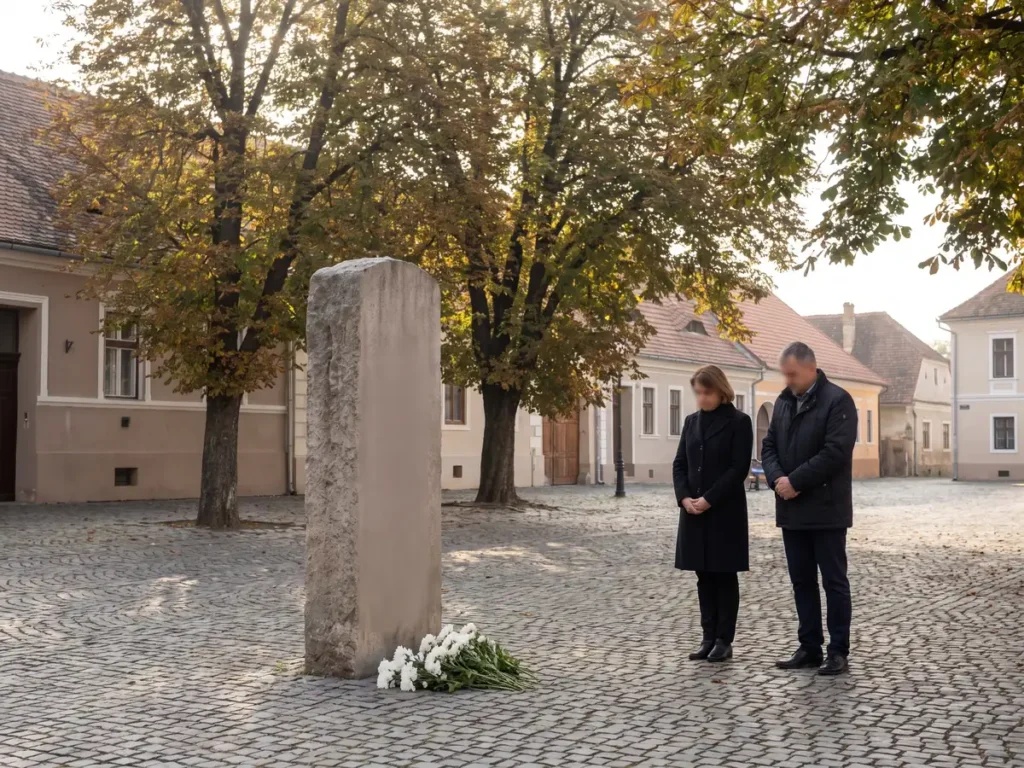
In brief
- Archpriest Aurel Munteanu, killed at Huedin in 1940, is declared by law a hero and martyr of the Romanian nation.
- The law establishes the Day of the Romanian Martyrs of Huedin, commemorated every year on 10 September, the date on which he was killed.
- The law concerns the central, county and local public authorities and the public cultural institutions in Romania and abroad, which may organise cultural and scientific programmes, within the limits of the available funds. Public radio and television may include dedicated broadcasts.
Published: Official Gazette of Romania (Monitorul Oficial) no. 596 of 21 July 2026
In force from: 24 July 2026
A priest beaten to death in the main square of the town of Huedin in September 1940 receives, 86 years later, the legal status of hero and martyr of the nation, and the day of his death becomes a day of commemoration. Law no. 156/2026, published in Official Gazette of Romania no. 596 of 21 July 2026, has four articles. It is one of the four laws promulgated on the same day and published in the same issue, alongside the designation of 2026 as the Year of the United States of America in Romania.
Article 1 declares the priest Aurel Munteanu, archpriest of Huedin, a hero and martyr of the Romanian nation. According to the text of the law, the grounds are his cultural, national, social and ecclesiastical activity in the area of Huedin and of the Vlădeasa Mountains in Cluj county, as well as the martyrdom he suffered on 10 September 1940 when, the law states, he was beaten to death in the Main Square of the town of Huedin, falling victim to the Hungarian Horthyist regime installed in Northern Transylvania after the Vienna Award, known in Romanian as the Vienna Diktat.
Article 3 establishes the Day of the Romanian Martyrs of Huedin, commemorated every year on the same date, 10 September. The law explicitly links this day to a longer series of events: the soldiers of Michael the Brave, who the text says were slaughtered at Huedin on 23 July 1600, the martyr heroes of Beliș of 8 November 1918, and the hero gendarme Gheorghe Nicula, killed together with archpriest Aurel Munteanu.
What it changes in practice
The first effect concerns status. Being declared by law a hero and martyr of the Romanian nation is an act of public recognition with symbolic value, not a title that brings pecuniary rights for descendants. The law does not provide for allowances, compensation or other benefits.
The second effect is the appearance of a fixed date in the commemorative calendar. The ceremonies take place every year on 10 September, and the central, county and local public authorities, as well as the public cultural institutions in Romania and abroad, may mark the date through cultural and scientific programmes and events.
The third effect is budgetary and is worded cautiously. The central and local public administration authorities may provide material or logistical support for organising these events, but only within the limits of the available funds. As with other commemorative laws, no new fund is created and no amount is specified.
The fourth effect concerns the public broadcasters. The Romanian Radio Broadcasting Corporation and the Romanian Television Corporation, as public services, may include in their schedules cultural programmes or coverage of the events dedicated to this day. It is an option, not a programming obligation.
The fifth effect, less conspicuous, is that the mention of public cultural institutions abroad opens the commemoration to the diaspora as well, through the Romanian cultural institutes.
What has changed compared with the previous situation
Until now, the commemoration at Huedin took place at the initiative of the local community, the Church and the county authorities, without a dedicated legal basis. From 24 July 2026 there is a day established by law and an official name, the Day of the Romanian Martyrs of Huedin.
What also changes is the basis on which a public institution may support such an event financially or logistically. Previously, support fell under general cultural programmes; now there is an express reference to a law.
What does not change is the optional character. The law uses the wording “may be marked”, “may support”, “may include”. No authority is obliged to organise anything, and the absence of an event in a given year is not a breach of the law.
Nor does the status of the day in the working calendar change. The Day of the Romanian Martyrs of Huedin is not a non-working day and is not among the public holidays on which work is suspended.
Advantages and disadvantages
What it improves
- It fixes in the public calendar a local commemoration that until now depended entirely on the initiative of the community in Huedin.
- It gives cultural institutions an express legal basis for cultural and scientific programmes dedicated to the period and the persons mentioned.
- It extends the commemoration to the public cultural institutions abroad, and therefore to the Romanian communities outside the country.
- It creates no additional expenditure: the events are organised within the limits of the available funds.
What remains a problem
- The lack of dedicated funding makes implementation dependent on local budgets, and Huedin is a small town with limited resources.
- No coordinating institution is designated and there is no official calendar of events, so the organisation remains scattered.
- The law contains firm historical assessments in a normative text. Historical research on the events in Northern Transylvania in the autumn of 1940 is ongoing, and the wording of a law does not replace scholarly debate.
- 10 September is not a non-working day, which limits public attendance at the ceremonies, especially in years when it falls on a weekday.
Practical advice
- If you are a town hall, a museum, a school or a parish and you want to organise something on 10 September, cite Law no. 156/2026 expressly in the supporting documents. It gives you the basis for material or logistical support.
- Check the budget before promising support. The law says “within the limits of the available funds”, so it does not open a new funding line.
- The format required by the law is the “cultural and scientific” one: conferences, sessions of papers, documentary exhibitions, works of local history. A project built this way fits the text directly.
- The Romanian cultural institutes abroad may organise events, because the law expressly mentions the public cultural institutions abroad.
- If you are aiming for broadcast on public radio or television, bear in mind that the law allows it, but the editorial decision remains with the two corporations.
- For research purposes, note that the law also names other landmarks of local history: the events at Huedin in 1600, those at Beliș in November 1918, and the gendarme Gheorghe Nicula. They are starting points for research in the local archives.
Frequently asked questions
Who was Aurel Munteanu, according to the law?
What does being declared a hero and martyr of the Romanian nation mean?
When is the Day of the Romanian Martyrs of Huedin commemorated?
Is it a day off?
Who organises the ceremonies?
Is money allocated for the events?
What other events does the law mention?
Original text of the legal act
The text below is reproduced in Romanian, the official form of publication.
The full text, as published in the Official Gazette of Romania
Official Gazette of Romania no. 596 of 21 July 2026 16 pages PDF, 112 KB the act starts on page 6
Open the official PDFDownload the PDF
The viewer is not shown on small screens. Use the buttons above to open or download the file.
This article is for informational purposes only and does not constitute legal advice. For specific situations, consult a licensed attorney or tax advisor.