
In brief
- The Romanian State is expropriating 117 privately owned plots along an additional strip of the future motorway, between Suplacu de Barcău and Chiribiș, and is paying 161,253.37 lei for them. The land lies in Marca, Sălaj county, and in Suplacu de Barcău, Balc, Abram and Chișlaz, Bihor county. The total area taken from owners is 22,798 square metres, that is 2.28 hectares, spread along the 26.35 kilometres of the subsection.
- The expropriator is the Romanian State, represented by the Ministry of Transport and Infrastructure, acting through the National Company for Road Infrastructure Administration, abbreviated CNAIR. The money, 162 thousand lei allocated from the State budget, is paid into a treasury account opened in the company’s name, within no more than 30 days of the approval of the request to open budget credits, and from there it reaches the owners.
- The owner does not receive the money automatically: he has to file his documents within 20 calendar days of being notified and to apply for payment within 10 days of the list being posted up at the mayor’s office. The land passes into State ownership on the date of the expropriation decision, and a challenge stops neither that transfer nor the works. The amount of the compensation can be contested separately, before the ordinary courts, with no stamp duty to pay.
Published: Official Gazette of Romania (Monitorul Oficial), Part I, no. 867 of 16 October 2026, pages 2-30
In force from: 16 October 2026, the date of publication, because the decision sets no other date
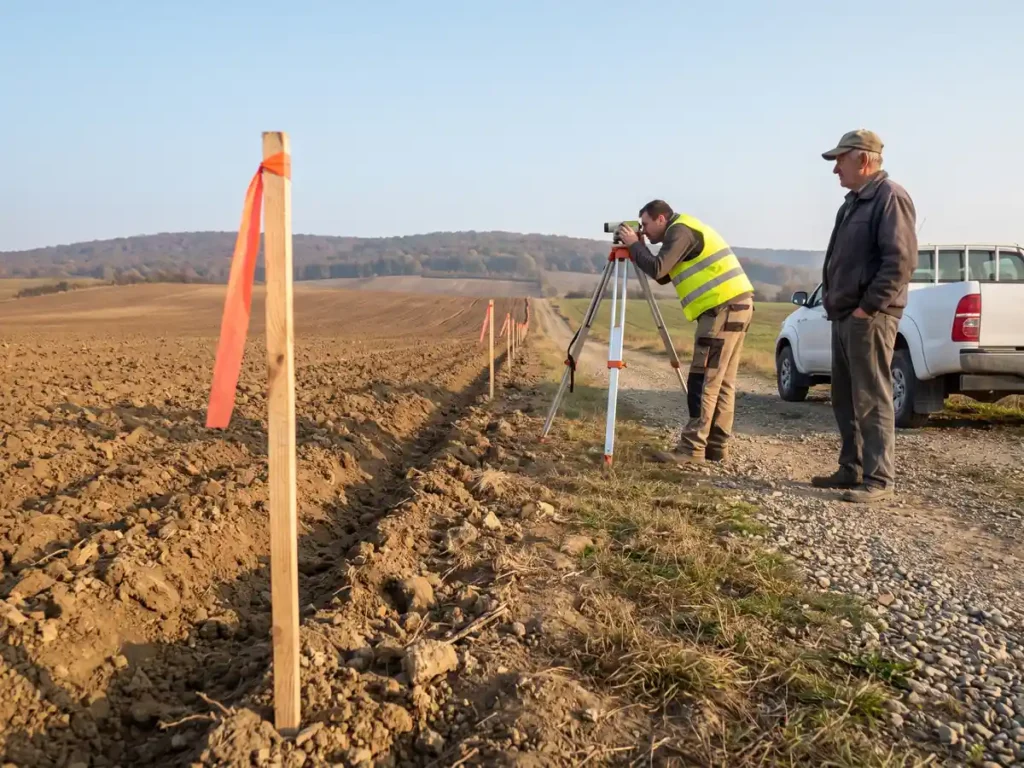
On a field track in Marca, Sălaj county, five square metres of land outside the built-up area have been valued at 2 lei and 75 bani. The sum appears at position 15 of Annex no. 2 to Government Decision no. 813/2026 and is the smallest of the 117 payments the State will make for the strip of ground along which it has to move the cables, pipes and lines standing in the way of the motorway between Suplacu de Barcău and Chiribiș.
The decision was adopted by the Government on 9 October 2026 and published in the Official Gazette of Romania, Part I, no. 867 of 16 October 2026, filling pages 2-30, of which 28 are annexes alone. It does not approve a new route. The expropriation corridor of subsection 3C1, between kilometre 4+200 and kilometre 30+550, already existed, and the technical and economic indicators of the works were re-approved by Government Decision no. 739/2019. What is added now is an „amplasament suplimentar”, an additional site, in other words an extension of the corridor, which the law allows under Article 11 paragraph (6) of Law no. 255/2010 on expropriation for a public utility purpose, where the site changes after the feasibility study or the design has been revised.
The size of that extension says more than the title does. The 22,798 square metres taken from private owners, spread along 26.35 kilometres, make a band with an average width of 87 centimetres. This is not a stretch of motorway, it is a utilities trench, and that explains why 76 of the 117 positions receive less than 500 lei and 35 of them less than 100 lei. At the other end, a single position in Suplacu de Barcău, with 2,132 square metres of land inside the built-up area, takes 60,975.20 lei, that is 37.8 per cent of all the money in the decision.
What it changes in practice
For anyone who owns land along subsection 3C1, the practical questions have had, since 16 October 2026, the following answers.
Who takes the land. The Romanian State, represented by the Ministry of Transport and Infrastructure, acting through the National Company for Road Infrastructure Administration. Article 2 paragraph (1) of the decision names it as the expropriator, while Article 4 places on the same company the responsibility for the accuracy of the data in the lists and for the way the money is used. That means complaints about an area wrongly measured or a name wrongly spelled go to the company, not to the mayor’s office.
Where. In five administrative-territorial units. Marca, the only one in Sălaj county, has 60 positions, 12,817 square metres and 60,558.61 lei. Suplacu de Barcău has 42 positions, 8,379 square metres and 96,584.39 lei. Then come Abram, with 8 positions and 1,545.25 lei, Chișlaz, with 4 positions and 2,472.76 lei, and Balc, with 3 positions, 39 square metres and 92.36 lei in all. Together, Marca and Suplacu de Barcău account for 97.5 per cent of the money.
How much. In Annex no. 2 the decision publishes a total line: 159,822.09 lei for land and buildings, plus 1,431.28 lei for 4.34 cubic metres of timber volume, hence 161,253.37 lei. Under Article 3 paragraph (1), the decision allocates „162 thousand lei”, from the State budget, through the budget of the Ministry of Transport and Infrastructure, under chapter 84.01 „Transporturi”, Transport, on the line for programmes financed from the European Regional Development Fund for the 2021-2027 financial framework.
How the individual amount is worked out. The decision publishes the result and leaves the criterion aside, and the differences between positions are wide. The average across the whole annex is 7.07 lei per square metre, yet the 18 positions inside the built-up area reach 26 lei per square metre, while the 99 positions outside it stand at 2.57 lei. Under Article 11 of Law no. 255/2010, the sum estimated by the expropriator rests on a report drawn up by a licensed valuer, who works from the appraisals of the chambers of public notaries. Anyone who wants to understand why he received what he received has to ask for the valuation report.
The commune’s roads and the State’s land. Besides private property, the decision approves two separate lists. Annex no. 3 contains 7 positions in the public ownership of the State, 1,558 square metres, all of them in Marca and for the most part administered by the Crișuri Basin Water Administration. Annex no. 4 contains 12 positions in the public ownership of the communes of Marca, Suplacu de Barcău and Abram, 1,097 square metres in all, almost entirely roads. No compensation is paid for these: under Article 5 paragraph (11) and Article 28 of Law no. 255/2010, the State’s land merely changes the holder of the right of administration, while the communes’ land passes into the public ownership of the State by operation of law, 15 days after the administrative-territorial unit has been notified.
From when it is no longer the owner’s. Not from the publication of the decision. The decision only launches the procedure. Ownership passes by operation of law on the date the expropriation decision is issued, once the sums have been deposited into an account, under Article 9 paragraph (4) of Law no. 255/2010. That decision is issued within 5 working days of the expiry of the time limits in Article 8 and is an enforceable title for handing over the land, and challenging it does not suspend the transfer.
What time limits run for the owner. Two, short and one after the other. The first: 20 calendar days from notification of the intention to expropriate, for filing the ownership documents with the expropriator, under Article 8 paragraph (2). The second: 10 days from the public announcement by posting at the local council, for filing the application for payment of the compensation, under Article 19 paragraph (2). If the documents are incomplete, the applicant has 15 days to complete them. Anyone who does not file the application does not lose the money, but does not receive it either: the sum is deposited into an account in the name of the expropriated person and is released only once the right has been proved.
Where the amount is contested. The amount of the compensation goes before the ordinary courts, under Articles 22 and 23 of Law no. 255/2010. The action is brought within the general limitation period of three years, which runs from the communication of the decision establishing the compensation, and claims against the State are exempt from stamp duty. What cannot be obtained by this route is a halt to the works: the law says explicitly that neither the expropriation procedure nor the public utility objective can be suspended because of a dispute over possession or ownership.
What the authorities have to display. Article 5 of the decision requires the expropriator to bring the plan of the additional site to public notice by posting it at the premises of the local councils concerned and on its own website. Article 11 paragraph (4) of the law adds that the tables of properties are posted up 10 days before the committee for verifying ownership starts work, and that the date on which the committee begins is announced through a notice in the local press.
What has changed compared with the previous situation
Until 16 October 2026, the expropriation corridor of subsection 3C1 was the one approved earlier, on the basis of the original design. The plots in the annexes to the decision were not inside it, so their owners had no obligation and no compensation to expect. From 16 October 2026 they are inside the corridor, and for them a procedure with time limits measured in days begins.
The second change concerns the communes. The communal roads and the other public land of Marca, Suplacu de Barcău and Abram listed in Annex no. 4, 1,097 square metres in all, were until now in the public ownership of the administrative-territorial units. Their entry on the list opens the way to their transfer into the public ownership of the State, without payment and without the local authority being able to refuse.
The third change is budgetary and is the smallest: 162 thousand lei move from a credit line to expropriations for this subsection. By way of comparison, the whole works is a motorway of more than 400 kilometres, while the subsection in question measures 26.35 kilometres. The decision does not alter the technical and economic indicators approved by Government Decision no. 739/2019 and does not change the completion date for the lot.
The procedure itself is untouched. All the time limits, the form of the notification, the powers of the committee for verifying ownership and the remedy available remain those of Law no. 255/2010 and of the implementing rules approved by Government Decision no. 53/2011. The new decision introduces no procedural rule of its own, only the list and the money.
Advantages and disadvantages
What it improves
- The amount, the area and the name of the holder are published for each of the 117 positions, together with the plot number and the land book or title deed number. An owner can check his own data even before the notification arrives.
- Annex no. 2 has a total line, and its two components add up: 159,822.09 lei for property plus 1,431.28 lei for timber volume make exactly 161,253.37 lei. The check is within reach of anyone who can add two numbers.
- The money is allocated at the same time as the procedure is launched, and the source is indicated down to the budget article. The payment deadline, no more than 30 days, is written into the decision.
- The corridor is extended by the route the law provides, through a published decision, and not by simply occupying the land. The owner has an act he can challenge and a sum he can compare with the market price.
- Publicly owned land is dealt with separately, in annexes of its own, and does not come up for payment. The expropriation budget does not pay the State for the State’s own ground.
What remains a problem
- For 35 positions the compensation is below 100 lei, and the smallest is 2.75 lei. The file, the ownership documents and the journey to the expropriator’s office cost the owner more than the sum he receives, yet the procedure is the same for everyone.
- The decision writes the sum rounded up, „162 thousand lei”, although the total of the annex is 161,253.37 lei. The difference of 746.63 lei is explained nowhere, and the reader has no way of knowing whether it is a reserve, a rounding or a mistake, other than by adding up the 117 lines.
- Annex no. 1, the site plan, is published as a facsimile over 20 pages. It has no searchable text, so an owner cannot find out from the Official Gazette of Romania whether his plot is affected, except by looking for his name in Annex no. 2.
- The owner’s time limits, 20 and 10 days, have a clear starting point. The State’s time limit, the 30 days for paying the money out, runs from the approval of the request to open budget credits, and the decision does not say by when that request has to be filed.
- The differences in price per square metre are wide, from 55 bani to 28.60 lei, and the decision publishes neither the valuation report nor the criterion. A comparison with the neighbour is possible, an explanation of it is not.
- The communes lose 1,097 square metres of roads and other public land without compensation and without any step at which they could state their position.
Practical advice
- Look for your name in Annex no. 2, no. 3 or no. 4 of the official PDF edition attached to this article. The list of private property starts on page 23 and ends on page 29, and the positions are grouped by county and by commune, in the order of the route.
- Check four things on your own line: the plot number, the land book or title deed number, the area expropriated and the total value. If any of them does not match the documents you hold, the complaint goes to the National Company for Road Infrastructure Administration, which Article 4 of the decision makes responsible for the accuracy of the data.
- Do not wait for the notification to arrive by post before gathering your documents. The 20 calendar days in Article 8 paragraph (2) of Law no. 255/2010 run from notification, and an up-to-date land book extract, a certificate of inheritance or the settlement of an estate are not obtained in three weeks.
- Watch the mayor’s office noticeboard and the expropriator’s website. The application for payment of the compensation is filed within 10 days of the list being posted at the local council, and the date on which the committee for verifying ownership starts work is announced through a notice in the local press.
- If the land is held in common or the estate has not been settled, file the application anyway and set out the situation. The law allows the right to be proved by any means of evidence and grants 15 days for completing the documents; the sum is deposited in the name of the expropriated person and released once the right has been proved.
- If it is the amount that concerns you, ask for the valuation report before going to court. The action is brought within the general three-year limitation period, before the ordinary courts, and is exempt from stamp duty, but the cost of the court-appointed expert report is advanced by whoever requests it.
- Do not challenge the expropriation decision in the hope of stopping the works. The decision is an enforceable title for handing over the land, and the law forbids suspending the procedure or the objective because of a dispute over possession or ownership. What can be obtained in court is higher compensation, not keeping the land.
- If there are trees, woodland or other valuable vegetation on the land, check the timber volume columns. Across the whole annex they show 4.34 cubic metres, valued at 1,431.28 lei, and a wooded plot left without that entry is worth a complaint.
Frequently asked questions
Does the decision take my land from 16 October 2026?
How do I find out whether my land is on the list?
Why does my neighbour get more for the same area?
Can I refuse the sum and ask for more?
What happens if I file no application at all?
Does the commune’s mayor’s office receive money for the roads in Annex no. 4?
Can the works start before my compensation is paid?
Where do I find the full annexes, with all the names and sums?
Editorial analysis
The decision stands up to checking. The total of Annex no. 2 adds up on both of its components, 159,822.09 lei for property and 1,431.28 lei for 4.34 cubic metres of timber volume, and their sum is exactly 161,253.37 lei. The totals of Annexes no. 3 and no. 4, 1,558 and 1,097 square metres, can be rebuilt from their own lines. No position shows an expropriated area larger than the area in the ownership document. The localities listed in Article 2 match those in the titles of the annexes. The legal bases invoked say what they are credited with saying: Article 11 paragraph (6) of Law no. 255/2010 does indeed govern a change of site after the design has been revised, and Article 5 paragraph (11) does indeed allow the lists of public property to be approved by the same decision. It needs no correction, and that is not an oversight, it is an act drafted properly.
Its interest lies elsewhere, in what comes out of the figures. The 22,798 square metres taken from private owners, spread along the 26.35 kilometres of the subsection, make a strip with an average width of 87 centimetres. That is not a motorway, it is the trench into which the utilities are being moved, and the act admits as much indirectly, because Article 3 paragraph (2) and Article 5 add the qualification „necesar pentru relocarea utilităților”, needed for relocating the utilities, which is absent from Article 1, Article 2 and Article 4. The consequence shows in the structure of the sums: 76 of the 117 positions receive less than 500 lei, 35 less than 100 lei, and the smallest compensation is 2.75 lei for 5 square metres in Marca. At the same time, a single position of 2,132 square metres inside the built-up area in Suplacu de Barcău takes 60,975.20 lei, more than a third of the budget of the whole decision.
That imbalance is consistent, not accidental. The 18 positions of land inside the built-up area account for 19.2 per cent of the expropriated area but receive 113,949 lei, that is 70.7 per cent of the money; the 99 positions outside the built-up area share the rest, 47,304.37 lei. Translated into price, 26 lei per square metre inside the built-up area against 2.57 lei outside it, a ratio of almost ten to one, on the same strip and in the same village. For the owner of land outside the built-up area the procedure demands the same effort on paperwork, and at positions of 5 or 6 square metres the cost of the documents exceeds the compensation. On those lines, the State pays more for administering the payment than for the ground.
There is one more asymmetry, this one of calendar. The owner has 20 calendar days to file his documents and 10 days to apply for payment, both with a precise starting point, the notification and the posting at the mayor’s office. The administration has 30 days to pay the money out, but counted from the approval of the request to open budget credits, a moment no provision places in time. Missing the 10-day limit means, for the owner, that the sum is deposited and he has to wait; a delay in the request for credits has no limit to miss.
What should be changed
- Write the exact sum, not one rounded to the thousand. Article 3 paragraph (1) says „162 thousand lei”, while Annex no. 2 totals 161,253.37 lei. The difference of 746.63 lei is left unexplained, and a reader who wants to check the allocation has to add up 117 lines. The exact figure, followed by a mention of the reserve if there is one, would turn public scrutiny into a one-second operation.
- Use a single name for the site throughout the act. Article 3 paragraph (2) and Article 5 write „amplasamentul suplimentar, necesar pentru relocarea utilităților, prevăzut la art. 1”, the additional site needed for relocating the utilities, as referred to in that article, while Article 1 and Article 2 write only „amplasamentul suplimentar”, the additional site. Moving that qualification into Article 1 would make clear from the first sentence that this is a utilities trench and not a widening of the motorway, and would spare the reader the question of whether the two texts are speaking about the same area.
- State in the act what effect Annexes no. 3 and no. 4 produce. Article 2 paragraphs (3) and (4) „approve lists”, without specifying that for the State’s land the holder of the right of administration changes and that the communes’ 1,097 square metres pass into the public ownership of the State 15 days after notification. Those effects are in Article 5 paragraph (11) and in Article 28 of Law no. 255/2010, but the mayor of Abram reads the decision, not the law.
- Introduce a simplified procedure for the small positions. With 35 positions below 100 lei and one of 2.75 lei, a written compensation agreement signed on the spot, with no committee and no deposit, would cost less than the present file and would spare the owner two journeys. The threshold can be tied to a multiple of the administrative cost, which updates itself.
- Give the payment deadline a starting point. A single sentence requiring the expropriator to file the request to open budget credits within a fixed number of days of the publication of the decision would turn the 30 days in Article 3 paragraph (2) into a real time limit. Without it, the only calendar with a start date is the owner’s.
- Publish the plan in a searchable form. The 20 facsimile pages of Annex no. 1 have no extractable text. A list of the cadastral numbers affected, published alongside, or a consultable layer on the expropriator’s website would let any owner in the five communes find out within seconds whether his plot falls inside the corridor.
Original text of the legal act
The text below is reproduced in Romanian, the official form of publication.
The full text, as published in the Official Gazette of Romania
Official Gazette of Romania no. 867 of 16 October 2026, pages 2-30 32 pages PDF, 3.8 MB the act starts on page 2
Open the official PDFDownload the PDF
The viewer is not shown on small screens. Use the buttons above to open or download the file.
This article is for informational purposes only and does not constitute legal advice. For specific situations, consult a licensed attorney or tax advisor.