
In brief
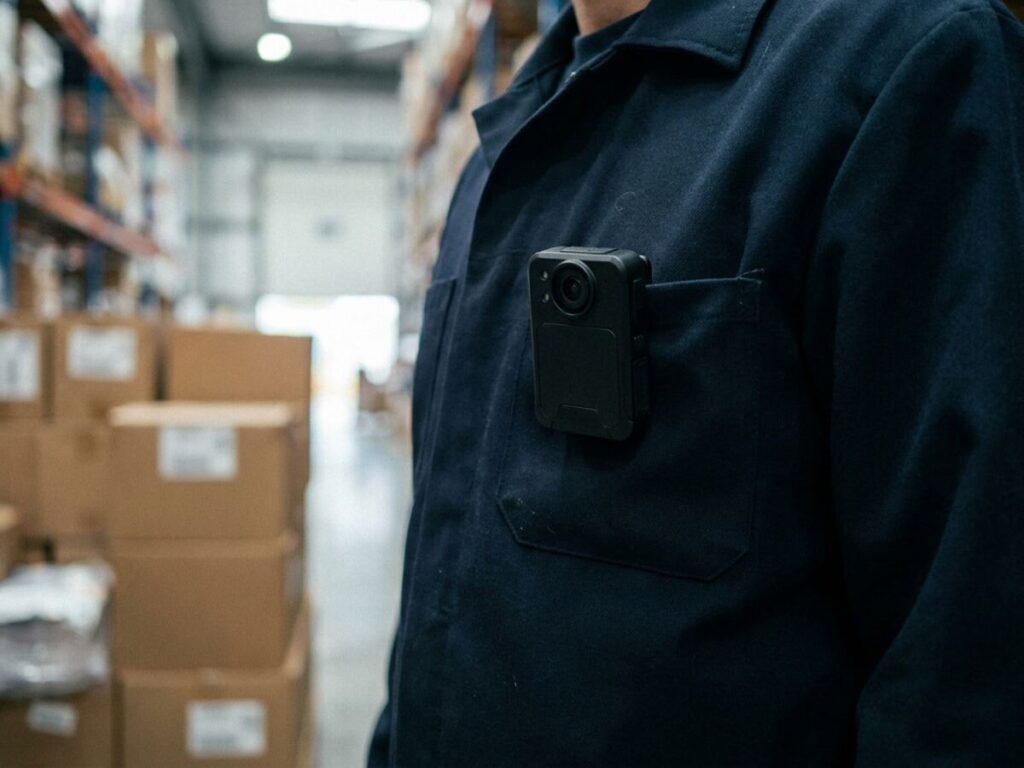
- Antifraud inspectors at ANAF now have a written procedure for the cameras worn on their uniforms: they may record photo, audio and video without the consent of the people being filmed, in public spaces, whenever there are suspicions of tax evasion or tax fraud.
- The recordings constitute means of evidence and may be used in administrative and judicial proceedings. They are not information of public interest, so they cannot be requested by anyone who asks.
- The retention period is 6 months, except for material that has entered a court file, which follows the rules on evidence. Access is limited to four categories of people, and every download is entered in a register.
Published: Official Gazette of Romania (Monitorul Oficial) No. 629 of 30 July 2026
In force from: 30 July 2026
If an antifraud inspector walks into your shop, warehouse or restaurant, he can switch on the camera clipped to his uniform without asking for your agreement. The rules for this filming were published on 30 July 2026 in Official Gazette of Romania No. 629, through the joint order issued by the president of the National Agency for Fiscal Administration (ANAF), No. 898/2026, and by the minister of finance, No. 899/2026, both signed on 16 July. It is a step in equipping and disciplining antifraud enforcement, and it comes in the same year in which Parliament approved performance bonuses for the staff of ANAF and of the Customs Authority.
The legal basis for filming is not new. It comes from Article 5(11) to (15) of Government Emergency Ordinance No. 74/2013 on the reorganisation of the National Agency for Fiscal Administration, approved with amendments by Law No. 144/2014. What was missing until now was the actual procedure: who films, under what conditions, where the files end up, how long they are kept, who may view them. The order of 30 July approves exactly that document, as an annex with five chapters and nine articles.
The text applies to antifraud inspectors within the General Directorate for Fiscal Antifraud, in the exercise of their control duties. It does not apply to ordinary tax inspection, nor to other structures of ANAF.
What it changes in practice
Also on how a control is run, this time remotely: the hearing in a documentary verification can be held by video call, and the invitation no longer says how fast the online option must be asked for.
The first effect, and the most visible one for companies, is that filming may take place without consent. The procedure states explicitly that ANAF, through the General Directorate for Fiscal Antifraud, records and captures operative moments without the consent of the persons concerned, where there are suspicions regarding acts and deeds of tax evasion and tax fraud. Separately, inspectors may record activities carried out in public spaces, again without agreement.
The second effect is the legal value of the material. Audio and video recordings made under the conditions of the procedure constitute means of evidence and may be used in administrative or judicial proceedings. In practice, what the camera captures can end up in the file challenging the inspection report, or in a criminal file.
The third effect concerns access to these images. Recordings containing personal data do not qualify as information of public interest, under Article 12(1)(d) of Law No. 544/2001. An ordinary request for access to public information will not get you the footage. The list of those who may reach it is short: the inspector who made the recording, the account administrators designated for technical management, the integrity structure of ANAF or the hierarchical management, upon request and on a case-by-case basis, and criminal investigation bodies, courts or other competent authorities, on the basis of an express legal provision or of a procedural act.
The fourth effect is traceability. Any download or sharing is recorded in a register kept at the level of the General Directorate for Fiscal Antifraud. Local downloading, onto a computer, is permitted only with the approval of the head of the structure and only for procedural purposes, such as attaching the file to a criminal investigation case or presenting it in court. The register itself is to be regulated by a separate order of the president of ANAF, so one more piece is still pending.
The fifth effect concerns infrastructure. The data is downloaded automatically and securely from the recorder into a cloud platform provided by the manufacturer of the equipment. The owner of the platform is obliged, just as the inspectors are, to maintain confidentiality and to observe the security measures that have been established.
The sixth effect concerns the inspectors themselves. Failure to comply with the instructions for use, or improper use of the cameras, amounts to a disciplinary breach and is investigated under Government Emergency Ordinance No. 57/2019, the Administrative Code. Unauthorised access, dissemination of personal data, unjustified deletion or use of the device for other purposes are sanctioned in accordance with the law.
What has changed compared with the previous situation
Until 30 July 2026 the right to record existed, but there was no procedure to frame it. The difference is not merely theoretical. Footage taken outside a clear procedural framework is far easier to challenge, both before the administrative litigation court and before the National Supervisory Authority for Personal Data Processing.
The most concrete new element is the retention period. Images and recordings are kept for 6 months from the date they were obtained. If they enter judicial proceedings, they follow the rules on evidence and remain until those proceedings are completed. Once the term expires, the material is destroyed through irreversible procedures. The procedure expressly prohibits destruction before the minimum term of 6 months, which protects the person filmed as much as the administration: the evidence cannot vanish overnight.
The second new element is the way material is indexed. Data is stored so that a recording can be identified precisely by the inspector’s name, the date and time when the recording started and ended, the GPS location and the serial number of the equipment. With these four reference points, a company asking for an inspection to be reviewed can point exactly to the material it is talking about.
The third new element is the obligation to anonymise. When images are sent to a court or to other institutions, measures of anonymisation, pseudonymisation, masking or blurring are applied to the persons who are not the subject of the request. A customer who happens to be in the frame should not end up recognisable in a file that has nothing to do with him.
The fourth new element is controlled manual deletion. Material marked as evidence may be deleted only by designated staff within the central structure of the General Directorate for Fiscal Antifraud, only at the written request of the head of the structure that collected it, and only after the judicial proceedings have been completed.
Advantages and disadvantages
What it improves
- It protects both sides. A camera that is running discourages abuse of authority just as much as it discourages invented claims about how the inspection unfolded.
- It sets a clear retention period, 6 months, and forbids earlier destruction. The evidence stays available throughout the window in which you can challenge the inspection report.
- It closes off general access to the footage. It is not information of public interest, so it does not reach competitors or the merely curious through a simple request.
- It requires a register of downloads and shares, which makes any leak of material verifiable.
- It provides for the anonymisation of persons who are not the subject of the request, a genuine safeguard for employees and customers caught accidentally in the frame.
- It refers expressly to Regulation (EU) 2016/679, so the person filmed keeps the rights granted by data protection legislation.
What remains a problem
- The procedure lays down no obligation to inform a person that they are being filmed. There is no moment at which the inspector has to say so out loud, and no wording for such a notice.
- The person filmed is given no simple route, under this text, to request a copy of the recording that concerns them. What remains is the general procedure under Regulation (EU) 2016/679, which is slower and more formal.
- The data ends up in a cloud platform belonging to the manufacturer of the equipment. The order does not say where it is hosted, who the supplier is, what happens when the contract ends, or how the security audit is carried out.
- The download register, the piece that ensures traceability, has not been regulated yet. It is to come through another order of the president of ANAF, with no announced deadline.
- The phrase “operative moments” is not defined. What exactly gets filmed, and for how long, is left in practice to the inspector’s judgement.
- The sanction for misusing the camera is disciplinary and is decided inside the institution, with no external control mechanism provided for in the procedure.
Practical advice
- If you are being inspected, write down the identification details. The inspector’s name, the date, the start and end time of the inspection and the location are exactly the criteria by which the recording is indexed. Without them, a later request is hard to process.
- Do not obstruct the filming. The procedure allows recording without consent where there are suspicions of evasion or fraud. Opposition does not stop the inspection and may be noted against you.
- Note in the inspection report that filming took place. A written mention gives you proof that the material exists, which is useful if you end up asking for it later.
- Keep the 6 month term in mind. If you want to use the recording in your defence, submit the request in good time, not in the final month. Once the term expires, the material is destroyed irreversibly, unless it has entered a court file.
- If you have reached court, ask for the recording through the court. Judicial bodies and courts have express access, on the basis of a procedural act. This is the safest route, and more effective than an administrative request.
- As a person who has been filmed, you can exercise your rights under Regulation (EU) 2016/679, including the right of access, and a complaint is lodged with the National Supervisory Authority for Personal Data Processing.
- Train your staff. It helps if the people working in the shop, the warehouse or the kitchen know that an antifraud inspection may be filmed, and that behaving naturally is the right approach, camera or no camera.
Frequently asked questions
Can antifraud inspectors film me without asking for my agreement?
Can the footage be used against me?
How long are the recordings kept?
Can I ask to see the recording made during the inspection at my company?
Who is allowed to view the recordings?
Where are the files stored?
What happens to people who appear in the frame by chance?
What happens if an inspector misuses the camera?
Does the procedure apply to ordinary tax inspection as well?
When does it apply from?
Original text of the legal act
The text below is reproduced in Romanian, the official form of publication.
The full text, as published in the Official Gazette of Romania
Official Gazette of Romania no. 629 of 30 July 2026 16 pages PDF, 101 KB the act starts on page 2
Open the official PDFDownload the PDF
The viewer is not shown on small screens. Use the buttons above to open or download the file.
This article is for informational purposes only and does not constitute legal advice. For specific situations, consult a licensed attorney or tax advisor.