
In brief
- The national state of alert for energy is extended by another 30 days, from 30 August until 28 September 2026. The first period was due to end on 29 August.
- The reason is unchanged: the Danube enters the country at around 1,350 m³/s at Baziaș, while electricity demand at the evening peak can top 7,500 MW and the coal units can deliver no more than 1,200 MW.
- The dredging works at Cernavodă continue, and Transelectrica is mandated to raise output, bring in imports or cut consumption.
Published: Official Gazette of Romania (Monitorul Oficial) no. 722 of 28 August 2026
In force from: 30 August 2026
The energy alert declared at the end of July is not being lifted on 29 August, when it would have expired, but extended until 28 September. Decision no. 21/2026 of the National Committee for Emergency Situations, published in Official Gazette of Romania no. 722 of 28 August 2026, adds another 30 days to the state of alert declared by CNSU Decision no. 15/2026, starting on 30 August.
The document behind the decision is the „Analysis of risk factors” registered with the Ministry of Energy under no. 43.741/SDE of 27 August 2026, that is the day before it was adopted. In short, it says that nothing which produced the alert has changed for the better.
The flow rate of the Danube where it enters the country, at Baziaș, is around 1,350 m³/s. A temporary rise to roughly 1,600 m³/s is forecast for 30 and 31 August, but even that figure stays, the analysis says, well below the long-term average for the period, with a high probability that the decline resumes in the first ten days of September unless there is significant rainfall in the Danube basin.
On the same day the Government also extended the electricity market safety measures until 30 September 2026, through Decision no. 684/2026, citing the uncertain restart of both Cernavodă units.
What it changes in practice
The first effect is continuity. Without this decision the state of alert would have ended on 29 August, and the legal framework for emergency measures would have disappeared during exactly the period the analysis describes as the tightest. The extension starts on 30 August, so not a single day is left uncovered.
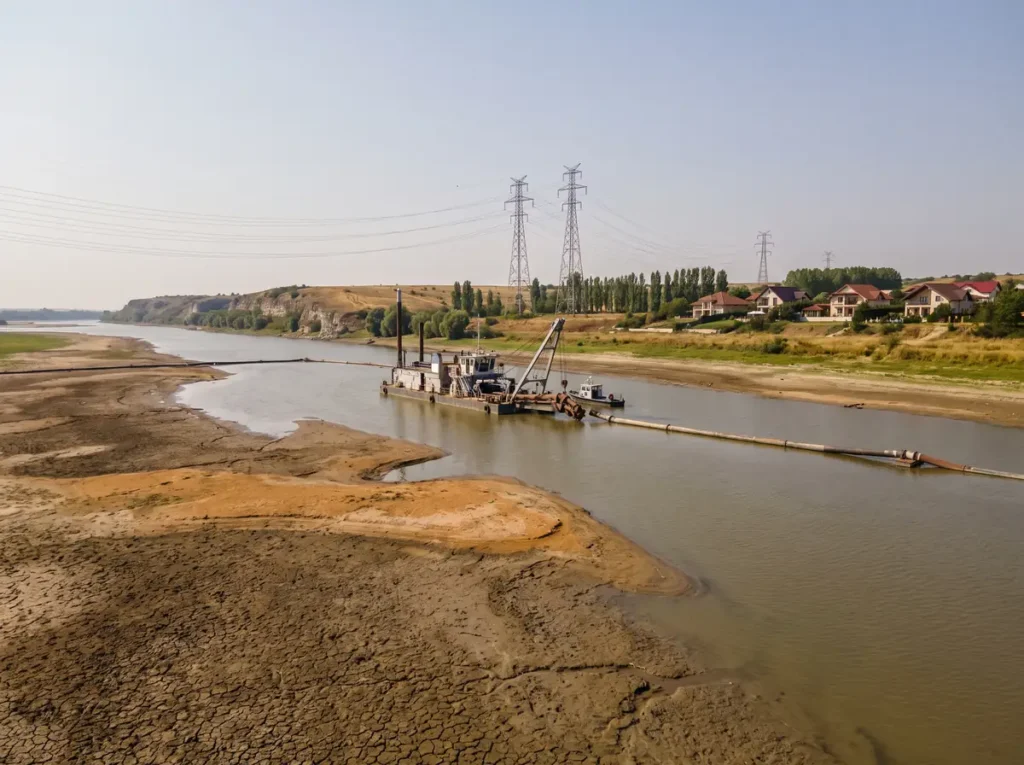
The second effect concerns the works at Cernavodă. The emergency intervention measures and works ordered by CNSU Decision no. 20/2026 are maintained, in order to secure the raw water at the intake of the Cernavodă Nuclear Power Plant, together with any other operational measures and technical solutions identified along the way. The wording leaves the list open, so a fresh decision is not needed for every intervention.
The third effect is the mandate given to the transmission system operator. The National Power Grid Company „Transelectrica” takes all the measures needed to keep the national power system running, and the decision names three routes: raising output from every available source, securing imports, or cutting consumption.
The fourth effect is institutional support. The bodies named in CNSU Decision no. 20/2026, chiefly the National Water Administration „Apele Române” and the Lower Danube River Administration in Galați, are to be supported by central and local public institutions and authorities, depending on how the situation develops.
What has changed compared with the previous situation
Compared with the July decision, what changes is the duration and the reasoning, not the substance of the measures. The first alert covered 31 July to 29 August. The second covers 30 August to 28 September. Put end to end, the two periods add up to 60 days of national alert for electricity, running to the end of September.
The timing of publication has changed too. CNSU Decision no. 15/2026 was published on the very day it took effect, 31 July. This one appears on 28 August for a period that begins on 30 August, so with two days of notice. It is a small difference, but it means operators and local authorities find out beforehand rather than on the day itself.
The reasoning has become more detailed. The decision is no longer content with the hydrological situation; it puts figures on the adequacy of the system. The coal units can run at a maximum of 1,200 MW, with limited fuel reserves and mostly on working days; wind output is forecast between 200 and 800 MW; photovoltaic output is falling, with a daytime peak below 3,000 MW and a maximum of 2,300 MW between 3 and 6 September, and with a shorter daily production window than in the summer months.
The calendar context has also entered the reasoning. People coming back from holiday, businesses restarting after their planned shutdowns and the beginning of the school year are all cited as factors that push demand at the evening peak above 7,500 MW. On imports, the decision looks across the border: the Paks plant in Hungary has been raised to around 90% of its installed capacity, while Kozloduy in Bulgaria is running with a power reduction of roughly 20%.
Advantages and disadvantages
What it improves
- Not a single day is left without a legal framework: the extension begins on the very day after the first period expires.
- The dredging works at Cernavodă carry on without a new procedure, and the list stays open for technical solutions that come up along the way.
- The reasoning contains figures that can be checked, broken down by generation source and by river flow, not just general formulas about drought.
- Publishing the act two days before it takes effect gives operators a period of notice that the first decision had not offered.
What remains a problem
- The three options handed to Transelectrica, generation, imports and demand reduction, are listed without any order of preference and without a numerical threshold for moving from one to another.
- The decision provides for no periodic public reporting, so the public has no way of following whether the reserve margin is improving or not.
- The adequacy figures are given for the peak output of each source, not for the hour when the system is actually under pressure.
- The works at Cernavodă are given no deadline, even though they are the reason the alert is being extended for a second time.
Practical advice
- If you are an industrial consumer with dispatchable demand, check whether you can sign up for the flexibility mechanism opened by ANRE, because cutting consumption is one of the three routes the decision gives Transelectrica.
- Businesses resuming activity after their planned shutdowns should avoid starting up large capacity at the evening peak, the interval the decision identifies as critical.
- Local authorities in the Cernavodă area and along the Danube need to be ready to support the bodies listed in CNSU Decision no. 20/2026, an obligation that Article 3 sets out in general terms, without naming anyone.
- Note the date of 28 September 2026. If the hydrological situation does not improve, a third extension decision will be published around then.
- No obligation arises from this decision for households. The state of alert is about managing the power system, not about how domestic customers behave.
Frequently asked questions
How long does the state of alert last?
Does this mean there will be power cuts?
What obligations does a household customer have?
Why does the flow of the Danube matter for energy?
Who signed the decision?
What happens to the measures in the previous decision?
Editorial analysis
The decision solves a real problem and solves it cleanly: the alert was expiring on 29 August, its causes had not gone away, so the extension starts on 30 August and leaves no day uncovered. The act is short, backed by figures and free of tangled cross-references. It has no internal logical errors, and that is worth saying, because the reasoning of a crisis decision is usually where they turn up.
What does not show when you read the act from beginning to end appears once you put the adequacy figures next to the hour at which the system is actually under pressure. The decision names a single critical moment, the evening peak, when demand can exceed 7,500 MW. But the three types of output it quantifies are given at their own peak, which is not the same moment. Photovoltaic, with a maximum below 3,000 MW and 2,300 MW between 3 and 6 September, produces around midday, and the decision itself notes that the daily production window is getting shorter. At the evening peak it contributes almost nothing. What is left is coal, at no more than 1,200 MW and with limited fuel reserves, and wind, between 200 and 800 MW. That is between 1,400 and 2,000 MW from the sources the document puts on paper, against demand of more than 7,500 MW. The rest has to come from nuclear, from hydro, of which the same text says that flows on the rivers are very low, and from imports.
This is where the paragraph about the neighbours fits in, which would otherwise read like a note of context. The decision looks at Paks and at Kozloduy precisely because imports are one of the three solutions handed to Transelectrica, and one of the two plants is running at reduced power. In other words, the fallback route of the Romanian system depends on the state of the neighbouring systems, and the act says so without saying so.
The second thing that comes out of the comparison is the pace. The first decision was published on the day it took effect. This one appears two days ahead. The difference looks small, but it shows an administration moving from reaction to anticipation, and if a third extension is needed at the end of September, this is the benchmark it will be measured against.
What should be changed
- Adequacy figures given for the peak hour, not for the peak of each source. They would show directly how much is missing at 20:00 and would turn the reasoning into a decision-making tool, rather than a list of maxima that never occur at the same time.
- A numerical trigger for demand reduction. The three solutions handed to Transelectrica are alternatives with no hierarchy at present; a reserve threshold below which demand reduction kicks in would turn a discretionary power into a procedure that industrial consumers can anticipate.
- An express reference to the ANRE flexibility mechanism. The regulation on dispatchable demand flexibility was published two days before this decision; linking the two would give demand reduction a contractual basis and a price, instead of an administrative instruction.
- A public timetable for the works at Cernavodă. The extension rests on the fact that the works are not finished, but neither the first nor the second decision says when they should be, so there is no way of telling whether the delay is normal or not.
- The same indicators, in the same form, at every extension. If the flow at Baziaș, the reserve margin at peak and the state of the dredging were reported identically from one decision to the next, the public could see for itself whether the situation is improving or merely repeating.
Original text of the legal act
The text below is reproduced in Romanian, the official form of publication.
The full text, as published in the Official Gazette of Romania
Official Gazette of Romania no. 722 of 28 August 2026 16 pages PDF, 112 KB the act starts on page 15
Open the official PDFDownload the PDF
The viewer is not shown on small screens. Use the buttons above to open or download the file.
This article is for informational purposes only and does not constitute legal advice. For specific situations, consult a licensed attorney or tax advisor.