
In brief
- The Government approved the 2026 budgets of the State’s two large coal-based energy producers 73 days before the end of the very year they budget for. The decisions were adopted on 16 October 2026 and published on 19 October 2026, by which point 292 of the budgeted year’s 365 days had already gone, exactly four fifths. Taken together, the two budgets provide for revenue of 3.85 billion lei and expenditure of 4.56 billion lei, hence a gross loss of 711,465,000 lei, roughly 1.95 million lei for every day of the year.
- At Valea Jiului almost two thirds of the money comes from the public budget, and it still is not enough. Of the 548.1 million lei in revenue, 349.98 million are transfers granted under the legal provisions in force, that is 63.85%. What the company sells on its own account, 198.2 million lei, covers less than a third of its 690.6 million in expenditure, and the loss remains 142,455,000 lei. Without the transfers, the company would spend 3,485 lei for every 1,000 lei it takes in, against the 1,260 lei shown by the budget with the transfers included.
- Complexul Energetic Oltenia receives not one leu from the budget, and its loss is four times larger. The subsidy and transfer lines are empty, revenue reaches 3.3 billion lei, expenditure 3.87 billion, and the net loss is 572,647,000 lei, after a current profit tax of 3.64 million entered in the same year in which a loss is recorded. The company has 660.4 million lei of overdue receivables still to collect, a fifth of the year’s revenue and more than the loss it budgets for.
Published: Official Gazette of Romania (Monitorul Oficial), Part I, no. 871 of 19 October 2026, pages 2-7
Who it affects: the 8,670 employees the two companies have on average over 2026, their management and the Ministry of Energy, which exercises authority over both; indirectly, every taxpayer, because one of the companies receives 349.98 million lei in transfers from the public budget, while the other’s loss weighs on the shareholder, which is the State
Takes effect: 19 October 2026, the date of publication, because neither decision sets a later date for itself, and Article 12(3) of Law no. 24/2000 on legislative drafting rules for normative acts brings into force on the date of publication any normative act that does not provide for a later one; the budgets apply to the whole of 2026 all the same, and therefore also to the 292 days that had elapsed by publication
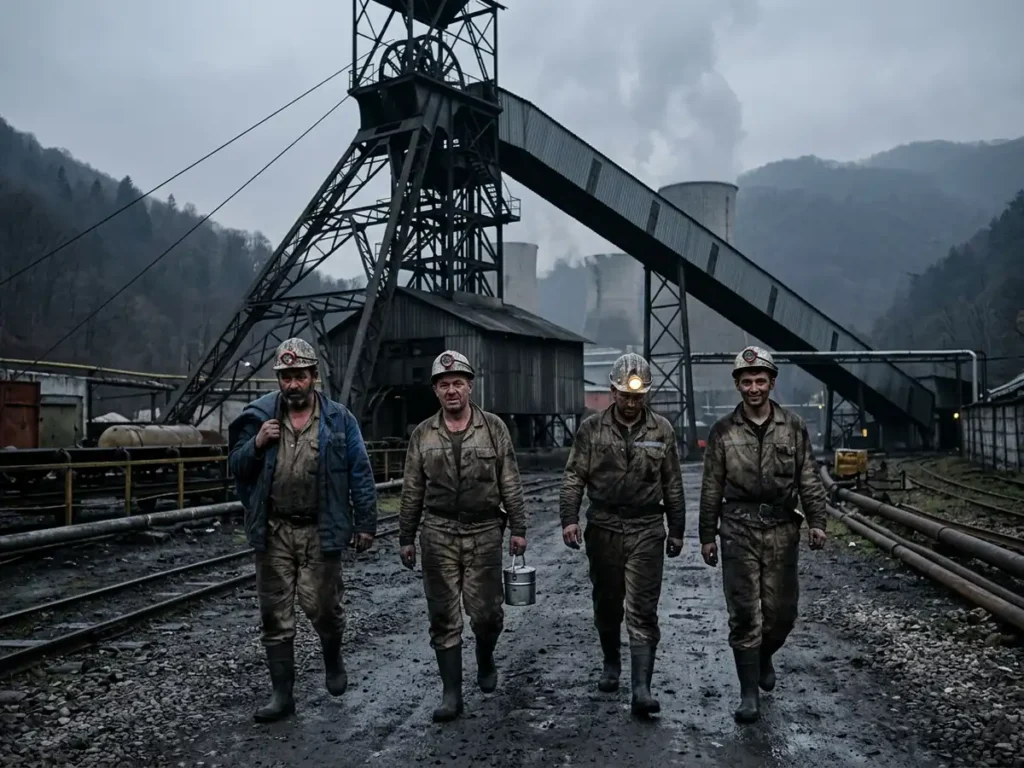
In an open-pit lignite mine in Gorj or in a shaft mine in the Jiu Valley, the working month does not stop to wait for a government decision. People go on shift, the machinery burns diesel, the electricity goes into the grid, the wages are paid. The document that says how much the company is allowed to spend across the whole of 2026 appeared only on 19 October 2026, in the Official Gazette of Romania, Part I, no. 871.
These are two separate decisions, with the same author, the same date of adoption and the same structure. Government Decision no. 826/2026 approves the 2026 revenue and expenditure budget of Societatea Complexul Energetic Valea Jiului, with its registered office in Petroșani, Hunedoara County. Government Decision no. 827/2026 does the same for Societatea Complexul Energetic Oltenia, with its office in Târgu Jiu. Each has a single substantive provision, headed „Articol unic”, the sole article, and each puts all of its substance into the annex reproduced in facsimile. Both are issued under Article 108 of the Constitution of Romania and Article 4(1)(a) of Government Ordinance no. 26/2013 on strengthening financial discipline at certain economic operators in which the State or the administrative-territorial units are sole or majority shareholders, approved with additions by Law no. 47/2014. The same issue carries one more decision of the same kind, no. 828/2026, for the Romsilva National Forest Administration, a sign that the delay is not an isolated one.
The annexes do not make for easy reading: 59 numbered lines, a single column of figures, everything written in thousands of lei. Read side by side, however, the two tables say something that neither says alone. Two companies doing broadly the same thing, under the authority of the same ministry, in the same year, look entirely different in where they get their money, in how much they invest and in how much they pay their people.
The figure that sums up the whole year is the last one in the upper part of each table: line 20, the gross result. The annex from Petroșani reads minus 142.5 million lei. The one from Târgu Jiu, minus 569 million. Neither company budgets a profit, and the State approves their loss in writing.
What it changes in practice
A decision approving a revenue and expenditure budget changes no rule of law for the general public. What it does is fix the ceilings within which the company’s management may move until 31 December 2026: how much it may spend on goods and services, how much on wages, how many people it keeps on the payroll on average, how much it invests. From 19 October 2026 these ceilings exist and are binding on the management, and exceeding them becomes a matter of financial discipline, taken out of the zone of managerial judgement.
Societatea Complexul Energetic Valea Jiului receives total revenue of 548.1 million lei, all of it from operations, because the financial revenue line is empty. Within that, line 4 shows transfers of 349.98 million lei, public money, while line 3, the subsidy line, is empty. Total expenditure reaches 690.6 million lei, of which 690.57 million is operating expenditure and 24,000 lei financial expenditure. The gross result is a loss of 142.5 million lei, and since the company budgets no profit tax, the net loss stays the same.
Staff costs here come to 318.4 million lei, that is 46.10% of everything the company spends in 2026. Of these, 276.7 million is salary-related expenditure, made up of 244.3 million in wages proper and 32.3 million in bonuses. The average number of employees is 2,161, and the headcount forecast at year-end 2,055. Divided by the average headcount and by 12 months, one employee costs the employer 12,277 lei a month, contributions included.
At Societatea Complexul Energetic Oltenia, total revenue is 3.3 billion lei, of which 3.26 billion from operations and 40.8 million financial revenue. The subsidy and transfer lines are both empty: the company receives nothing from the public budget. Total expenditure reaches 3.87 billion lei, the gross result is minus 569 million, and after a current profit tax of 3.64 million the net loss climbs to 572.6 million lei.
Staff costs in this second budget are 1.23 billion lei, that is 31.68% of the total, for an average of 6,509 employees and a headcount forecast at year-end of 6,061. The monthly cost of one employee to the employer works out at 15,707 lei, 28% more than at Petroșani. The largest item in Oltenia’s whole budget is not the wage bill, though: line 18, „other operating expenses”, is worth 1.97 billion lei, that is 50.99% of total expenditure and more than staff costs and goods and services put together, which come to 1.73 billion. The annex breaks this line down into nothing.
What has changed compared with the previous situation
Neither decision amends an earlier act. Both approve the 2026 budget for the first time, which means that until 19 October 2026 the two companies ran without the instrument that sets their ceilings for the year under way. By then 292 days of the budgeted year had gone, and the budget applies retroactively to those as well: the figures are annual, not calculated for the remaining 73 days.
The second change shows up under the heading of people. In both companies the average number of employees over the year is higher than the figure forecast at year-end, which means the headcount falls during 2026: by 106 people at Petroșani, from an average of 2,161 to 2,055, and by 448 people at Târgu Jiu, from 6,509 to 6,061. Both budgets set money aside for departures, 9.99 million lei in the first case and 7.93 million in the second, entered on line 15, „expenditure on compensatory payments for staff redundancies”. In the Valea Jiului annex this sum is the entire content of line 14, „other staff costs”, which carries exactly the same value.
The third change, and the hardest to read, is that the annexes contain no comparison column at all. There is no column for 2025, none for actual performance up to the date of approval, none for the previous budget. A reader who wants to know whether the 2026 loss is larger or smaller than the one in 2025 will not find the answer in the published act and has to look for it elsewhere.
Advantages and disadvantages
What it improves
- The loss is owned in writing, not hidden. The Government approves a budget that says openly that Valea Jiului will lose 142.5 million lei and Oltenia 572.6 million in 2026, out in the open, in the Official Gazette of Romania, where anyone can check the figures.
- Every total adds up. Total revenue equals the sum of its components, operating expenditure adds up correctly from the four items, staff costs match the sum of the four sub-lines, and the gross result is the exact difference between revenue and expenditure, in both annexes. That is no small thing for a 59-line table reproduced in facsimile.
- Oltenia budgets investment of 357.1 million lei, that is 10.81% of the year’s revenue, without a single leu from the public budget: the budget allocation line is empty, so the money comes from the company’s own resources. For a company running a loss, it is the only line that looks like a plan for the future.
- The money for compensatory payments is budgeted before the departures happen. In both companies the sum for redundancies is provided from the outset, which means an employee who leaves does not depend on a later amending decision to receive what is due.
- Oltenia’s budget does not hide its receivables: 660.4 million lei to be collected late appear explicitly on line 59, even though the amount is embarrassing and exceeds the year’s loss.
What remains a problem
- The budget for the year arrives with four fifths of that year already spent. Published on 19 October 2026, it caps expenditure that has for the most part already been made, which turns the approval into a mere confirmation of what was done.
- Half of Oltenia’s budget sits on one undivided line. The 1.97 billion lei under „other operating expenses” has no sub-line in the annex, so the reader cannot find out what the company’s largest expenditure item actually buys.
- Valea Jiului’s dependence on public money is not even named as such. The 349.98 million lei sits on line 4, „transfers in accordance with the legal provisions in force”, with no reference to the specific legal basis, and the fact that it amounts to 63.85% of revenue is calculated nowhere.
- The productivity indicator is misleading at Petroșani. Line 54 shows 254,000 lei per person, but it is calculated from operating revenue, which includes the transfers. Measured against what the company actually sells, real productivity falls to 91,700 lei per person, 2.8 times less.
- The line for productivity in physical units is empty at Oltenia and zero at Valea Jiului. Two companies that dig coal out of the ground and generate electricity report no physical unit at all, even though the annex has a line for it.
- Oltenia declares zero overdue payments but 660.4 million lei of overdue receivables. At the other end of the chain, the Valea Jiului company declares 50.7 million lei of overdue payments and 70.8 million of overdue receivables. Neither the empty lines nor the full ones are explained anywhere in the act.
Practical advice
- If you work for one of the two companies, look first at lines 50 and 51 of the annex that concerns you. An average for the year higher than the year-end figure means the headcount is falling: by 106 people at Valea Jiului and by 448 at Oltenia. Line 15 tells you how much money is set aside for departures.
- Keep in mind that the annexes are written in thousands of lei. The figure 548,143 on the first line of the Petroșani budget means 548,143,000 lei, not 548,143. The header that says so is printed small, in a corner, and is easily missed.
- When you compare the two companies, compare line 57, the one that relates total expenditure to 1,000 lei of revenue. Valea Jiului has 1,260, Oltenia 1,172: both spend more than they take in, the first 26% more, the second 17%.
- If you want to know how much of the money comes from the State, read lines 3 and 4, not line 1. In Oltenia’s budget both are empty. At the Petroșani company, line 4 shows 349.98 million lei, which line 1 adds to the rest of the revenue.
- Check the totals yourself before you quote a figure. Line 1 should be the sum of lines 2 and 5, line 6 the sum of lines 7 and 19, and line 20 the difference between 1 and 6. In both annexes they do add up, but a table reproduced in facsimile does not guarantee that by itself.
- If you are owed money by Complexul Energetic Oltenia, note that the company declares zero overdue payments on line 58. An empty line means zero in the logic of the annex, and that is the figure it has committed to before the Government for the whole of 2026.
Frequently asked questions
Who ultimately pays for the two companies’ losses?
Does this mean redundancies are coming?
How can a company pay profit tax in a year in which it loses money?
Why does the budget appear in October if it is for the whole of 2026?
Which of the two companies is in worse shape?
Where do I find the tables if I want to check the figures?
Errors and inconsistencies in the published text
- The annex to Government Decision no. 826/2026, lines 52 and 53, and the annex to Government Decision no. 827/2026, the same lines. In both annexes the name of the indicator carries a footnote marker, „*)” and „**)” at Valea Jiului, „*” at Oltenia, and the note it points to is missing from the published act. The only footnote printed on these pages is the Gazette’s own, „Anexa este reprodusă în facsimil”, the annex is reproduced in facsimile, which belongs to the marker on the word „ANEXĂ”, annex, and has nothing to do with the two lines. Lines 52 and 53 carry average monthly earnings per employee, that is precisely the figure against which the wage bill is measured, so the missing note is the one that would have said what is and is not included in it.
- The same lines, column 4. Because the note is missing, the figure cannot be reconstructed from the rest of the annex. Line 52 says it is „determinat pe baza cheltuielilor de natură salarială”, determined on the basis of salary-related expenditure, and the annex carries both salary-related expenditure, on line 11, and the average number of employees, on line 51. The plain division gives 10,669 lei at Valea Jiului against the 10,307 written in the table, 3.5% less, and 14,305 lei at Oltenia against the 14,250 written there, 0.4% less. Neither wages alone, from line 12, nor total staff costs, from line 10, reproduce either of the two figures. It follows that the two annexes subtract different amounts from the same base, in different proportions, for an indicator published under the same name, in the same issue and under the same legal basis, and a reader who wants to verify whether the wage ceiling is respected has nothing to do it with.
Editorial analysis
The two decisions do what they are meant to do: they bring to light, in the same issue of the Official Gazette of Romania, the figures of two companies that together lose 711.5 million lei in a year and keep 8,670 people on the payroll. Every total adds up, in both annexes, and that is not to be taken for granted in a 59-line table reproduced in facsimile. The problem lies elsewhere: in the moment they appear and in what they leave out.
The first observation that does not emerge from reading the acts front to back is that Valea Jiului’s productivity indicator is inflated by the very help it receives from the State. Line 54 states plainly how it is calculated, operating revenue divided by the average number of employees, and gives 254,000 lei per person. Except that line 2 also includes the 349.98 million lei of transfers from the public budget. Strip them out and the company’s own revenue comes to 198.2 million lei, while real productivity drops to 91,700 lei per person, that is 36% of the published figure. Set against Oltenia, where line 54 shows 501,000 lei and contains not a single leu of public money, the tables make it look like a two-to-one gap; measured on own revenue, it reaches five and a half to one.
The second observation appears only when two lines of the same annex are put together. Line 16 of Oltenia’s annex, expenditure on the mandate contract and on other management and control bodies, commissions and committees, is worth 3.68 million lei, while line 15, the money for compensatory payments to those leaving, is 7.93 million. In other words, in a year in which the company budgets a headcount reduction of 448 people, the sum for management and committees is the equivalent of 46% of the sum for everyone who leaves. In the Valea Jiului annex, where the reduction is 106 people, the ratio drops to 11.6%, and the money for departures, 9.99 million lei, is the sole content of the line for „other staff costs”. Comparing the two companies brings out a second asymmetry as well: measured against the headcount reduction, the compensatory payments amount to roughly 94,200 lei per person at Petroșani and roughly 17,700 lei at Târgu Jiu.
The third observation concerns the calendar, and it is the one that matters most in practice. The decisions are adopted on 16 October 2026 and published on 19 October 2026, that is on day 292 of the 365 of the year they budget for. Four fifths of the year is already spent when the ceiling appears. For the management of the two companies the document is a confirmation of what has already been spent, and for the Ministry of Energy, which exercises authority over both, the financial discipline check is left with 73 days in which to be exercised. Decision no. 828/2026, for the Romsilva National Forest Administration, appears in the same issue, a sign that what lies behind this is a settled working rhythm.
What should be changed
- Print the footnotes to which lines 52 and 53 refer. Two lines of text under the table would say what goes into average monthly earnings and why the figure in column 4 comes out different from the plain division of line 11 by line 51 and by 12 months. Without them, nobody outside the company can verify the wage ceiling, and the two annexes may use different bases without this being visible, which is evidently what is happening.
- Add a comparison column to the annex. One column with the previous year’s outturn and one with performance up to the last completed month would turn the table from a photograph into a series. As it stands, a reader cannot say whether Oltenia’s loss of 572.6 million lei is rising or falling, and without that benchmark the approval itself has nothing to measure.
- Break down line 18, „other operating expenses”. At Oltenia it is worth 1.97 billion lei, more than wages and goods and services combined, and it is the only major item without sub-lines. Three or four sub-lines would turn the company’s largest expense into a verifiable figure, lifting it out of the condition of a residual heading that absorbs half the budget.
- Add a line showing the share of transfers in revenue. In the Petroșani annex, a figure stating that transfers cover 63.85% of total revenue would change the reading of the entire annex. As things stand, the 349.98 million lei sits buried inside line 2 and looks like just another component of operating revenue.
- Set a statutory approval deadline and a consequence for missing it. A budget approved 73 days before the end can no longer be usefully breached, because the money has been spent. If the deadline fell in the first quarter, with a clear consequence for whoever is late, the ceilings would mean something in 2027.
- Fill in line 56, productivity in physical units. A mining company and an electricity generator have measurable physical units, tonnes and megawatt-hours. A zero at Valea Jiului and an empty line at Oltenia leave the one indicator that does not depend on prices or on transfers without content, at precisely the companies where it would be most useful.
Original text of the legal act
The text below is reproduced in Romanian, the official form of publication.
The full text, as published in the Official Gazette of Romania
Official Gazette of Romania no. 871 of 19 October 2026, pages 2-7 16 pages PDF, 156 KB the act starts on page 2
Open the official PDFDownload the PDF
The viewer is not shown on small screens. Use the buttons above to open or download the file.
This article is for informational purposes only and does not constitute legal advice. For specific situations, consult a licensed attorney or tax advisor.