
In brief
- The Ministry of the Environment has cut the legal hunting period for the European turtle dove to zero days in 2026. In practice, the species cannot be hunted at all this year.
- The order was published on 14 August 2026, one day before the season opens, and the managers of the hunting grounds can no longer issue hunting permits for the turtle dove.
- The National Forestry Guard checks compliance weekly between 15 August and 30 September 2026, and any breach triggers the liability of the managers, including under the management contracts.
Published: Official Gazette of Romania (Monitorul Oficial) no. 673 of 14 August 2026
In force from: 14 August 2026
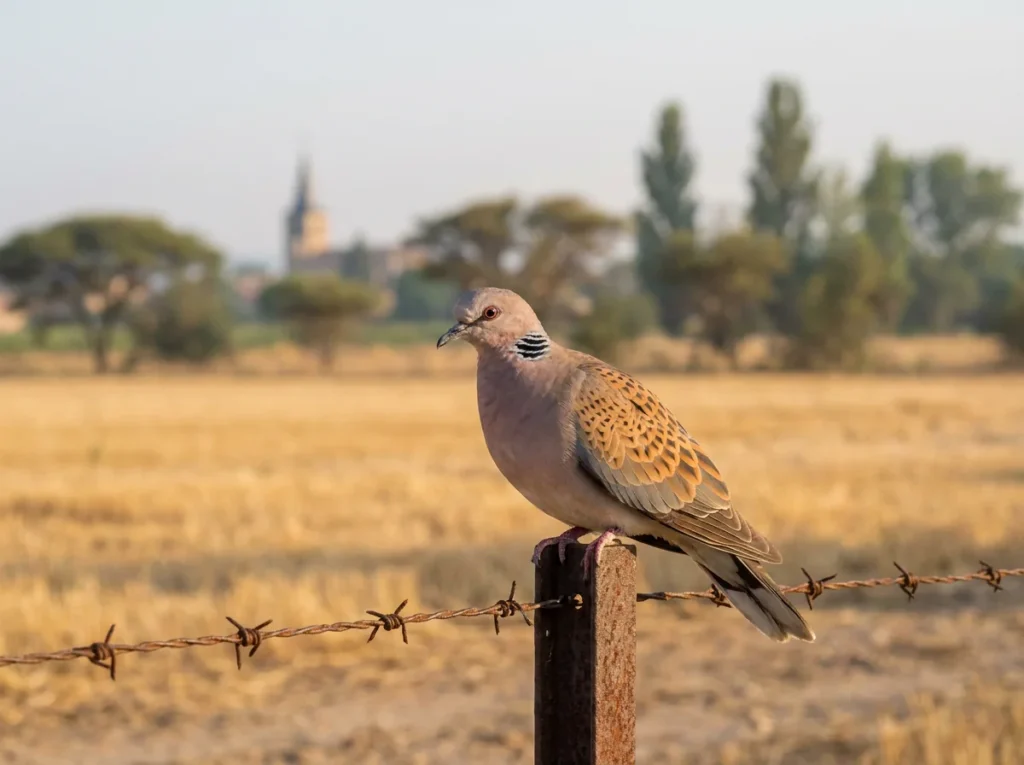
The 2026 turtle dove hunting season closes exactly one day before it was due to open. The Ministry of the Environment, Waters and Forests published Order no. 1.635/2026 in the Official Gazette of Romania on Friday, and its Article 1 restricts the legal hunting period for the European turtle dove, Streptopelia turtur, to zero days. The hunting rules have already drawn public attention this summer, through the constitutional dispute over the brown bear harvest quotas. In the neighbouring field of recreational fishing, MADR Order no. 260/2026 moves the permit online and introduces the catch record.
The wording chosen by the ministry is unusual. Instead of banning the hunt, the order keeps the legal construction of a „legal hunting period” and gives it the value zero. The practical effect is the same as a ban for the rest of the year, but the legal basis invoked remains Hunting Law no. 407/2006, through Article 6(1)(g) and (4) and Article 26(2), which allow the ministry to shorten the periods rather than to remove a species from the list.
The reason is a European one. The order implements a recommendation of the European Commission concerning Article 5 and Article 7(1) of the Birds Directive and takes over the proposals of the EU Task Force on the Recovery of Birds, which had proposed that the species not be harvested in 2026. The existence of such a task force and the explicit proposal that the species not be harvested show that, at European level, the turtle dove is treated as a species whose numbers need to be rebuilt. Among its recitals, the preamble also cites Article 19(1) of the Hunting Law and Article 37(1) of Government Emergency Ordinance no. 57/2007 on the regime of protected natural areas.
The act was signed on 13 August, on behalf of the minister, by a secretary of state, and published on 14 August, with the season starting on 15 August. The preamble cites the opinion of the National Hunting Council no. 7/2026 and two reports of the Biodiversity Directorate, dated 22 July and 7 August 2026.
What it changes in practice
No hunting permit for the turtle dove may be issued in 2026. This is the concrete prohibition in Article 2, addressed directly to the managers of the hunting grounds. The order stops the issuing of permits, and without a permit hunting the species becomes unlawful under the general regime of Law no. 407/2006.
The measure covers 2026, no more. The text says „in 2026”, that is the rest of the calendar year from the date of publication. For 2027 the situation starts again from scratch and depends on a new order from the ministry, so this order carries no guarantee of continuity.
Enforcement follows a strict calendar. Between 15 August and 30 September 2026, the interval that the order calls the hunting season, the territorial structures of the National Forestry Guard check weekly, and whenever necessary, how the managers comply with the order. After 30 September there is a further checking window, running until 15 October 2026.
The results are centralised and sent up to the ministry. The Forestry Guard must send the central public authority responsible for hunting a report covering the number of checks, the cases of non-compliance, the facts established and the measures taken.
Liability falls on the manager, not only on the hunter. Article 4 links any breach of the order to the liability of the managers of the hunting grounds, under the law and under the clauses of the management contracts in force. The management contract thus becomes an instrument of sanction, alongside ordinary legal liability.
Enforcement works on two levels. Besides the Forestry Guard, checks are also carried out by the specialist staff of the central public authority responsible for hunting.
What has changed compared with the previous situation
Until this order was published, the turtle dove was among the species that could be hunted, during the period set under the general regime of Law no. 407/2006 on hunting and the protection of game stocks. Permits were issued by the managers, within the limits of that period.
From 14 August 2026, that period has the value zero. The difference is not one of nuance: it is not the number of days or the quota that is reduced, it is the very possibility of hunting the species this year that disappears.
The second change concerns supervision. The order does not stop at prohibiting, it also sets up a control mechanism with a fixed, weekly frequency and with centralised reporting. That is a heavier level of scrutiny than is usual for a simple shortening of a period.
Advantages and disadvantages
What it improves
- The measure implements a recommendation of the European Commission, so it brings Romania into line with the requirements of the Birds Directive cited in the preamble.
- Protection is total for the rest of the year rather than partial, so the effect on the turtle dove population is the strongest one possible within a single season.
- Enforcement comes with a calendar, a frequency and a reporting duty, so it does not remain a statement of principle.
- The liability of the managers is set out explicitly, including in contractual terms, which shifts the pressure onto whoever issues the permits.
- The specialist body was consulted before the order was issued: the preamble cites the opinion of the National Hunting Council no. 7/2026.
What remains a problem
- Publication a single day before the season opens leaves managers and hunters almost no time to adapt.
- The order says nothing about permits that may already have been issued for the 2026 season, nor about the fees already collected for them.
- The measure covers only the rest of 2026, so it offers predictability neither for conservation nor for those who organise hunting activity.
- No form of compensation is provided for the managers who lose income from permits.
- The text lays down no penalties of its own and refers instead to liability „under the law”, which leaves both the amounts and the procedure to other acts.
Practical advice
- If you manage a hunting ground, stop issuing permits for the turtle dove immediately. The ban has been in force since 14 August 2026, one day before the season opens.
- If you already hold a permit issued for this species, check the situation with the manager before going out hunting. The order prohibits the issuing of permits, and using a permit for a species whose legal period is zero days exposes you to liability.
- Keep the enforcement window in mind: weekly checks between 15 August and 30 September 2026, then further checks until 15 October 2026.
- Take care when identifying the species in the field. The measure targets only the European turtle dove, Streptopelia turtur, and not the collared dove or other pigeon species.
- If you organise hunting trips for clients, adjust your offers for the 2026 season. The restriction runs until the end of the year, not just for one interval within the season.
Frequently asked questions
Is hunting the turtle dove banned in 2026?
Does the measure also apply in 2027?
Why was the measure taken?
Who checks that the ban is observed?
What does a manager who issues permits anyway risk?
Are other species affected?
Original text of the legal act
The text below is reproduced in Romanian, the official form of publication.
The full text, as published in the Official Gazette of Romania
Official Gazette of Romania no. 673 of 14 August 2026 16 pages PDF, 108 KB the act starts on page 15
Open the official PDFDownload the PDF
The viewer is not shown on small screens. Use the buttons above to open or download the file.
This article is for informational purposes only and does not constitute legal advice. For specific situations, consult a licensed attorney or tax advisor.