
In brief
- The agreement under which Moldovan border police and customs officers are to work at Fălciu station, on Romanian territory, has been in force since 21 July 2026. The Ministry of Foreign Affairs recorded this in an order published on 9 September 2026, 50 days later.
- The legal basis invoked in the preamble of the order itself, Article 25(9) of Law no. 590/2003 on treaties, requires publication within no more than 10 working days of entry into force. That deadline fell on 4 August 2026, and the order appeared after 36 working days.
- 21 July 2026 is not the day trains start stopping only once. The Agreement applies for 12 months from the date on which coordinated control becomes operational, and that is a date the two governments notify each other of through diplomatic channels and which is not published.
Published: Official Gazette of Romania (Monitorul Oficial) no. 766 of 9 September 2026
In force from: 9 September 2026, the date of publication
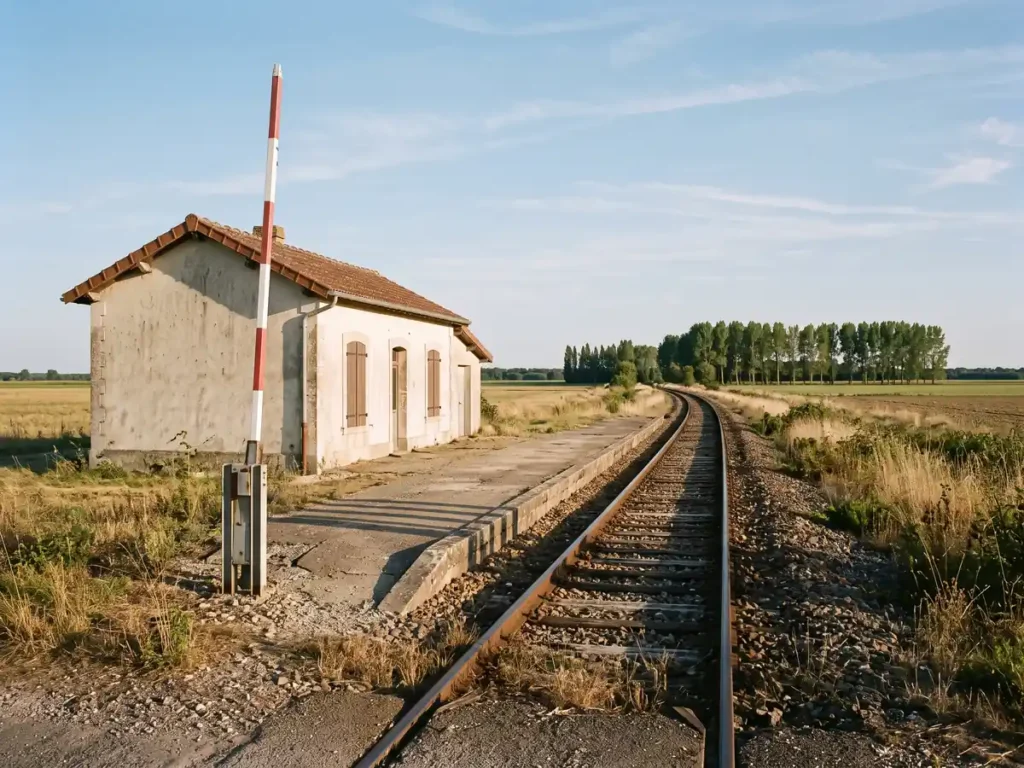
The agreement that brings Moldovan border guards and customs officers to Fălciu station has been in force for almost two months, and only now is it officially known from which day. Order no. 1.944/2026 of the minister of foreign affairs, published in Official Gazette of Romania no. 766 of 9 September 2026, records that on 21 July 2026 the Agreement between the Government of Romania and the Government of the Republic of Moldova on coordinated control on Romanian territory, at the Fălciu (Romania) – Cantemir (Republic of Moldova) rail state border crossing point, entered into force. The Agreement had been ratified by Law no. 134/2026, published in Official Gazette of Romania no. 573 of 13 July 2026.
The order has two articles and eight lines. It creates no obligation and changes nothing in the Agreement: it merely makes public the date on which the Agreement became binding on Romania. It was signed on 31 August 2026 by the minister of foreign affairs, Oana-Silvia Țoiu, and published nine days later.
What actually matters is the Agreement the order confirms, published in full in Official Gazette of Romania no. 573, at pages 2 to 10. The definition sits in Article 1 point 4: coordinated control is border control carried out separately by the staff of the State of exit, followed consecutively by that of the State of entry, but performed on the territory of a single State. The place is fixed by Article 6(1), at a stop, in both directions, at Fălciu railway station. The order of operations is set by Article 7(5): first the teams of the State being left, then those of the State being entered.
The unusual part, the one that called for a treaty and a ratifying law, is what happens to jurisdiction. Article 6(2) provides that Moldovan staff carry out their control on Romanian territory under their own legislation, „to the same extent and with the same legal consequences as if it were carried out on the territory of the Republic of Moldova”. Paragraph (4) goes further: an act contrary to Moldovan law, committed in what the Agreement calls the area of operation, is deemed to have been committed in the Republic of Moldova, in the locality closest to the crossing point. And that area is no abstraction: Article 5(1) composes it of the place of service for coordinated control, with the rooms used by Moldovan staff, plus the stretch of railway between the border and that place.
The limits are written in the same place. Under Article 6(5)(a), Moldovan staff are required, when they learn of matters justifying the arrest of a person, the taking of a person into protection or the seizure of goods, to inform the Romanian side orally and in writing and to hand over the person, the goods and the means of transport. The measures are taken by the Romanian authority, under domestic, European and international law, whatever the nationality of the person. Point (b) prohibits Moldovan staff from preventing the entry into Romania of persons enjoying the right of free movement under Union law, listed in the annex to the Agreement: the nationals of the 27 Member States, of Norway, Iceland and Liechtenstein, of Switzerland, plus their family members. Point (c) guarantees a third-country national seeking international protection access to the Romanian authority and to the asylum procedures.
For goods, the Agreement uses broad definitions. „Goods” means any movable property, objects and other valuables, including currency and payment instruments, while „means of transport” is defined as a train, that is, rail vehicles coupled together, carrying goods or passengers. The regime therefore covers both passenger and freight trains. Article 8 closes the loop: neither Party may refuse to take back persons, goods or means of transport that the other has not authorised to cross, except in the situations covered by Article 6(5).
Between the event and the announcement there are 50 calendar days and 36 working days, from 21 July to 9 September 2026. The minister’s signature came 41 days after entry into force, that is, after 29 working days.
What it changes in practice
The order enters into force on 9 September 2026, the day of publication. The rule sits in Article 12(3) of Law no. 24/2000, under which the normative acts referred to in Article 11(1), other than laws and ordinances, enter into force on the date of publication in the Official Gazette of Romania unless they set a later date. Article 2 of the order sets no other.
The legal effect of the act, however, lies not in the day it appears but in the date it records. From 21 July 2026 the Agreement binds Romania. Since that date the provisions that concern people directly have also been live: the territorial fiction in Article 6 and Article 11(2), which extends to Moldovan control staff the protection that Romanian criminal law gives to public officials, for acts committed against them within the area of operation.
The mechanism of entry into force matches the general rule. Under Law no. 590/2003, in Article 25(3), bilateral treaties at governmental level enter into force on the date of the last notification informing the other Party that domestic procedures have been completed, and Article 37(1) of the Agreement provides exactly that. Consequently, 21 July 2026 is the day on which the later of the two notifications arrived through diplomatic channels.
What does not follow from the order is the date from which travellers will actually stop only once. Article 37(2) of the Agreement ties its duration to something other than entry into force: the agreement applies for 12 months, „which starts to run from the date on which coordinated control becomes operational/is carried out”, and the Parties notify each other of that date through diplomatic channels. Neither Law no. 134/2026 nor the present order provides for its publication.
The regime can be interrupted without anything appearing in the Official Gazette of Romania. Article 4(3) and (4) allow the Moldovan side, in special situations, to move control temporarily back onto its own territory, with at least 24 hours’ diplomatic notice. Article 36(2) and (3) allow either Party to suspend application, in whole or in part, on grounds of national security, public order or public health, and in situations calling for immediate measures the suspension takes effect on the very date of notification.
Moldovan staff cross the border by a special route. Article 5(2) provides that their entry and exit, and that of persons providing services, take place by way of derogation from Articles 6 and 8 of Regulation (EU) 2016/399, that is, from „Entry conditions for third-country nationals” and from „Border checks on persons”. Instead, the system works on nominal lists handed to the Romanian authorities, with surname, forename, badge number and identity document, under Article 7(2).
What has changed compared with the previous situation
Until 21 July 2026, Fălciu-Cantemir was governed by the general rule in the Romanian-Moldovan Agreement on state border crossing points, signed in Bucharest on 13 November 2009: each State carries out its control on its own territory. For a train that means two stops, two teams, two procedures. The new Agreement does not abolish the rule; it creates an exception for a single rail crossing point.
The map of crossing points is moving in the north as well: through Government Decision no. 733/2026, a new road crossing towards Ukraine was approved at Sighetu Marmației, with no opening date.
What changed on 9 September 2026 is something other than the legal regime, which had already changed in July. What changed is the information. For 50 days the Agreement was in force, but the Official Gazette of Romania did not say from which day. Anyone who needed the exact date, a rail carrier, a lawyer, a court, had to ask the Ministry of Foreign Affairs for it or work it out.
An earlier act of the same kind offers a yardstick. Order no. 1.286/2026 of the minister of foreign affairs, published in Official Gazette of Romania no. 525 of 25 June 2026, recorded that on 17 April 2026 the Agreement between the Government of Romania and the Cabinet of Ministers of Ukraine on cooperation in emergency situations, ratified by Law no. 28/2026, had entered into force. Between entry into force and publication, 69 calendar days and 47 working days went by on that occasion. Compared with that one, the present order came 19 calendar days sooner, but still far beyond the 10 working day deadline.
There is also a drafting difference between the two. The June order used the formula „finding that the conditions for the entry into force of the international treaty listed below have been met”. In 1.944/2026 the sentence stops at „for entry into force”, without saying of which treaty. The meaning remains unambiguous, since the treaty is fully identified in Article 1, but the shortened formula helps nobody. Another difference: the June order was signed by a state secretary, for the minister, whereas this one bears the minister’s own signature.
Advantages and disadvantages
What it improves
- The date of entry into force becomes public and can be relied on: 21 July 2026, with no need for a letter to the ministry.
- The order identifies the treaty in full, the ratifying law and the Official Gazette of Romania number in which the text appears, so the reader reaches the full Agreement in two steps.
- The finding confirms that domestic procedures were completed on both banks of the Prut, the condition set by Article 37(1) of the Agreement.
- Publication is free of charge under the same Article 25(9), so cost cannot be invoked as a reason for delay.
- The signature belongs to the minister, not to a stand-in, which closes off any argument about competence to issue the act.
What remains a problem
- The 36 working days that passed before publication are more than three times the 10 working day deadline in the very text invoked as the legal basis.
- The title does not name the treaty. Anyone searching the contents of the issue for „Fălciu” or „Republic of Moldova” finds nothing, because all it says there is „an international treaty”.
- The order does not say when single-stop control actually starts, even though that is the date that matters for travellers and for the rail operator.
- Law no. 590/2003 attaches no consequence to missing the deadline and imposes no duty to explain the delay.
- The wording of the finding is shortened compared with earlier orders of the same kind, which makes the text harder to read on its own, without Article 1.
- The rules of operation of the rail crossing point, which set concretely where the area of operation begins and ends, are not an international treaty under Article 9(3), so they are not published.
Practical advice
- If you are travelling by train towards Cantemir, do not assume the single stop is already working. The entry into force of the Agreement, on 21 July 2026, and the moment coordinated control becomes operational are two different dates, and the second has not been published. Ask the rail operator before you leave.
- The text of the Agreement is not in Official Gazette of Romania no. 766, where the order appeared, but in no. 573 of 13 July 2026, at pages 2 to 10, together with the annex listing the persons enjoying the right of free movement.
- If you ran into a problem crossing at Fălciu between 21 July and 9 September 2026, remember that the Agreement already applied. The order records an earlier date; it does not produce effects from publication.
- Moldovan control staff wear a uniform and a badge, under Article 10, and their service rooms are marked with the official signs and inscriptions of the Republic of Moldova, under Article 15. Outside the area of operation and without those markings, nobody acts under the Agreement.
- Rail freight carriers should ask the territorial structure of the Border Police in good time for the rules of operation of the crossing point. They set the access lists and the facilities inside the area of operation, and they do not appear in the Official Gazette of Romania.
- For personal data processed during control, Articles 29 to 32 of the Agreement give the right of access, the right of rectification, an administrative remedy and judicial review. The request is filed with the competent authority of the State in which you bring it, under the law of that State.
Frequently asked questions
What does coordinated control mean in practice?
From what date do trains stop only once?
Does the order of 9 September change anything for me?
Can Moldovan customs officers detain me on Romanian territory?
I am a European Union citizen. Can the Moldovans stop me entering Romania?
What happens to goods one of the Parties does not accept?
How long does the Agreement last?
Why did the order appear only on 9 September?
Can the Republic of Moldova move control back to its own side?
Where can I find the full text of the Agreement?
Editorial analysis
The order is correctly drafted and there is nothing in it to contradict: it identifies the treaty, the ratifying law, the Official Gazette of Romania number containing the text and the date of entry into force. What does not work about it is the timing, and this timing is not a matter of administrative common sense: it is a deadline set by law. Article 25(9) of Law no. 590/2003, invoked in the preamble itself, requires the order to be published „within no more than 10 working days of the date of entry into force”. Counting from 21 July 2026 and skipping Saturdays, Sundays and public holidays, the deadline fell on Tuesday, 4 August 2026. The signature came on 31 August, after 29 working days, and publication on 9 September, after 36. The deadline was exceeded by 26 working days, meaning that publication came at more than three times the interval allowed.
This is not an isolated case. An earlier order of the same kind, no. 1.286/2026, published in Official Gazette of Romania no. 525 of 25 June 2026, recorded the entry into force, on 17 April 2026, of the agreement with Ukraine on cooperation in emergency situations. There the deadline had expired on 4 May 2026, and publication came after 47 working days. Put side by side, the two show a pattern rather than a slip: the ministry treats the deadline in Article 25(9) as guidance rather than as a rule. The likely explanation is that the text attaches no consequence to exceeding it, and that the act itself creates no rights. Except that this is not what it does.
The real stake of the delay becomes visible if we read the Agreement rather than the order. An act contrary to Moldovan law, committed in the area of operation on Romanian soil, is deemed to have been committed in the Republic of Moldova, says Article 6(4). And Article 11(2) extends Romanian criminal protection to Moldovan staff. These are rules that concern ordinary people, not only administrations, and their application turns on a single date. For 50 days that date did not exist in the Official Gazette of Romania. Someone penalised at Fălciu on 25 July 2026 had no public source from which to learn whether the treaty applied or not. That is precisely the window Article 25(9) is there to close, and the ministry kept it open until September.
The second observation concerns the date that is missing. The present publication says when the Agreement became binding, but it does not say, because it cannot, when it starts to apply. Article 37(2) ties the 12 months of validity to the moment coordinated control becomes operational, and Article 37(3) requires the joint assessment before any extension to be carried out no more than 30 days before expiry. The result is a whole calendar hanging from a date that circulates only through diplomatic channels: nobody on the outside can know when the 12 months expire, nor whether the assessment was made in time. The same goes for the rules of operation of the rail crossing point, which set the perimeter of the area of operation and the list of special non-lethal means Moldovan staff may use, but which, under Article 9(3), are not an international treaty and are approved at regional level. About an arrangement that brings foreign officials onto Romanian territory, the public learns the principle from the Official Gazette of Romania, but not the perimeter.
What should be changed
- The title of the order should name the treaty. Today, the contents page of the issue says only „on the entry into force of an international treaty”. Effect: a search for „Fălciu”, „Cantemir” or „Republic of Moldova” would find the act, instead of it being found only by those who already know its number.
- A consequence for exceeding the deadline in Article 25(9). The cheapest option: a duty to state in the order the date of the last diplomatic notification and the reason for the delay, whenever the deadline is missed. Effect: the delay becomes visible and explainable in the act itself, not only to those who count working days.
- Publication of the date on which coordinated control becomes operational. Through a second order or through a paragraph of the same act. Effect: the traveller and the rail operator learn when the procedure actually changes, and the 12 months of validity become countable from outside the two ministries.
- Publication of the part of the crossing point rules that concerns the public. At the very least the perimeter of the area of operation and the list of special non-lethal means in Article 10(2). Effect: a passenger knows where they are under the authority of Moldovan staff and what may be used against them there, without depending on an internal document.
- A deadline for public communication of any extension, suspension or termination of the Agreement as well. Today, suspension takes effect on the very date of notification in urgent cases, and denunciation after 30 days, with no publication at all. Effect: passenger and freight rail traffic no longer depends on information that circulates solely between chancelleries.
Original text of the legal act
The text below is reproduced in Romanian, the official form of publication.
The full text, as published in the Official Gazette of Romania
Official Gazette of Romania no. 766 of 9 September 2026 16 pages PDF, 115 KB the act starts on page 7
Open the official PDFDownload the PDF
The viewer is not shown on small screens. Use the buttons above to open or download the file.
This article is for informational purposes only and does not constitute legal advice. For specific situations, consult a licensed attorney or tax advisor.