
In brief
- The 150 million euro scheme for industrial batteries now has its rules of access: the Ministry of Energy has published the applicant’s guide, 148 pages.
- The funding may cover up to 100% of the eligible costs, but no more than 15 million euros per undertaking and no more than 69,000 euros per MWh installed.
- The batteries must be stand-alone, not attached to a solar or wind plant, must have at least 1 MW and must be able to deliver at full power for a minimum of two hours.
Published: Official Gazette of Romania (Monitorul Oficial) No. 680 and No. 680 bis of 17 August 2026
In force from: 17 August 2026
The 150 million euros for industrial batteries now come with the rules on how the money is shared out. Through Order No. 915/2026, the Ministry of Energy has approved the applicant’s guide for supporting investment in stand-alone battery energy storage installations, financed from the Modernisation Fund. The order has three articles and an annex of 148 pages, published separately, in the bis issue No. 680, the supplementary edition of the Official Gazette of Romania, Part I, that carries the same number and the same date. The State aid scheme had been approved in July, with the same ceilings. What was missing, and appears only now, are the concrete conditions of access.
The order was signed on 14 August 2026 by Ilie-Gavril Bolojan, in his capacity as interim minister of energy. It comes at the end of a long journey through the European procedures: the confirmation of the European Investment Bank of 11 March 2026 for the priority investment MF 2026-1 RO 0-006, opinion No. 2.656 of the Competition Council of 25 February 2026 and Decision C(2026) 1.588 final of the European Commission of 6 March 2026, in case SA.121308. The State aid scheme itself had already been approved by Order No. 745/2026 of the minister of energy.
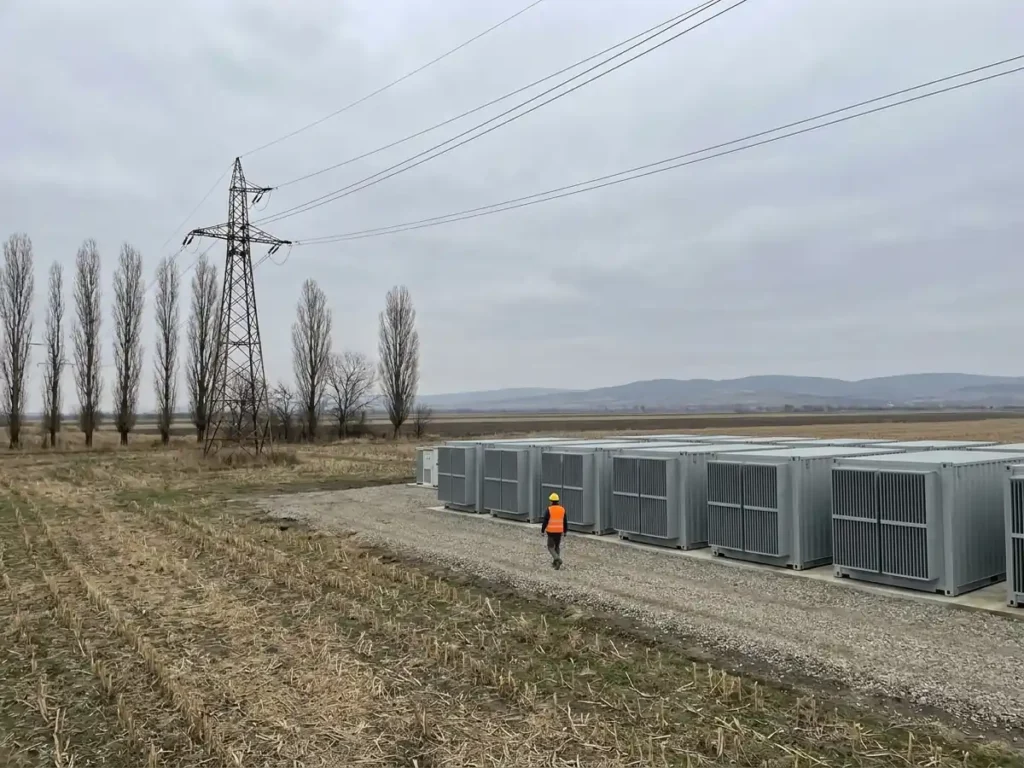
The technical stake is simple to explain. A stand-alone battery does not produce energy, it moves it in time: it takes energy from the grid when there is plenty of it and it is cheap, usually around midday, when the sun is producing a great deal, and gives it back in the evening, when consumption rises. The guide states that Romania has set itself, through the National Integrated Plan in the field of Energy and Climate Change (PNIESC), a total storage capacity of 1,200 MW or 2,400 MWh by 2030 and of 2,000 MW by 2035.
What it changes in practice
The first effect is the budget and the way it is divided. The allocation for the call is the leu equivalent of 150,000,000 euros, non-repayable amounts from the Modernisation Fund. If the budget of the scheme is not used up in full, the ministry organises a new competitive bidding procedure for the remaining sum, until it is exhausted.
The second effect is the two ceilings. The aid may cover up to 100% of the eligible costs, but it cannot exceed 15,000,000 euros per undertaking, whatever the number of projects it submits, nor 69,000 euros for each MWh of storage installed. The conversion is made at the InforEuro rate for the month preceding the opening of the procedure, and the guide gives 1 euro as equal to 5.2434 lei. The difference up to the total value of the project is covered by the beneficiary, from its own resources or from resources raised elsewhere.
The third effect is the technical condition that filters the projects. The installed storage capacity, in MWh, must be at least twice the installed power, in MW, which means that the battery must be able to deliver at full power for a minimum of two hours. If the project aggregates several installations, each of them must have at least 1 MW of installed power.
The fourth effect is the list of five categories excluded from funding. Not eligible are combined projects, that is, those that put renewable energy generation and storage together, projects with batteries based on lead, nickel-cadmium or nickel-metal hydride, those proposing the replacement of older storage installations, those that have already received non-repayable funding for the same eligible costs, and projects submitted as a partnership.
The fifth effect concerns who may ask for the money. The applicants are companies, from microenterprises to large undertakings, newly established ones included, registered with the trade register in Romania by the date on which the financing contract is signed. The articles of association must contain activities of generation and sale of electricity, from division 35 of the CAEN Rev. 3 classification. Newly established firms must have paid-up subscribed share capital of at least 100,000 lei.
The sixth effect is a financial test with a way out. The applicant must have a solvency ratio, that is, the ratio between total debt and equity, which is positive and lower than 7.5 in the last two closed financial years. Anyone who does not meet the criterion, newly established firms included, may instead submit a letter of comfort from a banking or non-banking institution authorised by the National Bank of Romania.
The seventh effect is the completion deadline. The implementation period runs from the submission of the financing application until commissioning, but no later than 48 months from the date on which the aid is granted. Operating costs are not eligible.
The eighth effect is that the guide does not yet open the call. The launch date is announced separately, through a dedicated announcement on the website of the Ministry of Energy, and the applications are submitted electronically, through the MySMIS 2021 platform. The storage line came back for public bodies in September 2026, in guides with the same gap: Orders no. 1.065/2026 and no. 1.066/2026 open 650 million euro without naming a submission date.
What has changed compared with the previous situation
Until now the scheme existed, but not the rules of access. Order No. 745/2026 of the minister of energy had approved the State aid scheme, following the decision of the European Commission in March. The guide published now is the document that turns the scheme into concrete conditions: who may apply, which projects qualify, what documents are submitted, how they are assessed and how they are contracted.
The substantive change compared with earlier storage programmes is the separation from generation. The guide expressly excludes combined projects, so the battery financed here cannot be an annex to a photovoltaic or wind farm. It is a choice that moves the support away from renewable energy producers and towards storage operators proper, the ones that work on the balancing market and on the market for ancillary services.
The second change is the European framework under which the aid is granted. The financing is made under section 4.1 of the Commission Communication on the framework for State aid measures to support the Clean Industrial Deal, known as CISAF, a European document from 2025. This is no longer a matter of the general block exemption rules, but of a competitive bidding procedure, that is, of a competition between projects.
The third change is the exclusion of old battery technologies. Lead, nickel-cadmium and nickel-metal hydride are out of the game, which steers the funding towards lithium-ion and the technologies that come after it.
Advantages and disadvantages
What it improves
- The aid intensity of up to 100% of the eligible costs is unusually generous for an investment scheme and makes the projects bankable.
- The ceiling per MWh installed, 69,000 euros, ties the money to the capacity actually delivered, not to the size of the cost estimate.
- The condition of a minimum discharge duration of two hours keeps out batteries too small to help in the evening, when the system needs them.
- Newly established firms are not excluded: they can make up for the lack of a financial track record with a letter of comfort.
- If the budget is not exhausted, the ministry is obliged to organise a further round, so the money is not lost after the first procedure.
What remains a problem
- The guide does not say when the call opens. The date comes through a separate announcement, on the website of the ministry.
- The exclusion of combined projects leaves out precisely those investors who already have photovoltaic farms and could add storage on the same site.
- The ban on partnerships forces each firm to carry the project on its own, which puts small consortia at a disadvantage.
- Operating costs are not eligible, even though they decide how profitable a battery is over its whole service life.
- The 48 month deadline from the granting of the aid runs regardless of delays in the grid connection, which are outside the beneficiary’s control.
Practical advice
- Follow the launch announcement on the website of the Ministry of Energy. The guide is published, but the call opens through a separate announcement, with all the calendar details.
- Check the articles of association in good time. They must contain activities of generation and sale of electricity, from division 35 of CAEN Rev. 3.
- Calculate the ratio between capacity and power before ordering the equipment. Below two hours of discharge at full power, the project does not qualify for the scheme.
- If you aggregate several installations, make sure that each one has at least 1 MW of installed power, not just the total.
- Calculate the ceiling per MWh before sizing the project: 69,000 euros per MWh installed is the limit, whatever the investment actually costs.
- If the solvency ratio exceeds 7.5 or the firm is newly established, obtain the letter of comfort in good time. It has to contain the exact statements required by the guide.
- Do not apply as a partnership. Projects submitted in this way are not eligible, and the rule has no exceptions in the guide.
- Prepare the account and the documents in MySMIS 2021 before the call opens. The application and all its annexes are submitted exclusively in electronic form, on this platform.
Frequently asked questions
How much money is there in total?
How much can one firm receive?
What does a stand-alone installation mean?
Which batteries are not accepted?
What technical condition has to be met?
Can several firms apply together?
What is required of a newly established firm?
How long is there to finish the project?
When are the applications submitted?
Original text of the legal act
The text below is reproduced in Romanian, the official form of publication.
The full text, as published in the Official Gazette of Romania
Official Gazette of Romania no. 680 of 17 August 2026 16 pages PDF, 154 KB the act starts on page 7
Open the official PDFDownload the PDF
The other editions cited: nr. 680 bis/2026
The viewer is not shown on small screens. Use the buttons above to open or download the file.
This article is for informational purposes only and does not constitute legal advice. For specific situations, consult a licensed attorney or tax advisor.