
In brief
- Leadless pacemakers are joining the list of medical supplies reimbursed from the Single National Health Insurance Fund, for patients enrolled in the National Programme for Cardiovascular Diseases.
- Along with them come the introducer kits specific to this type of pacemaker, as well as the kits for femoral access. The list under letter c) thus reaches 16 entries.
- The amendment applies from the date of publication, and the task of carrying it out falls to the health insurance houses and to the units through which the national curative programmes are run.
Published: Official Gazette of Romania (Monitorul Oficial) no. 693 of 21 August 2026
Issued: 18 August 2026
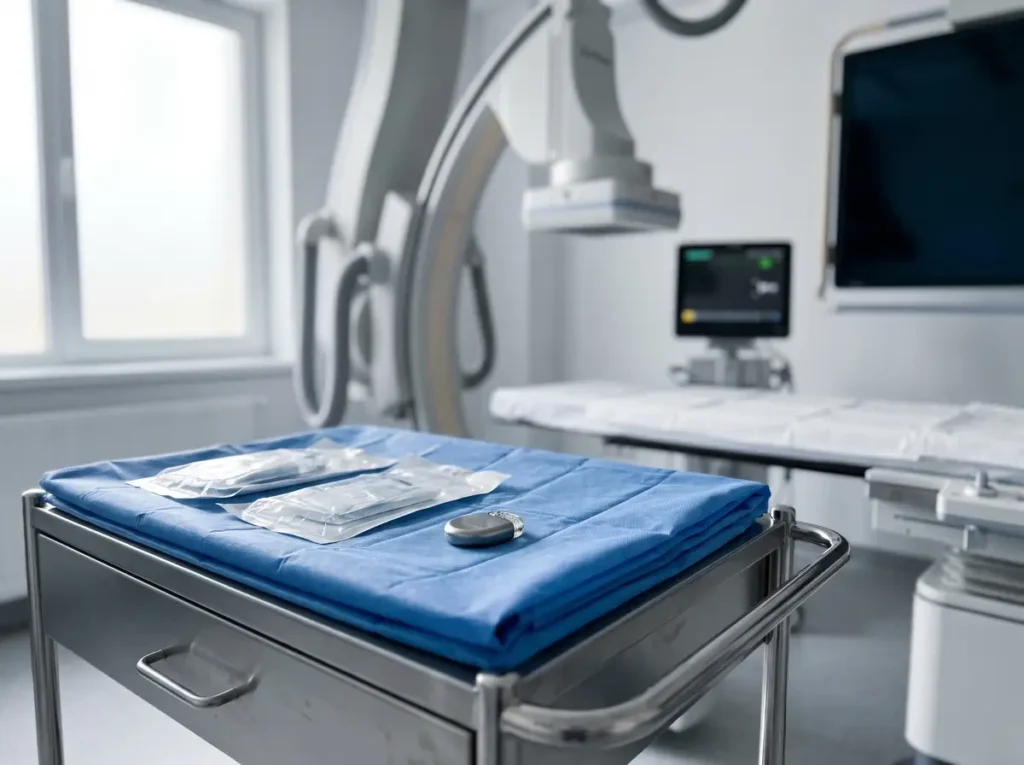
The leadless pacemaker, the capsule-sized device implanted directly into the heart, has been added to the list of medical supplies covered from the health insurance budget. Order no. 1,506 of 18 August 2026 of the President of the National Health Insurance House, published in Official Gazette of Romania no. 693 of 21 August 2026, amends letter c) of the list attached to the National Programme for Cardiovascular Diseases. This is the second time this summer that the insurance house has rewritten what is reimbursed under the national programmes, after it also changed, earlier in August, the list of medicines reimbursed under eight programmes.
The underlying list is the one approved by Order no. 268/2013 of the President of the National Health Insurance House, published in Official Gazette of Romania no. 326 of 5 June 2013. It sets out, programme by programme, the medical supplies covered from the budget of the Single National Health Insurance Fund, and letter c) is the one devoted to cardiac pacemakers.
The order does not change the criteria for admitting patients to the programme and does not alter the programme’s budget. It changes only what can be reimbursed when the implant is performed.
What it changes in practice
The first effect is that the leadless pacemaker enters reimbursement. Entry 14 in the new wording of letter c) expressly provides for „leadless cardiac pacemakers”, a category that did not appear in the original 2013 version of the list.
The second effect concerns the accessories without which the device cannot be implanted. Entry 15 covers the introducer kits specific to leadless pacemakers, and entry 16 the introducer kits for femoral access, the route by which these devices reach the heart.
The third effect is the expansion of the list as a whole. Letter c) reaches 16 entries, up from the 13 it had in the original wording of the 2013 order, and the three new entries are added at the end, without renumbering the existing ones.
The fourth effect is a clarification of content at the first entry. The enumeration of accessories specific to the implant procedure, sterile gowns, surgical drapes, products for the sterile protection of equipment, metal guidewires for leads and screwdrivers, now appears without „etc.” at the end, unlike the 2013 wording, which left the enumeration open.
The fifth effect is operational. The specialist directorates of the National Health Insurance House, the health insurance houses and the specialist units through which the national curative programmes are run are the ones that give effect to the provisions of the order.
What has changed compared with the previous situation
A comparison with the original version of the list, published in Official Gazette of Romania no. 326 of 5 June 2013, shows a list that has modernised along with the technology. In 2013, letter c) stopped at entry 13, adhesive tape adapted for compression dressings, and leadless pacemakers did not exist in current practice.
The second difference from the 2013 wording is at entry 7. It used to read „material for surgical suture”, and it now reads „surgical suture threads”, a more precise formulation that describes the product rather than the category.
The third difference is the one at entry 1, where „etc.” has disappeared. In 2013, the enumeration of implant accessories ended with „etc.”, which left room for interpretation at the reimbursement stage. The enumeration is now closed.
One necessary clarification: the 2013 order has been amended and supplemented several times over the years, so the wording immediately preceding this amendment may have differed from the one published in 2013. What can be stated with certainty is the current content, the 16 entries in the present order, and the fact that it was not to be found in the original version.
Advantages and disadvantages
What it improves
- It brings into reimbursement a modern technology, the leadless pacemaker, which does away with the intravenous leads and the subcutaneous pocket of the conventional pacemaker.
- It covers the accessories needed for the implant as well, not only the device, so the patient is not left with part of the procedure unreimbursed.
- It expressly includes the kits for femoral access, the route used for this type of implant.
- It closes the enumeration at entry 1, which reduces reimbursement disputes over implant accessories.
- It states who is to give effect to the order, so responsibility does not remain diffuse between the insurance house and the hospital.
What remains a problem
- The order does not say how many devices are reimbursed, within what monetary limit or on what medical criteria the leadless pacemaker is chosen instead of the conventional one.
- Being on the list does not guarantee availability. Actual reimbursement depends on the programme’s budget and on the contracts of each health insurance house.
- Closing the enumeration at entry 1 may leave genuine accessories that are not expressly named outside reimbursement.
- There is no separate date of application, so units have to adapt from the day of publication, with no transition period.
- The consolidated list is not republished, so the patient or the hospital has to reconstruct the up-to-date version from the 2013 order and its successive amendments.
Practical advice
- If you are about to have a pacemaker implanted, ask your doctor which type is indicated in your case and whether it appears on the reimbursed list in its current form.
- Ask the hospital for written confirmation that the device and the implant kit are covered from the Single National Health Insurance Fund, before the procedure.
- Check whether you are enrolled in the National Programme for Cardiovascular Diseases. Reimbursement of the supplies on this list is conditional on being enrolled in the programme.
- Do not confuse the medical supplies list with the list of subsidised medicines. They are different acts, with different updating procedures.
- If you are asked to pay for the device, ask for the legal basis in writing. Since 21 August 2026, the leadless pacemaker has appeared on the list at entry 14.
- For the up-to-date form of the list, start from Order no. 268/2013 and follow its subsequent amendments. The present order does not republish the list in full.
Frequently asked questions
What exactly has been added to the list?
What is a leadless pacemaker?
Does this mean I no longer pay anything?
From when does it apply?
Who gives effect to the order?
Does anything change for implantable defibrillators?
Original text of the legal act
The text below is reproduced in Romanian, the official form of publication.
The full text, as published in the Official Gazette of Romania
Official Gazette of Romania no. 693 of 21 August 2026 16 pages PDF, 109 KB the act starts on page 15
Open the official PDFDownload the PDF
The viewer is not shown on small screens. Use the buttons above to open or download the file.
This article is for informational purposes only and does not constitute legal advice. For specific situations, consult a licensed attorney or tax advisor.