
In brief
- A new law sets up the „Viața la țară” („Life in the Countryside”) national programme, under which a village household can take in paying visitors and show them how the land is worked, how a craft is practised or what a local custom looks like.
- Registration is done at the town hall, with a declaration and a rural activities producer certificate, while booking and payment go through a national platform that the Ministry of Agriculture is building and will hand over to a private operator chosen by tender.
- The money taken in counts as income from independent activities taxed on income norms, with the norms set by a joint order of the minister of agriculture and the minister of finance. The tax rule applies only from the 2027 income year.
Published: Official Gazette of Romania (Monitorul Oficial) no. 574 of 13 July 2026
In force from: 16 July 2026
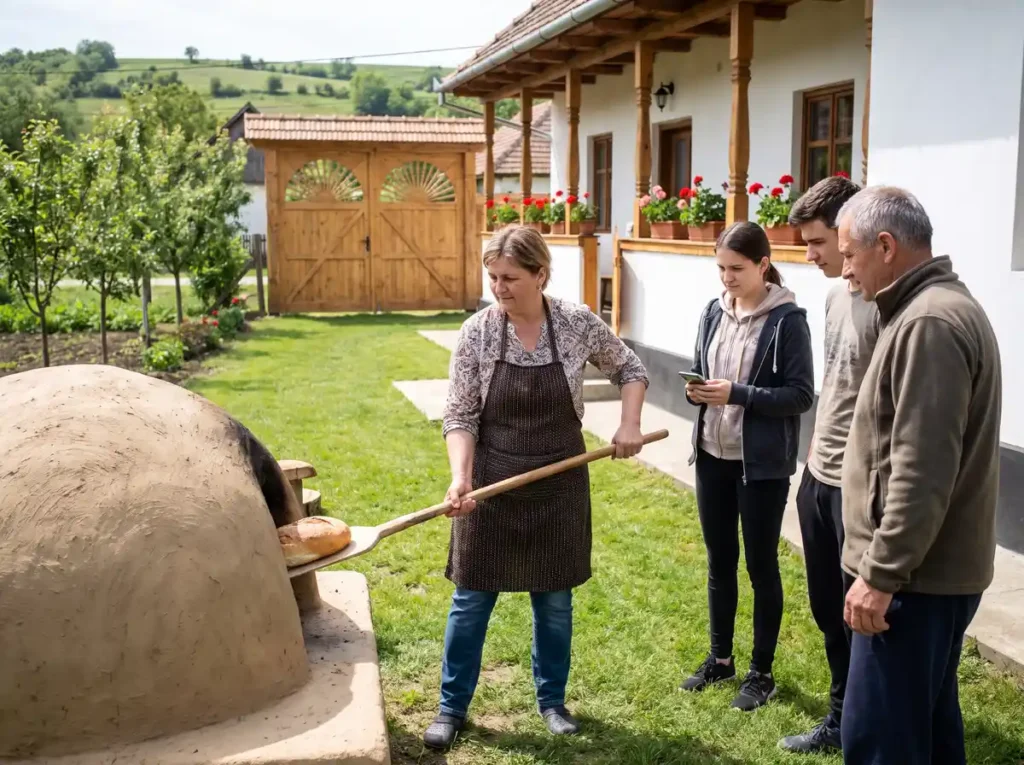
Anyone who has a household in the Romanian countryside will be able, legally and with the money collected by card, to take in visitors and show them how a cow is milked, how bread is baked in a clay oven or how cloth is woven on a loom. Law no. 139/2026, published in Official Gazette of Romania no. 574 of 13 July 2026, turns this from a tolerated activity into a registered and taxable one that the State promotes. It is the second piece of legislation in 2026 that tries to bring the small village economy into the open, after the one under which products named after a place received new recognition rules.
The programme is called „Viața la țară” and has a precise object: not accommodation and not meals, but showing the work done in one’s own household. The law speaks of promoting and putting to use the cultural, traditional and natural heritage of rural areas by helping peasant households display their work. The difference from the classic agritourism guesthouse is essential: there you sell a bed and a plate of food, here you sell access to a working day.
The mechanism has three parts: the town hall, which registers applicants and issues the certificate; the national electronic platform, which gathers the offer, shows it to the public and takes the money; and the tax authority, which receives the list of income norms and the financial statements.
What it changes in practice
A new document appears at the town hall counter. The rural activities producer certificate is issued on the basis of a registration declaration setting out the applicant’s details and the activities they carry out usually and permanently, together with the conditions, the manner and the period in which they can present them. The certificate attests that the applicant holds the peasant household and confirms the information in the declaration.
Every town hall has to keep a digital register. Declarations are entered in the Local Register of Rural Activity Producers, set up in digital form at town hall level and compatible with the national platform. For small communes this means an infrastructure obligation, not just one more file to keep.
The State builds a platform and hands it to a private company. The Ministry of Agriculture and Rural Development develops the „Viața la țară” platform, but running and administering it fall to a private operator designated through a public tender. The platform handles registration, the presentation of activities, international promotion, the display of visiting periods and costs, and online booking and payment.
The money goes through the platform, not from hand to hand. The operator collects from visitors the price of the presentation services, adds the intermediation commission provided for in the tender specifications and then transfers the sum to the individual registered in the Programme. The same operator monitors income for ANAF and sends the financial statements to the competent tax authority.
Tax is charged on a norm, not on what is actually received. The income is classified as income from independent activities, and the annual net income is determined on the basis of the income norms in the Tax Code. The law derogates from Article 69(2) of Law no. 227/2015, that is from the usual procedure by which those norms are set, and moves the power to a joint order of the minister of agriculture and rural development and the minister of finance. The level of the norms is set by category of locality, according to where the household is situated, with correction coefficients.
There is a firm timetable for sending the figures. The Ministry of Agriculture sends ANAF the level of the norms and the correction coefficients every year during the fourth quarter, but no later than 30 November of the year before the one in which they are to apply.
The State also promises non-financial support. The law provides for good practice guides on promoting farming activities, free training courses in presenting traditional practices and in protecting the environment, plus funding programmes for courses on conserving traditional ecosystems. The programme is to be built into Romania’s national and international agritourism promotion campaigns.
What has changed compared with the previous situation
Until now, a smallholder who wanted to receive tourists had essentially two options. Either open an agritourism guesthouse, with classification, permits and accommodation obligations, or improvise, in which case the money stayed outside any records. Selling produce from the household had a framework of its own, with a producer’s certificate and a marketing booklet, but that one covers goods, not the experience.
Law no. 139/2026 creates a third option: the presentation activity, without accommodation and without any sale of goods, as a service in its own right, with a document from the town hall and a single payment channel. It is the first time that what is done inside the household becomes, by law, a product that can be booked online.
The second change is fiscal. The law does not invent a new regime, it fits the activity into the income norms regime that already exists for other independent activities, but it takes the setting of the norm out of the general procedure and puts it in the hands of two ministries. In practice, the tax level for a village in Maramureș and for one on the Bărăgan plain is decided in Bucharest, by order, with coefficients based on location.
The third change concerns town halls. The Local Register of Rural Activity Producers did not exist. It has to be set up in digital form and it has to talk to the national platform, which means that a commune with no technical staff will depend on whatever the ministry delivers.
Advantages and disadvantages
What it improves
- It takes out of the grey area an activity that was going on anyway, but without an invoice and without protection for either side.
- Taxation on income norms is predictable: the householder knows from the start of the year what is owed, no matter how many visitors turn up.
- Online payment through the platform removes the biggest obstacle to small-scale rural tourism, the fact that a foreign visitor has no way of booking and paying in advance.
- International promotion and inclusion in the national campaigns give visibility to households that would never surface on their own in a search engine.
- The free training courses and the good practice guides are written into the law itself, not left to the discretion of some future funding programme.
What remains a problem
- Nowhere does the law define what a peasant household is, and it does not refer to any text that defines it, even though the certificate from the town hall attests precisely that the applicant holds one.
- The private operator’s intermediation commission has no cap in the law. It is set through the tender specifications, that is through a document that is not published in the Official Gazette of Romania.
- All collection has to pass through the platform of a single operator. If the platform goes down or the operator is late with the transfers, the householder has no alternative provided for in the law.
- The digital register falls to the town halls, including the very small ones, without the law providing any funding for it.
- Monitoring of actual income for ANAF sits alongside taxation on a norm, which means that figures are reported which have no bearing on the tax due.
Practical advice
- Do not file the declaration at the town hall before the implementing rules appear. They are to be approved by Government Decision within 90 days of the publication of the law and will set the form, the procedure and the minimum content of the certificate.
- Draw up in good time the list of activities you carry out usually and permanently. That is exactly what the declaration asks for, plus the conditions, the manner and the period in which you can present them, so an occasional activity has no place there.
- Check which category of locality your commune falls into as soon as the joint order with the income norms appears. The tax is calculated on the norm, and the correction coefficient depends on location.
- Bear in mind that the tax rule in Article 6 applies only to income from the tax year following the one in which the law was published, so from 2027 income onwards. What you take in during 2026 does not fall under this regime.
- Ask at the town hall whether the local digital register has been set up. Without it, the declaration cannot be entered and the certificate cannot be issued.
- Read the commercial terms of the platform carefully once it appears. The intermediation commission and the deadline for transferring the money are set through the tender specifications, not by the law.
- Do not confuse this programme with an agritourism guesthouse. The law covers the presentation of the work done in the household, not accommodation and not meals, which remain under their own rules.
Frequently asked questions
When can I register for the Programme?
Which activities can be presented for a fee?
How is the tax calculated?
Do I have to set up a company or register as a sole trader?
Can I take the money directly from the visitor?
What does the town hall do with my declaration?
Does the State give money for fitting out the household?
Editorial analysis
The law solves a real and long-standing problem. Experience tourism in the Romanian village has run for years on trust, word of mouth and cash, and anyone who tries to do it legally finds there is no form to do it in. Classifying the activity as independent income taxed on a norm, and setting up a single payment channel, are practical choices that fit the reality of a household with no accountant.
Where the law falls short is on definitions and safeguards. The text builds an entire regime around the peasant household without saying what one is, even though the certificate issued by the town hall attests precisely that the applicant holds one. The official who issues the document will have to decide alone, and different decisions in neighbouring communes are inevitable. In the same way, the law gives a private operator a monopoly over collection, over the commission and over reporting to the tax authority, but sets no limit for it in the text, referring instead to the tender specifications, which are not published in the Official Gazette of Romania.
There is also a design tension worth noting: taxation on income norms means, by definition, that actual receipts do not matter for the tax, yet the platform is required to monitor the income earned and to send the financial statements to ANAF. Either the norm is a simplification, or the record keeping is complete. Here it is both, and the householder bears the cost of the second without the benefit of the first.
What should be changed
- Defining the peasant household in the body of the law itself, or through an express reference. It would remove interpretation at the counter and would make the certificate comparable from one town hall to another, which matters for a document that opens a tax regime.
- A statutory cap on the intermediation commission. Fixed in the law rather than in the tender specifications, it would protect participants from a margin settled during a tender to which they are not a party, and would make the household’s net income predictable.
- A maximum deadline for transferring the money to the participant. The law says only that the sum is transferred afterwards. A deadline written into the text would turn a contractual promise into a legal obligation, with a remedy, for someone who has no realistic way of suing a national operator.
- A fallback route outside the platform. It would make the programme resistant to the collapse of the operator or to an annulled tender, situations in which the whole collection mechanism is today left blocked.
- Aligning the reporting duty with the tax regime. If the tax is owed on a norm, the obligation to send financial statements should be cut back to what is strictly needed in order to check that the ceilings are respected, not extended to a complete record of receipts.
- A support provision for the digital register of small town halls. Without it, the communes with no technical staff will be the last to enter the programme, that is exactly the ones it was designed for.
Original text of the legal act
The text below is reproduced in Romanian, the official form of publication.
The full text, as published in the Official Gazette of Romania
Official Gazette of Romania no. 574 of 13 July 2026 16 pages PDF, 101 KB the act starts on page 15
Open the official PDFDownload the PDF
The viewer is not shown on small screens. Use the buttons above to open or download the file.
This article is for informational purposes only and does not constitute legal advice. For specific situations, consult a licensed attorney or tax advisor.