
In brief
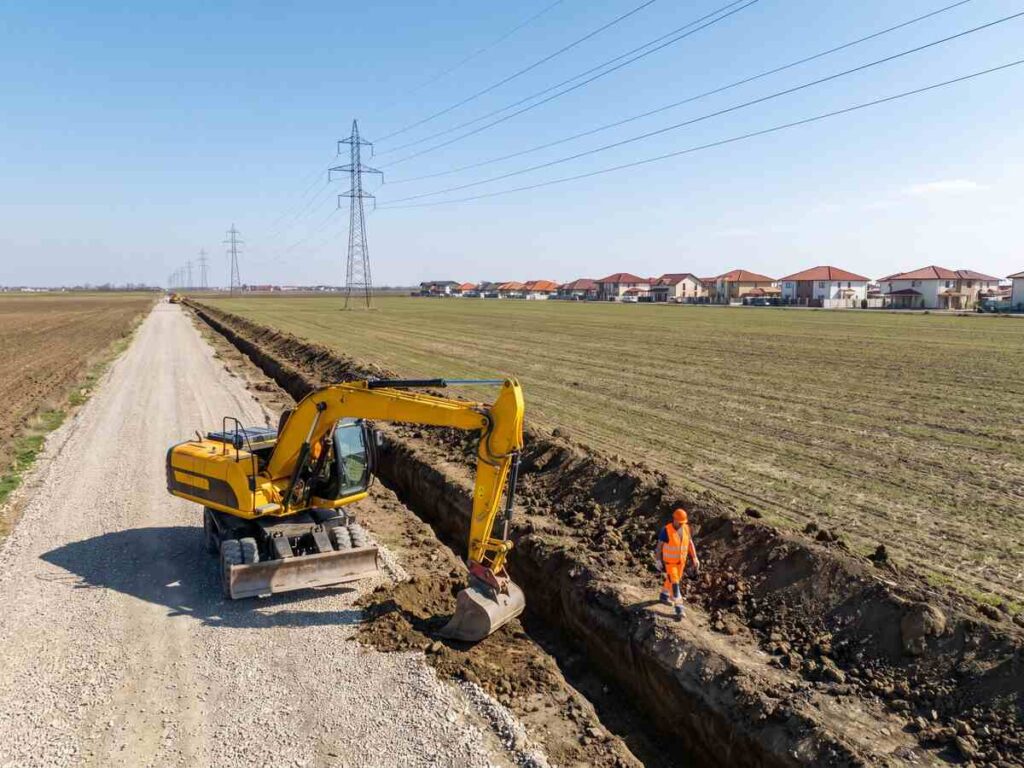
- The Government has approved an additional site for the western bypass of Timișoara, needed in order to move the utility networks off the route of the future road.
- Land is being expropriated in Timișoara, Săcălaz and Sânmihaiu Român, Timiș county, and the estimated compensation comes to 6,121.13 thousand lei.
- The lists of owners and of the individual sums are not in the ordinary issue: they were published separately, in Official Gazette of Romania (Monitorul Oficial) no. 702 bis, an edition running to 146 pages.
Published: Official Gazette of Romania no. 702 of 25 August 2026
In force from: 25 August 2026
In order to build the western bypass of Timișoara, the state needs one more strip of land alongside the route itself: the ground where the pipes, the cables and the power lines that stand in the way today have to be moved. Government Decision no. 632/2026, published in Official Gazette of Romania no. 702 of 25 August 2026, launches the expropriation on this additional site. It is the same mechanism used on other works around the country, for example on the Sibiu-Făgăraș Motorway, in the Avrig area, likewise for the relocation of the utilities.
The works are called „Timișoara West Bypass” and are declared to be of public utility and of national interest. Their technical and economic indicators had been approved by Government Decision no. 32/2024.
The expropriating authority is the Romanian State, represented by the Ministry of Transport and Infrastructure, acting through the National Company for Road Infrastructure Administration.
What it changes in practice
The first effect is the approval of the additional site, that is of the area of land needed solely for the relocation of the utilities, separate from the road corridor approved earlier.
The second effect is the launch of the expropriation for all privately owned properties situated on this site, within the boundaries of Timișoara, Săcălaz and Sânmihaiu Român, Timiș county.
The third effect is the approval of the three lists: the private properties subject to expropriation, together with their owners or holders and the individual sums, the properties in the public ownership of the state, and the properties in the public ownership of the administrative-territorial units lying on the same site.
The fourth effect is budgetary. The individual sums estimated by the expropriating authority add up to 6,121.13 thousand lei and are allocated from the state budget, through the budget of the Ministry of Transport and Infrastructure, under the state budget law for 2026, Law no. 43/2026.
The fifth effect is the source of the funding. The money goes to chapter 84.01 „Transport”, title 56, budget article 56.50, that is programmes financed from the Cohesion Fund for the 2021-2027 financial framework.
The sixth effect is the payment deadline. The sums are transferred by the ministry into a treasury account opened in the name of the road company, within no more than 30 days of the approval of the request to open credit lines, and are held at the owners’ disposal.
The seventh effect concerns publicity for the plan. The plan of the additional site is brought to public notice by being displayed at the premises of the local councils involved and on the website of the expropriating authority.
The eighth effect is accountability. The ministry, through the road company, answers for the accuracy of the data in the three lists and for the correctness of the documents on which they were based.
What has changed compared with the previous situation
The first change is the widening of the area affected. Until now, the expropriation corridor of the bypass covered the land beneath the future road. From now on, the land on the additional site, called for by the moving of the utilities, enters the procedure as well.
The second change concerns the people involved. Owners in Timișoara, Săcălaz and Sânmihaiu Român who did not figure on the earlier lists may now appear in annex no. 2, with individual sums.
The third change is budgetary in nature. A new sum is allocated, 6,121.13 thousand lei, separate from the one approved for the main corridor.
The fourth change is the European source. The funding comes from the Cohesion Fund, through budget article 56.50, and not from the European Regional Development Fund used on other road works.
The fifth change has to do with the way the act was published. The annexes do not appear in the ordinary issue of the Official Gazette of Romania but in the bis edition of the same date, which means the owner has to go looking in a different file.
What does not change is the legal framework. The procedure remains the one laid down in Law no. 255/2010 on expropriation for reasons of public utility, with the implementing rules approved by Government Decision no. 53/2011.
The same legal basis is used to take land that has nothing to do with roads: the works corridor at Lacul Roșu cuts 3,214 square metres out of a forest plot shared between 29 co-owners.
Advantages and disadvantages
What it improves
- The relocation of the utilities is given a legal basis and money, so the works will not stall the moment the contractor runs into a pipe or a cable.
- The sum is allocated explicitly, with the budget chapter and article spelled out, rather than being left for some future decision.
- The deadline for transferring the compensation is written into the decision, no more than 30 days from the approval of the request to open credit lines.
- The plan of the site is displayed at the town halls and on the website of the expropriating authority, so owners can see it without travelling to Bucharest.
- The three lists are kept separate by type of ownership, which makes it clear what is being expropriated and what is merely being taken over from the public domain.
What remains a problem
- The annexes were published in the bis edition, which has to be bought separately, so access to the list of names and sums is not immediate for everyone.
- The sums are estimated by the expropriating authority rather than negotiated, and the owner only learns the amount from the annex.
- The decision does not say how many properties are on the list, nor what total area is being expropriated.
- The 30-day deadline runs from an internal administrative moment, the approval of the request to open credit lines, which the owner has no way of following.
- The additional site turns up two years after the technical and economic indicators were approved, a sign that the relocation of the utilities had not been reckoned with from the start.
Practical advice
- If you own land in Timișoara, Săcălaz or Sânmihaiu Român, near the route of the western bypass, check annex no. 2 in Official Gazette of Romania no. 702 bis of 25 August 2026.
- Go to the town hall. The plan of the additional site is displayed at the premises of the local councils involved, and there you can see whether your land falls inside the corridor.
- Check the website of the National Company for Road Infrastructure Administration as well, where the plan is published as the law requires.
- Compare the cadastral number and the area given in the annex with your own title deeds. The list is drawn up from the records of the administrative-territorial units, which may be out of date.
- If you disagree with the estimated sum, the procedure for challenging it is the one in Law no. 255/2010. The time limits run from the communication of the decision establishing the compensation.
- If you hold the land without a registered title, go to a notary and to the land registry in good time. Payment is made to the owner or holder identified in the records.
- Keep any correspondence with the expropriating authority. The ministry answers for the accuracy of the data in the lists, so an error reported in writing leaves a trace.
Frequently asked questions
What is an additional site?
Which localities are affected?
How much money is allocated?
Where can I find the list of owners and sums?
Who pays the compensation?
Which European funds is the money coming from?
When does the decision start to apply?
Errors and inconsistencies in the published text
- Article 3(1): „Legea a bugetului de stat pe anul 2026 nr. 43/2026”. The name of the act from which the money is allocated is written wrongly, with an extra „a”, the correct form being „Legea bugetului de stat pe anul 2026 nr. 43/2026”, the state budget law for 2026, Law no. 43/2026. The check can be made without opening any other document: in the same edition of Official Gazette of Romania no. 702 of 25 August 2026, at page 6, Government Decision no. 650/2026 uses exactly the same reference, in the same sentence about allocation through the budget of the Ministry of Transport and Infrastructure, and writes it correctly. The slip does not change the meaning, but it affects the official name of the budget law in an article that moves 6,121.13 thousand lei.
Editorial analysis
The decision solves a concrete problem on the site. The expropriation corridor approved for the western bypass of Timișoara covers the land beneath the future road, but not the strips beside it, where the pipes, the cables and the power lines crossing the route have to be moved. Without a site of its own, the contractor reaches the first network and stops, because there is no land to move it onto. The act rests on precisely Article 5(1^1) of Law no. 255/2010, the provision brought in for this very situation, and allocates 6,121.13 thousand lei for privately owned properties in three localities, Timișoara, Săcălaz and Sânmihaiu Român. As a piece of legislation it is short, coherent and complete: six articles, four annexes, a named expropriating authority, a budget chapter and article stated.
What is interesting is how unexceptional this second wave has become. In the same edition of Official Gazette of Romania no. 702, four pages away, Government Decision no. 650/2026 does exactly the same thing for the rehabilitation of the Brașov-Sighișoara railway line, again on an additional site, again within a single administrative-territorial unit. And at Timișoara the gap in time says something as well: the technical and economic indicators of the works were approved by Government Decision no. 32/2024, while the land needed for moving the utilities is called for only in August 2026. The study on relocating the networks comes, as a matter of course, after the main corridor has already been set and expropriated, which means a second round of notifications, valuations and challenges for people who thought the procedure was over.
The weak part of the act is not what it says but what cannot be read. The operative part, the free one that runs to a page, says who expropriates and how much is allocated in total. The part that says who is being expropriated, with which parcel and for what sum, sits in annexes nos. 1 to 4 in Official Gazette of Romania no. 702 bis, a 146 page edition that the footnote directs the reader to buy at the counter at 1 Panduri Road in Bucharest. Article 5 already requires the expropriating authority to publish the site plan on its own website, so the online channel exists and is provided for by the act; it is only the list of names and sums that stays outside it. To that is added a lack of numerical context: Article 3(1) gives the total of 6,121.13 thousand lei, but says neither how many properties are on the list nor what area is being taken, so the sum cannot be set against anything by someone outside the procedure.
What should be changed
- The list of individual sums, published online together with the plan. Article 5 already requires the site plan to be displayed on the website of the National Company for Road Infrastructure Administration; the obligation ought to be extended to annex no. 2, in a format that can be searched by cadastral number. In practice, an owner in Săcălaz would find out in five minutes whether he is on the list, instead of buying a 146 page edition.
- The number of properties and the total area, written into Article 3(1). Alongside the 6,121.13 thousand lei there ought to be the number of positions in annex no. 2 and the area they add up to. In practice, anybody could work out the average compensation per square metre and see whether the sum proposed against his own name departs sharply from the rest of the corridor.
- A reference to the original expropriation decision and to the cumulative total. The act cites Government Decision no. 32/2024 for the indicators, but does not say how much has been allocated so far for the main corridor of the same works. In practice, a single act would show the real cost of the land for the western bypass, not only the current instalment.
- A deadline tied to a public moment, not to an internal one. The 30 days in Article 3(2) run from the approval of the request to open credit lines, an administrative act the owner never sees. If the expropriating authority were required to publish the date of that approval on its own website, people would in practice know from which day the payment period starts to run and from when they can complain of delay.
- A corrigendum for the name of the budget law. The slip in Article 3(1) is put right by a corrigendum published in the Official Gazette of Romania, the usual procedure for clerical errors. In practice, the budgetary reference in the act would become quotable as it stands, without anyone having to correct it in his head.
Original text of the legal act
The text below is reproduced in Romanian, the official form of publication.
The full text, as published in the Official Gazette of Romania
Official Gazette of Romania no. 702 of 25 August 2026 16 pages PDF, 159 KB the act starts on page 2
Open the official PDFDownload the PDF
The viewer is not shown on small screens. Use the buttons above to open or download the file.
This article is for informational purposes only and does not constitute legal advice. For specific situations, consult a licensed attorney or tax advisor.