
In brief
- The Government has received, through law, the tools to officially declare a crisis situation on the crude oil and fuel market, until 31 October 2026, with the possibility of extension.
- The trade markup on petrol and diesel is capped at the average applied by each operator in 2025, and the pump price can be raised only once a day, until 12:00.
- The excise duty on diesel can be gradually reduced, by up to 25%, while major crude oil extractors and refiners pay a solidarity contribution on excess revenues, of up to 60%.
Published: Official Gazette of Romania (Monitorul Oficial) no. 642 of 4 August 2026
Enters into force: 7 August 2026 (general provisions); 9 August 2026 (offences)
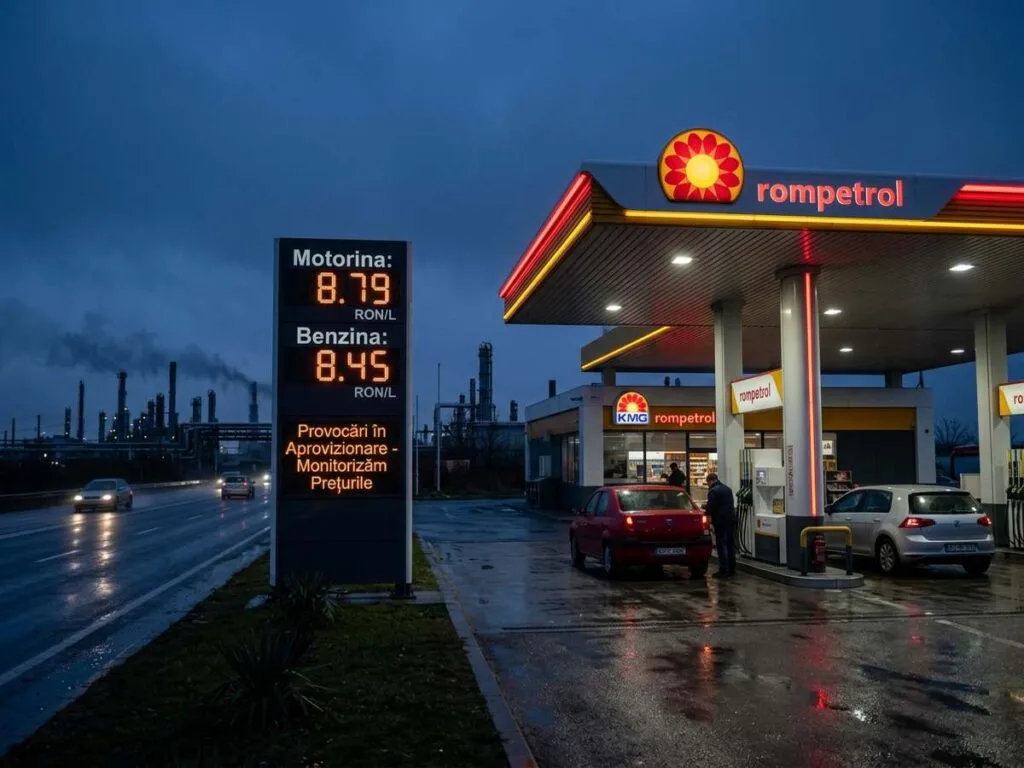
Fuel prices at the pump are temporarily coming under state control. Law no. 162/2026 on declaring the crisis situation on the crude oil and petroleum products market, promulgated by Decree no. 713/2026 and published in Official Gazette of Romania no. 642 of 4 August 2026, gives the Government the legal levers to cap the trade markup on petrol and diesel, to temporarily reduce the excise duty on diesel, and to impose an additional tax on the excess profits of major crude oil extractors and refiners. The law comes shortly after the creation of CONSE, the center that officially declares crises on the electricity market, and after Law 160/2026, which extends what solar panel prosumers can do with surplus electricity produced, signs of the same state concern for preparedness against shocks on energy markets.
The crisis situation is established automatically, by operation of law, from its entry into force until 31 October 2026 inclusive, with the possibility of successive extension, by government decision, for periods of up to 3 months each, for as long as the circumstances that required it persist. After this first period ends, the Government can redeclare the crisis at any time, on the joint proposal of the Ministry of Finance and the Ministry of Energy, if the price of Brent crude or diesel rises by at least 20% within 30 calendar days compared with the average of the last 12 months, if the average pump price rises at the same pace, or if there is a real risk of disruption to the supply of crude oil or petroleum products.
Also from the energy market, on 28 August Parliament raised the advance the State pays suppliers, from 40% to 60%.
Under the same law, hauliers now receive compensation of 43 bani a litre, for as long as the diesel excise duty stays cut by 25%.
What it changes in practice
For the duration of the crisis situation, the law sets four mechanisms in motion at the same time, designed to act all the way from crude oil extraction to the filling station pump.
Capping the trade markup. For every economic operator that imports, produces, distributes or retails petrol and diesel (except for exports and intra-Community deliveries), the average trade markup cannot exceed the annual average applied by that same operator in 2025, possibly increased once by the inflation rate between 2025 and 2024, as reported by the National Institute of Statistics. Compliance with the cap is checked using the average calculated over the entire duration of the crisis, not month by month, so that exceeding it in a single month does not automatically amount to an offence if the final cumulative average stays within the limit. Retail operators can raise the price only once a day, until 12:00 inclusive; they can lower it at any time and as often as they like.
Special regime for exports. During the crisis, exports and intra-Community deliveries of diesel and crude oil can only be made with the prior written consent of the Ministry of Economy, Digitalization, Entrepreneurship and Tourism and the Ministry of Energy, a measure meant to prevent the mass outflow of stocks from the domestic market precisely when local demand is under pressure.
Gradual reduction of the excise duty on diesel. A technical mechanism, recalculated twice a month by the Ministry of Finance, based on two indicators: the percentage change in the Platts quotation for diesel and the percentage change in the average pump price of standard diesel, both measured against a fixed reference period, 1 February to 29 March 2026. If both indicators simultaneously exceed a threshold of at least 5%, the excise duty is reduced gradually, from 5% (at the 5% threshold) up to a maximum of 25% (at the 25% threshold or above). The reduction calculated for one two-week segment (days 1-15, or 16 to the end of the month) applies to the immediately following segment and is not carried over from one period to the next.
The solidarity contribution on excess revenues. Owed only in months when the average monthly price of Brent crude exceeds USD 70/barrel or the average monthly Platts price for diesel exceeds USD 630/tonne. Operators extracting crude oil from deposits located on Romanian territory pay a rate of 60% on revenues obtained above the USD 70/barrel threshold. Those who, directly or through affiliated companies, also refine this crude oil pay a variable rate, between 1.5% and 11.9%, applied to revenues from the sale of products resulting from processing, depending on how far prices exceed the thresholds set out in the law’s tables. The contribution is deductible when calculating corporate income tax and is declared and paid monthly, by the 25th of the month following the one for which it is owed.
What has changed compared with the previous situation
- No legal cap on the trade markup: until now there was no mechanism allowing the state to legally limit the margin of refineries and fuel distributors during crisis periods; Law 162/2026 introduces such a cap for the first time, calculated individually for each operator.
- Fixed excise duty on diesel: the level of the excise duty was set only through the Fiscal Code, with no mechanism for temporary adjustment based on the trend in international prices; now there is a gradual reduction formula, triggered automatically based on public indicators.
- No special tax on crisis profits: crude oil extractors and refiners previously had no tax obligation explicitly tied to the international price level; the solidarity contribution directly links the additional taxation to Brent and Platts quotations.
- Exports of diesel and crude oil were unrestricted: operators could export or make intra-Community deliveries without administrative restrictions; now, during the crisis, the prior consent of two ministries is required.
- Pump price increases had no frequency limit: distributors could adjust prices as often as they considered necessary in a single day; the law now limits them to a single daily increase.
Advantages and disadvantages
What it improves
- Direct protection for drivers and hauliers: capping the trade markup limits room for speculation at the pump, and the excise duty reduction can actually lower the price of diesel.
- An objective mechanism, not a discretionary one: the excise duty reduction is calculated according to a public, twice-monthly formula, not decided politically from one day to the next.
- Those who profit the most from the crisis (major crude oil extractors and refiners) contribute extra to the budget only when international prices spike, not permanently.
- Limiting price increases to once a day reduces the risk of a “tail effect” at the pump, where the announcement of a price rise triggers queues and panic buying.
What remains a problem
- Capping the markup at the 2025 average may squeeze the margins of smaller operators, who lack the capacity to compensate through volume the way major market players do.
- A single daily price increase may delay the real pass-through of supply costs during periods of heightened volatility on international markets.
- The solidarity contribution is calculated using complex formulas (production reports, rates by price bracket, reference exchange rate), difficult for the public to verify independently.
- The prior-consent regime for exports could affect existing contracts of companies with regional operations, with no maximum legal deadline for the two ministries to respond.
Practical advice
- Driver or consumer: if you notice a fuel price increase more than once a day at the same station, you have grounds to report it to the National Authority for Consumer Protection, since the law allows only one increase per day, until 12:00 inclusive.
- Economic operator in import, production or distribution of petrol and diesel: calculate and document the average trade markup applied in 2025, because that figure becomes your legal cap for the entire duration of the crisis; report it to the Ministry of Finance according to the order the minister issues within at most 3 working days of the law’s entry into force.
- Holder of a petroleum agreement extracting or processing crude oil from Romania: monitor the Brent and Platts diesel quotations monthly, because exceeding the thresholds of USD 70/barrel and USD 630/tonne respectively automatically triggers your obligation to declare and pay the solidarity contribution, by the 25th of the following month.
- Company with export or intra-Community delivery contracts for diesel or crude oil: check, before carrying out the operation, whether you need the prior written consent of the Ministry of Economy, Digitalization, Entrepreneurship and Tourism and the Ministry of Energy; lack of consent is an offence and also leads to confiscation of the goods.
Frequently asked questions
How long does the crisis situation declared by Law 162/2026 remain in effect?
Does the excise duty on diesel drop automatically once the law enters into force?
Who pays the solidarity contribution?
Can a distributor raise fuel prices more than once a day?
What happens if an operator exceeds the trade markup cap?
What is the Methodology in the annex to the law?
Original text of the legal act
The text below is reproduced in Romanian, the official published form.
The full text, as published in the Official Gazette of Romania
Official Gazette of Romania no. 642 of 4 August 2026 16 pages PDF, 131 KB the act starts on page 3
Open the official PDFDownload the PDF
The viewer is not shown on small screens. Use the buttons above to open or download the file.
This article is for informational purposes only and does not constitute legal advice. For specific situations, consult a licensed attorney or tax advisor.