
In brief
- Law No. 170/2026 exempts from tax inheritances settled and finalised by 30 September 2026, if the 2-year deadline from the death falls between 14 July and 30 September 2026, and clarifies VAT regularisation for certificate-based exemptions.
- Debtors in insolvency-prevention procedures get dedicated tax rules: an order for extinguishing debts, VAT offsetting, and a ban on including in the restructuring plan the obligations that condition an already-granted payment schedule.
- From 31 August 2026, the STRR electronic road-toll system and the TollRo charge for trucks over 3.5 tonnes come into effect; ROMATSA gets a state-budget cover mechanism for amounts frozen in international disputes.
Published: Official Gazette of Romania (Monitorul Oficial) No. 648 of 5 August 2026
In force from: 8 August 2026
Law No. 170/2026 gathers a series of fiscal-budgetary measures without a single theme: from an inheritance-tax exemption for successions finalised by autumn, to new rules for companies in preventive insolvency, emergency financing for public enterprises with money frozen in international disputes and, most visibly for truck drivers, the STRR/TollRo electronic road toll taking effect on 31 August 2026. The law, promulgated and published in the Official Gazette of Romania on the same day, 5 August 2026, adds to the series of 2026 fiscal-budgetary acts, alongside the earlier measures on the reduced VAT rate for first homes.
For individuals, the most concrete change concerns inheritance: successions settled and finalised by 30 September 2026 inclusive are exempt from the tax on transferring property through inheritance, if the legal 2-year deadline from the date of death falls between 14 July and 30 September 2026. In practice, heirs who risked exceeding the 2-year window (after which inheritance tax generally becomes due) get a temporary exemption, provided they finalise the succession proceedings by 30 September.
For businesses issuing VAT-exempt invoices to exempt persons (diplomats, international institutions, other categories under the Tax Code), the law clarifies what happens when the exemption certificate arrives late: if the supplier obtains the certificate after delivery but within the limitation period, the exemption applies retroactively from the date of the chargeable event; if the certificate is missing during a tax inspection, the tax authorities collect the VAT, with regularisation to follow once the certificate appears.
The broadest technical component concerns debtors in insolvency-prevention procedures (preventive concordat, ad-hoc mandate): the law sets a clear order for extinguishing tax debts, allows VAT to be offset against obligations outside the restructuring agreement, and bans including in the restructuring agreement the debts on which an already-obtained payment schedule depends, to avoid a vicious circle between the two debtor-protection mechanisms.
On infrastructure, the law brings new rules for Exim Banca Românească, which is mandated to grant temporary, interest-free financing to public enterprises whose accounts have been frozen through enforced execution for state debts arising from international disputes, so their activity isn’t halted. A similar state-budget cover mechanism is provided for ROMATSA, if EUROCONTROL withholds amounts owed to it for the same reasons.
What it changes in practice
For heirs close to the expiry of the 2-year deadline, the temporary inheritance-tax exemption can mean direct savings, but only if the succession is actually finalised by 30 September 2026, a tight deadline for more complicated cases.
For freight road carriers, from 31 August 2026 a new charge appears, TollRo, applied to vehicles over 3.5 tonnes MTMA used on the SETRE network, collected through the new electronic STRR system, which replaces the old road-toll mechanisms for commercial transport. Mixed-transport vehicles are treated, for this purpose, as freight vehicles.
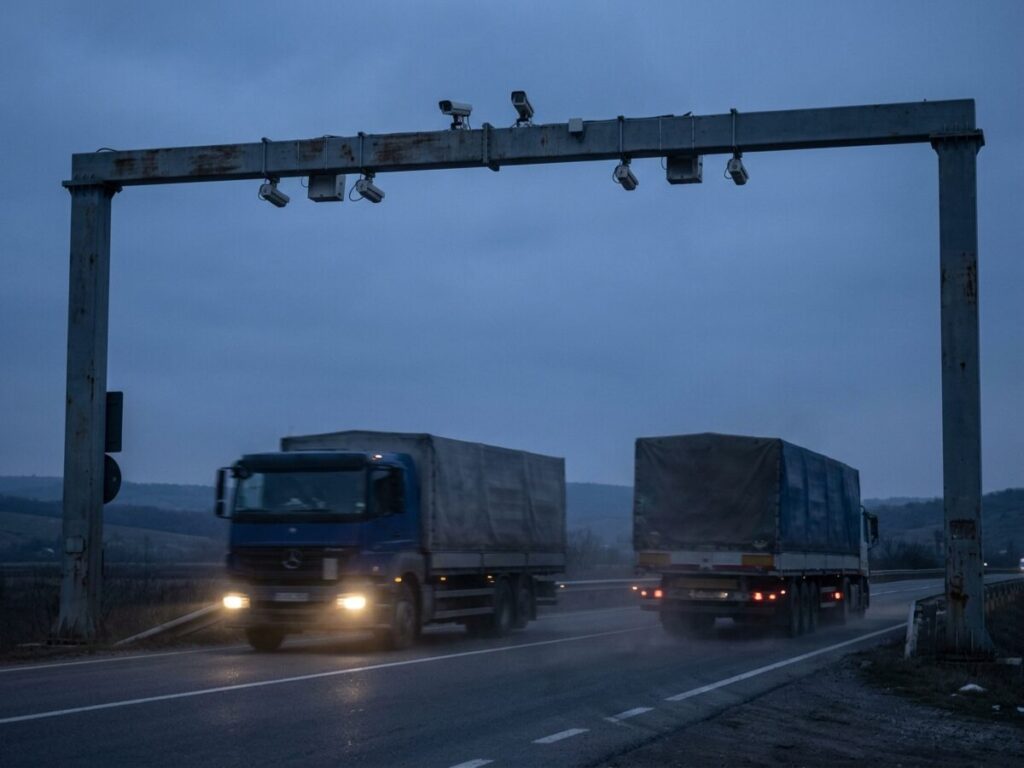
The charge now has the equipment that checks whether it was paid: 300 control sites with 1,258 cameras, for the rovinieță and TollRo, worth 132 million lei including VAT.
For companies in preventive insolvency, the new tax rules should reduce administrative bottlenecks between ANAF and the courts approving restructuring plans, the main benefit being clarity on the payment order and the ability to use VAT refunds to extinguish debts, not just accumulate them.
What has changed compared with the previous situation
- A new, temporary inheritance-tax exemption window: successions finalised by 30 September 2026, with the 2-year deadline falling between 14 July and 30 September 2026, no longer owe tax.
- Clarified VAT regularisation: the Tax Procedure Code gets explicit rules for late-obtained exemption certificates.
- A dedicated extinguishment order for preventive insolvency: the Tax Procedure Code introduces, for the first time at this level of detail, a special order for paying tax debts for companies in preventive concordat or ad-hoc mandate.
- A new road charge for trucks: the STRR system and the TollRo charge, applicable from 31 August 2026, replace the old commercial road-toll rules under Law No. 226/2023.
- A new emergency-financing mechanism: Exim Banca Românească can temporarily finance, interest-free, public enterprises with accounts frozen over state debts from international disputes.
Advantages and disadvantages
What it improves
- A concrete tax exemption for heirs close to the expiry of the legal 2-year deadline, if they manage to finalise the succession in time.
- Procedural clarity for companies in preventive insolvency, with an order for extinguishing tax debts set out explicitly in law, not just in administrative practice.
- Protecting the continuity of public enterprises whose accounts get frozen because of the state’s international disputes, a situation the company bears no direct blame for.
What remains a problem
- The inheritance-tax exemption window is short (until 30 September 2026) and does not help heirs whose cases cannot be finalised that quickly.
- The TollRo charge adds a further cost for freight carriers, at a time when the sector already reports pressure on costs.
- The temporary-financing mechanism through Exim Banca Românească remains conditional on government decisions, multiple approvals and liquidity analyses, so it is not an instant response to frozen accounts.
Practical advice
- If you have a succession case with the 2-year deadline falling between 14 July and 30 September 2026: speed up finalising the succession proceedings before a notary or court, otherwise you lose the exemption window.
- If you supply VAT-exempt goods or services on the basis of a certificate: don’t wait indefinitely for the certificate, if it arrives late you still have the right to regularisation, but you must follow the steps set out in the law.
- If your company is under preventive concordat or ad-hoc mandate: check the new order for extinguishing tax debts before negotiating the restructuring plan with ANAF, to avoid conflicts with obligations already on a payment schedule.
- If you transport freight with vehicles over 3.5 tonnes: prepare for the TollRo charge starting 31 August 2026, check your STRR registration in advance.
- If you manage a public enterprise with accounts frozen because of a state international dispute: contact the supervising authority to start the temporary-financing procedure with Exim Banca Românească.
Frequently asked questions
Who benefits from the inheritance-tax exemption in Law No. 170/2026?
What is the TollRo charge and who pays it?
What happens to companies already in insolvency-prevention procedures?
What is the temporary financing granted by Exim Banca Românească?
What does Law No. 170/2026 repeal?
Original text of the legal act
The text below is reproduced in Romanian, the official form of publication.
The full text, as published in the Official Gazette of Romania
Official Gazette of Romania no. 648 of 5 August 2026 8 pages PDF, 84 KB the act starts on page 2
Open the official PDFDownload the PDF
The viewer is not shown on small screens. Use the buttons above to open or download the file.
This article is for informational purposes only and does not constitute legal advice. For specific situations, consult a licensed attorney or tax advisor.