
In brief
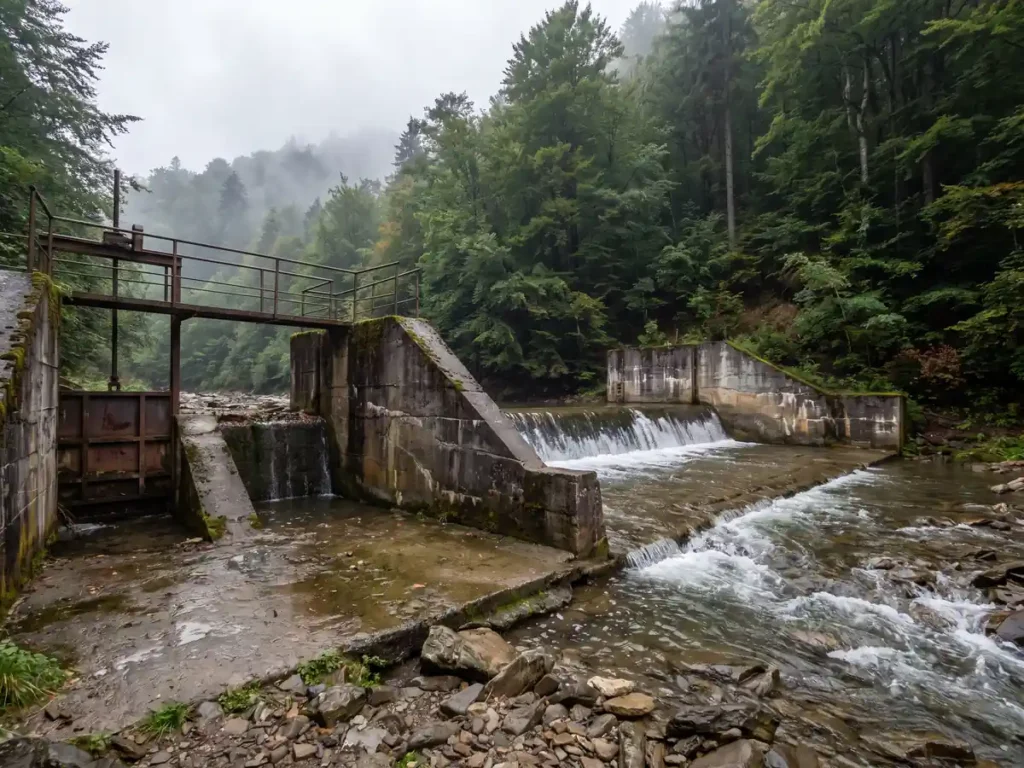
- From 12 September 2026, the Ministry of Environment, Waters and Forests must take the land occupied by a hydropower development out of the protected natural area, within 60 days of the beneficiary’s request, provided that on 29 June 2007 the investment objective had been approved by government decision or by state decree and the works had started or were under way.
- The exception copies the one introduced in 2018 for mining operations, but without the duty to provide land in compensation. In mining, the licence holder brings in exchange, at its own expense, an area at least equal to the one removed. For hydropower plants the law asks for nothing in return; all that is left is the 100 metre buffer zone.
- The second article takes defence and national security projects out of environmental impact assessment without the case-by-case examination required since 2018, and adds maintenance, retrofitting and modernisation work on existing electricity generation or transmission capacity located inside protected areas.
Published: Official Gazette of Romania (Monitorul Oficial) no. 767 of 9 September 2026
In force from: 12 September 2026, three days after publication
Anyone who owns a hydropower development started before 2007 inside a national park can ask for the protected area to be pulled back off the site, and the ministry has 60 days to pull it back. Law no. 185/2026 adds a new paragraph, paragraph (8), to Article 561 of Government Emergency Ordinance no. 57/2007 and rewrites Article 5(1) of Law no. 292/2018. The decision belongs to the Ministry of Environment, Waters and Forests, the same institution whose organisation chart was replaced two days earlier, by Government Decision no. 698/2026, which leaves it no more than 511 posts.
The entry condition is pinned to a single date: 29 June 2007, the day Emergency Ordinance no. 57/2007 appeared in Official Gazette of Romania no. 442. For the boundary to be moved, on that date there had to be, for the land in question, an investment objective for a hydropower development approved by government decision or by state decrees, and the works had to be under way or already started. The law does not say how many such objectives exist, it does not list them and it refers to no inventory.
What leaves the protected area is not just the dam. The text requires the new boundaries to be drawn so that the perimeter of the hydropower development scheme, the access roads serving it, and the substations and transmission and distribution networks connected to it all remain outside the area. Between the new boundary of the area and the boundary of the development, a minimum buffer zone of 100 metres is kept along the entire length of the border.
Article II changes something else entirely: the list of projects exempt from environmental impact assessment. From 2018 until now, the exemption worked only if the authorities for defence, national security or emergency situations established, together with the environmental authority and through a case-by-case examination, that the assessment would have an adverse effect on those objectives. The examination disappears. In its place, the new text exempts outright projects whose sole purpose is defence, national security or emergency response, adds projects that contribute to those objectives and are designated as such by decisions of the Supreme Council of National Defence, and adds maintenance, retrofitting and modernisation of existing electricity generation or transmission capacity located inside protected areas.
The law has a long road behind it. The bill was rejected by the Senate on 19 December 2022 and then spent three years in the Chamber of Deputies, which is the decision-making chamber. The Government issued a negative opinion in April 2023, the committees seised on the merits reported in favour of rejection on 30 April 2024, and the text was brought back for a supplementary report in September 2025 and adopted on 15 October 2025, by 262 votes to 33. The President referred the law to the Constitutional Court, which dismissed the objection by Decision no. 735 of 24 June 2026, and then asked Parliament to re-examine the law on 12 August 2026. Parliament refused the request and adopted the law in the same form: the Senate on 24 August, the Chamber on 26 August, with the two amendments tabled both rejected. Between the rejection in the Senate and publication in the Official Gazette of Romania, 1,360 days went by.
What it changes in practice
The law enters into force on 12 September 2026. It sets no date of its own, so the rule in Article 78 of the Constitution and in Article 12(1) of Law no. 24/2000 applies: the three-day period runs in calendar days from publication and expires at 24.00 on the third day. A first request filed on the day of entry into force would therefore fall due for an answer on 11 November 2026.
The ministry has no choice in the matter. The new paragraph says that the central environmental authority shall order the boundaries to be changed, not that it may order it. By comparison, the exception for mining operations in paragraph (4), in force since 2018, says that changing the boundaries is possible, and paragraph (5) makes it conditional on compensation. Here there is no compensation condition, no period in which to object and no ground on which the ministry could refuse, as long as the three factual conditions are met: an investment objective approved by government decision or by state decree, existing on 29 June 2007, with the works started or under way.
The law does not say what the beneficiary’s request must contain, nor by what instrument the change is ordered. For mining operations, paragraph (5) states expressly that this is done by an administrative act of the head of the central environmental authority, and paragraph (6) lists the documents that accompany the request, including the survey in the STEREO 70 system or in GIS. Both paragraphs, however, refer in their wording only to paragraph (4), that is, only to mines. For hydropower developments, the 60 days run from a request whose content is defined nowhere.
What does not change is the regime of Natura 2000 sites. The Constitutional Court held, in Decision no. 735/2026, that Article I concerns protected natural areas of national interest, namely the scientific reserves, national parks, natural monuments, nature reserves and nature parks listed in Article 5(1)(a) of Emergency Ordinance no. 57/2007, and not sites of Community interest. Where a national park overlaps a Natura 2000 site, and overlap is the rule in Romania, moving the park boundary does not touch the site, and Article 28(2) of the same ordinance still requires an appropriate assessment for any plan or project likely to have a significant effect on the site.
On the side of the second article, the effect is wider than it looks. The exemption from impact assessment no longer has a filter: projects whose sole purpose is defence or emergency response fall outside Law no. 292/2018 without anyone having to find, in the specific case, that an assessment would do any harm. For projects that merely contribute to those objectives, the filter becomes a decision of the Supreme Council of National Defence, an instrument that is not published in full. And maintenance, retrofitting and modernisation work on existing lines and power plants inside protected areas does not even need such a decision.
What has changed compared with the previous situation
Article 561 had seven paragraphs until now. It was introduced in 2011, by Law no. 49/2011 approving the ordinance, and in 2018 it received paragraphs (4) to (7) through Law no. 158/2018, among them the regime for mining operations. The form preceding this law is neither the 2011 one nor the 2018 one: paragraph (3), the one from which the exception is now made, was rewritten on 7 April 2026 by Government Emergency Ordinance no. 25/2026, published in Official Gazette of Romania no. 282.
Paragraph (3) remains in force and, in the April 2026 version, allows the boundaries of an area of national interest to be changed solely in order to delimit it more precisely or to correct material or scientific errors made in the original delimitation. The initiative belongs to the central environmental authority, to the National Agency for the Environment and Protected Areas or to the management body, a scientific study is required, together with the opinion of the scientific council, where applicable, and of the Romanian Academy, and the change is approved by government decision. The new paragraph sweeps away all of these at once: the purpose is no longer to correct an error but to remove land; the initiative comes from the beneficiary, not from the administrator; no scientific study and no opinion are required; and no government decision is adopted.
The sharpest difference, however, shows up in the comparison with the mining exception, which the new law copies almost sentence by sentence. Paragraph (4) uses the same reference date, 29 June 2007, the same logic of a perimeter carved out of the area and the same 100 metre buffer zone along the entire length of the border. Paragraph (5), though, adds something paragraph (8) does not have: the change is approved only if, through the care and at the expense of the licence holder, protected area status is established over another adjacent piece of land, and the minimum area brought in compensation must be equivalent to the one removed, increased by the buffer zone. For hydropower developments, this counterpart is missing altogether. The protected area shrinks, and nothing takes the place of the land lost.
As for Article 5(1) of Law no. 292/2018, the previous form was the original one, dating from 3 December 2018, untouched by any amendment for almost eight years. It said that the law does not apply to projects or parts of projects whose sole purpose is defence and national security or response to emergency situations, but only if the competent central authorities established, together with the environmental authority and through a case-by-case examination, that the impact assessment would have an adverse effect on those objectives. The condition came straight from Article 1(3) of Directive 2011/92/EU, which allows Member States to exempt such projects precisely „on a case-by-case basis” and only where they consider that applying the directive would have an adverse effect. In the new text, both elements have disappeared.
The rest of Article 5, on the other hand, has not been touched. Paragraphs (2) and (3) stay as they were: in exceptional cases, the central environmental authority may exempt a specific project, but it must then consider whether another form of assessment is appropriate, make the information and the reasons for the exemption available to the public, and inform the European Commission before granting development consent. Those safeguards remain, but they do not apply to the exemptions in paragraph (1), which operate automatically.
Advantages and disadvantages
What it improves
- It resolves a situation that has been stuck for almost two decades. Investments lawfully approved before 29 June 2007 found themselves, after that date, inside protected areas declared later, and paragraph (3) offers no way out, because it allows boundaries to be changed only to correct delimitation errors.
- The 60-day deadline is firm and verifiable. The beneficiary knows when the administration can be treated as having failed to act, which is more than paragraph (3) offers, where the procedure has no deadline at all.
- The 100 metre buffer zone is kept, as it is for mining operations, and it is the only dimension written as a figure anywhere in the article.
- The perimeter taken out is defined in technical terms, not as a matter of principle: the development scheme, the access roads, the substations and the networks serving them. The ministry cannot draw the boundary wherever it likes.
- For existing energy capacity, Article II puts into law an answer where practice was working on interpretation: maintenance, retrofitting and modernisation of a line or a power plant already located inside a protected area no longer go through the impact assessment procedure.
What remains a problem
- There is no compensation. The mining exception, which the text copies, obliges the holder to bring in exchange an area at least equal, increased by the buffer zone. Here, the land taken out of the protected area is lost for good.
- The word „beneficiary” is defined neither in the law nor in the ordinance it supplements. For mining operations, the applicant is the „licence holder”, a status established under the mining law. Here, who may apply remains a matter of interpretation.
- The law does not say which documents accompany the request or by what instrument the change of boundaries is ordered. Paragraphs (5) and (6), which settle exactly those two points, refer in their wording only to paragraph (4).
- The phrase „state decrees” matches no category of normative act in the current nomenclature. It follows from the context that pre-1990 decrees are meant, but the text does not say so.
- The exemption from impact assessment no longer has any filter for projects whose sole purpose is defence, even though the case-by-case condition comes from the European directive that Law no. 292/2018 transposes.
- For projects that merely contribute to national security objectives, the filter becomes a decision of the Supreme Council of National Defence, an instrument that is not published in full, so the public cannot check why a given project was exempted.
Practical advice
- If you manage a protected natural area, check now whether it contains hydropower developments with investment objectives approved before 29 June 2007. Those are the only pieces of land a request can reach, and the 60 days start running without the law requiring that the administrator be told.
- Beneficiaries planning to file a request would do well to attach, on their own initiative, the delimitation survey in the STEREO 70 system or in GIS and proof of the approval instrument issued before 2007. The law does not ask for them, but without them the ministry cannot draw the new boundary in 60 days.
- Check separately whether the land overlaps a Natura 2000 site. Leaving the national park does not take the land out of the site of Community interest, and Article 28(2) of Emergency Ordinance no. 57/2007 still requires an appropriate assessment for projects likely to have a significant effect on it.
- Environmental organisations wanting to challenge a decision should ask early for the instrument ordering the change of boundaries and for its reasoning. The law does not settle the form of that instrument, so the time limit for challenging it depends on the nature the ministry gives it.
- Network operators planning retrofitting work inside protected areas can rely on Article II from 12 September 2026, but only for existing capacity. For a new line or an extension, impact assessment remains mandatory.
- If you are following the file on this law, note reference PL-x 14/2023 at the Chamber of Deputies and case no. 4510A/2025 at the Constitutional Court. Both lead to the successive versions of the text and to the reasoning of the decision dismissing the objection.
Frequently asked questions
From when does the law apply?
What conditions must be met for land to be taken out of the protected area?
Can the ministry refuse the request?
Does other land have to be brought in exchange for the land removed?
What happens if the park overlaps a Natura 2000 site?
What exactly leaves the protected area?
Who still needs an environmental impact assessment after Article 5 is amended?
What did Article 5(1) say before?
Did the law get past the Constitutional Court?
How many hydropower developments are covered?
Editorial analysis
The problem the law solves is real and old. Hydropower developments begun decades ago found themselves, after 2007, inside protected areas declared later, and the text in force offered no way out: paragraph (3) of Article 561, rewritten only in April 2026 by Emergency Ordinance no. 25/2026, allows boundaries to be moved solely in order to correct a delimitation error. An investment objective lawfully approved before 2007 is not a delimitation error, so it could never fit through that door. On that count, the law fills a gap nobody disputes.
What is not visible from reading the act end to end is what was left out of the copy. The new law reproduces the 2018 mining exception almost word for word: the same reference date, 29 June 2007, the same construction of a perimeter carved out of the area, the same 100 metre buffer zone along the entire length of the border. The difference is that the mining exception does not stand alone. Paragraph (5) makes it conditional on compensation, and paragraph (6) imposes the documentation accompanying the request, including delimitation in the STEREO 70 system or in GIS. Both refer, in their own wording, only to paragraph (4). By placing the hydropower exception in paragraph (8), after paragraph (7), the legislature left it outside both. The sponsors’ original proposal, as it appears in the legislative file of the Chamber of Deputies, was to insert the new exception as paragraph (41), that is, immediately after the mining one. Even there the references in paragraphs (5) and (6) would not have reached it automatically, but the difference in placement shows that the question of safeguards was there from the start and was not settled in almost four years of debate.
The practical result is an asymmetry between two economic activities that is hard to justify. Whoever takes land out of a protected area for a mine must buy, or obtain the owners’ agreement over, an area at least equal, increased by the buffer zone, and must bear the cost of placing it under protection. Whoever takes land out for a hydropower plant owes nothing. The protected area shrinks and the balance of surface stays negative. No provision of the new law explains why the two situations are treated differently, and the explanatory memorandum, filed in 2022, does not even address the comparison.
The second observation concerns the calendar. The Chamber of Deputies worked on this text for 987 days, from February 2023 to October 2025, with a report in favour of rejection from the committees seised on the merits in April 2024 and a negative opinion from the Government in 2023. The re-examination requested by the President on 12 August 2026 was disposed of in 14 days: the Senate voted on 24 August, while at the Chamber of Deputies the bill was presented to the Standing Bureau on 25 August, with the deadline for tabling amendments and the deadline for the report both set for 26 August, that is, the following day. The two amendments tabled were rejected and the law was adopted in the form criticised. The same institution that needed almost three years to make up its mind needed one day to turn down the President’s reasoned objections. Promulgation came on 9 September, nine days after the law was sent to the presidential palace, inside the ten-day period in Article 77(3) of the Constitution, and publication followed the same day.
What should be changed
- Extending the duty of compensation to paragraph (8). An express cross-reference would be enough: paragraphs (5) and (6) apply accordingly. Effect: the protected surface no longer shrinks but moves, and the cost of moving it is borne by the beneficiary, not by the environment budget, exactly as for the mining operations covered since 2018.
- Defining the beneficiary. The law should say who may file the request: the holder of the investment objective approved before 29 June 2007, or its successor in title, proven by documents. Effect: the ministry no longer has to decide, in 60 days and without criteria, whether the applicant has standing to ask.
- A list of the documents accompanying the request and the form of the reply. A copy of the pre-2007 approval instrument, evidence of the stage the works had reached on that date and the delimitation in the STEREO 70 system or in GIS, with the reply taking the form of a published ministerial order. Effect: the 60-day deadline becomes workable and the decision becomes contestable in court under clear rules.
- Replacing the phrase „state decrees”. The correct wording would refer to the decrees of the Council of State and to the other instruments with normative force from the period before 1990. Effect: the argument about which category of act falls under the rule disappears, and the ministry no longer risks rejecting a request on nomenclature grounds.
- Reinstating the case-by-case examination in Article 5(1) of Law no. 292/2018. The condition is not a Romanian invention; it comes from Article 1(3) of Directive 2011/92/EU, which permits exemption only on a case-by-case basis and only where the State considers that an assessment would adversely affect defence objectives. Effect: the exemption stays, but becomes a reasoned decision again rather than an automatic category.
- Delimiting maintenance, retrofitting and modernisation work. The three terms are not defined in Law no. 292/2018, and a modernisation can also mean a significant increase in capacity. Effect: it closes off the risk that a genuine extension is presented as the modernisation of existing capacity and thereby escapes impact assessment.
Original text of the legal act
The text below is reproduced in Romanian, the official form of publication.
The full text, as published in the Official Gazette of Romania
Official Gazette of Romania no. 767 of 9 September 2026 16 pages PDF, 118 KB the act starts on page 2
Open the official PDFDownload the PDF
The viewer is not shown on small screens. Use the buttons above to open or download the file.
This article is for informational purposes only and does not constitute legal advice. For specific situations, consult a licensed attorney or tax advisor.