
In brief
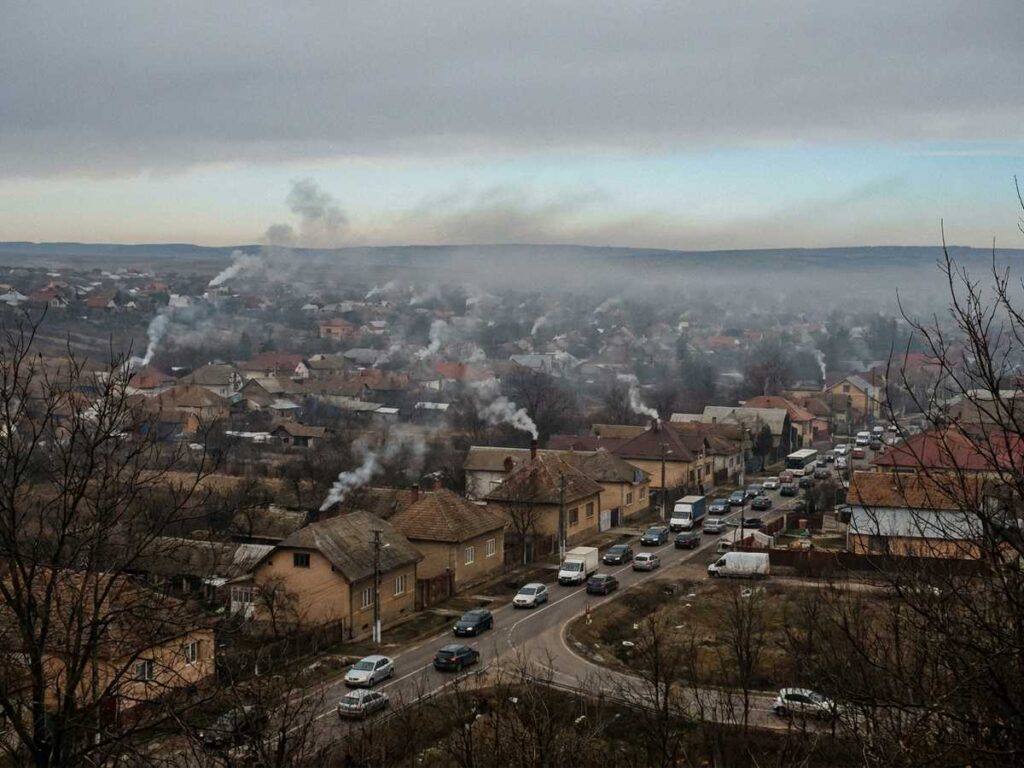
- The Government has updated the National Air Pollution Control Programme, because Romania is failing two of its five commitments to cut emissions: on nitrogen oxides and on fine particulate matter PM2.5. The culprits are road traffic and homes heated with wood.
- With the policies now in place, by 2030 nitrogen oxide emissions would fall by only 39.73% against 2005, instead of the 60% Romania signed up to, and fine particulate matter by 43.68%, instead of 58%.
- The programme banks on two packages of additional measures: replacing old wood-burning stoves with efficient appliances, heat pumps and solar panels in homes, and shifting traffic to electric power and to the railways. With those, the calculations come out at exactly 60.02% for nitrogen oxides and 61.23% for fine particulate matter.
Published: Official Gazette of Romania (Monitorul Oficial) no. 670 of 13 August 2026
In force from: 13 August 2026
The air a Romanian city breathes in winter comes, in good part, from the neighbours’ stoves and from the exhaust pipe of the car in front. In a 617-page document, the Government officially admits that the measures now in place are not enough to take Romania to the clean air targets it signed up to in the European Union. Government Decision no. 580/2026, published in Official Gazette of Romania no. 670 of 13 August 2026, updates the National Air Pollution Control Programme approved in 2023. It is the second major environmental intervention of this summer, after the Constitutional Court decision on hydropower plants in protected natural areas.
The programme is Romania’s obligation under European Directive 2016/2284, known as the NEC Directive, transposed here by Law no. 293/2018. Every member state has taken on fixed percentage reductions for five pollutants against 2005: sulphur dioxide, nitrogen oxides, non-methane volatile organic compounds, ammonia and fine particulate matter PM2.5. From 2030 onwards, Romania has to cut 88% of sulphur dioxide, 60% of nitrogen oxides, 45% of volatile organic compounds, 25% of ammonia and 58% of fine particulate matter.
The first programme, approved by Government Decision no. 119/2023, was sent to the European Commission in February 2023. The current update, prepared through a study commissioned by the Ministry of the Environment, Water and Forests in 2024, starts from a reason written in black and white in the document: failure to comply with the commitments to reduce emissions of fine particulate matter and nitrogen oxides.
The decision itself has a single article. All the substance, meaning the updated programme with its tables, projections and list of measures, is published separately, in issue no. 670 bis of the Official Gazette of Romania, which runs to 617 pages.
The stove replacement programmes on which the clean air target relies have meanwhile been given their own rules: the methodological framework published on 31 August 2026.
What it changes in practice
The document confirms that Romania is missing two targets out of five, if nothing changes. In the scenario called „with measures”, meaning that the policies already adopted stay as they are, nitrogen oxide emissions would stand at 185.09 kilotonnes in 2030, 39.73% below the 2005 level, against a commitment of 60%. Fine particulate matter would reach 68.04 kilotonnes, 43.68% below 2005, against a commitment of 58%.
For nitrogen oxides, the projection actually shows things getting worse after 2025. Emissions fall to 173.33 kilotonnes in 2025, then climb back to 185.09 kilotonnes in 2030. The cause named in the document is the rise in emissions from road traffic and from industrial combustion processes, which cancels out the gain from closing the large coal-fired combustion plants.
The other three targets are met comfortably. For sulphur dioxide, the reduction projected for 2030 is 95.24%, well above the 88% commitment. For volatile organic compounds, 47.85% against 45%. For ammonia, 50.93% against 25%.
The first package of additional measures goes after home heating. For fine particulate matter, the programme selects for adoption a cut in household biomass use, through solar panels, heat pumps and high-efficiency district heating, together with the replacement of old wood-burning stoves with energy-efficient appliances. A „Rabla pentru sobe” programme is mentioned explicitly, a scrappage scheme that would fund swapping old stoves for ones with an efficiency of at least 80%.
The aim is a visible change in the stock of stoves across Romania. In the scenario with additional measures, the share of pellet stoves and boilers would reach 21% in 2030, against 4.8% in the scenario without additional measures, and that of conventional wood-fired boilers 11%, against 7%. In mirror image, conventional wood-burning stoves would drop from 88.2% to 68%.
The second package moves traffic off the road and off diesel. For nitrogen oxides, the measures selected cover the shift of freight transport from road to rail, integrated public transport and metropolitan rail in the metropolitan areas, zero-emission urban zones under Law no. 155/2023 on sustainable urban mobility, accelerated electrification of the vehicle fleet and of the railways, urban deliveries with small electric vehicles and intelligent transport systems.
On paper, the package lands exactly on target. In the scenario with additional measures, nitrogen oxides fall by 60.02% in 2030, just above the 60% threshold, and fine particulate matter by 61.23%, above the 58% threshold. The margin on nitrogen oxides is two hundredths of a percentage point, so any delay in implementation puts Romania back in breach.
Even so, the air in the cities does not meet the new European standards. The document shows that, in 2030, annual mean PM2.5 concentrations stay below the limit of 25 micrograms per cubic metre in the legislation now in force, but exceed the limit of 10 micrograms in European Directive 2024/2881 in every zone and urban agglomeration in Romania.
Part of that dust never leaves through the exhaust pipe. What brake pads and discs throw off belongs to the same family of fine particles, and from 23 September 2026 the Union measures brake particle emissions under a different UN regulation, 67 days before the Euro 7 requirement starts to apply to new types of cars.
What has changed compared with the previous situation
The 2023 programme worked from the emission projections available at the time. The update uses 2022 as its historical reference year and projections recalculated in December 2024, which take in policies that have appeared since.
Among the new policies factored in are the long-term strategy „Neutral Romania in 2050”, approved by Government Decision no. 1215/2023, the Energy Strategy 2025-2035, Emergency Ordinance no. 108/2022 on the decarbonisation of the energy sector, the new Common Agricultural Policy 2023-2027 and European Regulation 2023/857 on the binding annual reduction of greenhouse gas emissions.
The difference of substance is that the first programme contained no scenario with additional measures for nitrogen oxides and fine particulate matter. Now it does, with concrete measures in two sectors and with named responsible authorities: the Ministry of Development, Public Works and Administration, the Ministry of the Environment, Water and Forests, the Ministry of Investment and European Projects, the Ministry of Energy and the regional development agencies, with an implementation timetable of 2025-2029 and a review every 4 years.
The air quality benchmark has changed too. The 2023 programme measured itself against Law no. 104/2011 and the 2008 directive. The update also takes in Directive 2024/2881, adopted in October 2024, which lowers the maximum permitted values significantly from 2030. Against these stricter values, Romania comes out non-compliant in more areas than it does under the legislation now in force.
Finally, the diagnosis by source has changed. The document says plainly that the reductions achieved so far have come from industry and energy, through desulphurisation, the retirement of lignite capacity and fuels with a low sulphur content, and that the two sectors left, road traffic and residential heating, are precisely the ones the state finds hardest to control.
Advantages and disadvantages
What it improves
- The state officially admits, with figures, that it is failing two of its five clean air commitments, instead of painting a broadly positive picture.
- The measures are focused precisely on the two sources that create the problem, wood heating and road traffic, rather than scattered across every sector.
- The „Rabla pentru sobe” programme gives households a concrete solution, not merely a ban.
- Every measure has a responsible authority and a timetable, with a review every four years, so it is possible to track who has not done their job.
- The update takes account of the stricter standards in Directive 2024/2881, so it is not measuring itself against a target reality has already overtaken.
- The projections are rebuilt on activity data obtained from the line ministries and from manufacturers, not on statistical estimates alone.
What remains a problem
- The margin on nitrogen oxides is 0.02 percentage points above the target, so any delay in implementation brings Romania back into breach.
- Even with every measure applied, PM2.5 concentrations in 2030 exceed the European limit of 10 micrograms per cubic metre in every city in Romania.
- The projections were finalised in December 2024 and start from 2022 as the historical year, so the document published on 13 August 2026 works with data more than three years old.
- The measures depend on funding from European funds and from the Environment Fund, which is not guaranteed at the volume the scenario assumes.
- Replacing a stove takes money and a decision at household level, and the programme provides for no penalties or obligations, only incentives.
- The 617-page annex is published in a separate issue of the Official Gazette of Romania, which has to be bought in hard copy, so public access to the actual content of the programme is limited.
Practical advice
- If you heat with a wood-burning stove, watch for the launch of the „Rabla pentru sobe” programme. It is mentioned explicitly as a measure selected for adoption, with a minimum efficiency of 80% required of the new appliance.
- Check the schemes run by the Environment Fund Administration before you change your heating system on your own. Heat pumps and solar thermal panels appear in the programme as measures eligible for funding up to 2029.
- If you live in a city where the limits are exceeded, ask the town hall for the air quality plan. The law requires such plans wherever the standards are not met.
- Consult the map of areas where the limits are exceeded before you buy a home. In 2022, exceedances were recorded for nitrogen dioxide at 3 stations across 3 assessment zones, and for PM10 at 7 stations across 4 assessment zones.
- If you run a freight transport fleet, consider the shift to rail. It is the first measure in the package for nitrogen oxides and it will be supported through the funding programmes.
- Follow the preparations for the zero-emission urban zones. They are provided for by Law no. 155/2023 on sustainable urban mobility and appear as a selected measure in the programme.
- The full text of the programme is in issue no. 670 bis of the Official Gazette of Romania. The Ministry of the Environment also publishes the programme on its own website, mmediu.ro.
Frequently asked questions
What is the National Air Pollution Control Programme?
What are the five targets Romania has?
Which targets is Romania doing badly on?
Where do these two pollutants come from?
What is the „with additional measures” scenario?
Does the decision impose direct obligations on citizens?
Where can the text of the updated programme be found?
Original text of the legal act
The text below is reproduced in Romanian, the official form of publication.
The full text, as published in the Official Gazette of Romania
Official Gazette of Romania no. 670 of 13 August 2026 16 pages PDF, 199 KB the act starts on page 2
Open the official PDFDownload the PDF
The viewer is not shown on small screens. Use the buttons above to open or download the file.
This article is for informational purposes only and does not constitute legal advice. For specific situations, consult a licensed attorney or tax advisor.