
In brief
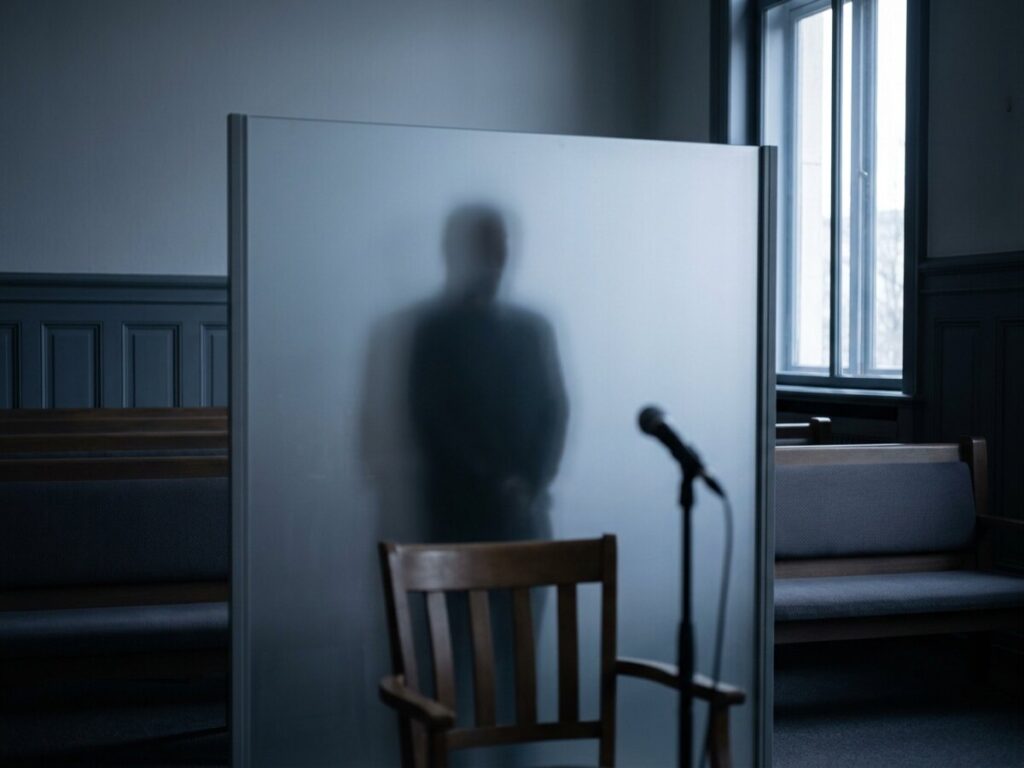
- Romania’s Constitutional Court rejected as unfounded the challenge of a defendant who asked that the defence receive minimum real data about a witness with a protected identity, for instance previous convictions or close relatives investigated in the same case. The provision allowing a pseudonym remains constitutional.
- The reason: disclosing such information could lead to identifying the witness and would empty the protection of meaning, discouraging people who hold essential information from taking part in the judicial process.
- The balance already exists in the law: statements of protected witnesses cannot be the determining basis for a conviction, and the defence may put questions to the witness through a system that preserves anonymity. The decision was taken unanimously.
Published: Official Gazette of Romania (Monitorul Oficial) No. 635 of 31 July 2026
In force from: 31 July 2026
How much may the defence learn about a witness whom the law protects through anonymity? A defendant from Neamț county asked the Constitutional Court to rule that a pseudonym alone is not enough, and the Court answered that any additional detail would risk exposing the witness. Decision No. 163 of 26 February 2026 was published in the Official Gazette of Romania on 31 July 2026, in the same issue as the ruling confirming that inspectors who draw up finding reports may be heard as witnesses, also in the field of criminal procedure and also a rejection.
The author of the challenge, Săbiuță Vasile George, contested Article 126 paragraph (1) letter c) of the Code of Criminal Procedure in a case pending before the preliminary chamber of the Neamț County Court. That provision allows the prosecutor, when granting the status of threatened witness, to order the protection of identity data by assigning a pseudonym with which the witness will sign the statement.
His criticism was concrete. A pseudonym, he argued, tells the defence nothing about whether the witness has been convicted of offences similar to those in the indictment, whether there is a conviction for perjury, or whether close relatives are under investigation in the same case or in others. Without those elements, he claimed, it is impossible to verify whether the witness has a personal interest in stating something in particular, and the right to a defence becomes purely formal. He invoked the right to a fair trial, the right to psychological integrity, the inviolability of individual liberty and the guarantee of the right to a defence.
The Court rejected the challenge as unfounded, unanimously, and found the provision constitutional in relation to the criticism raised. The reasoning has two parts. First, any additional real data about the witness may lead to identification, which would undermine the very purpose of the institution and deter people holding decisive information from coming before the judicial authorities. Second, the law has already offset the disadvantage of the defence, because Article 103 paragraph (3) of the Code of Criminal Procedure prohibits a conviction from being based to a determining extent on the statements of undercover investigators, collaborators or protected witnesses.
What it changes in practice
The decision is final and generally binding from publication, 31 July 2026. It does not change the wording of the law, but it closes a request that came up frequently in the preliminary chamber: obliging the prosecution to disclose a minimum of real data about the witness with a protected identity.
In practical terms, a defendant can no longer obtain, through a constitutional challenge, the disclosure of a protected witness’s criminal record or family connections. The request remains possible in the trial itself, as a matter of taking evidence, but the court will weigh it against the concrete risk of identification, not against a right to know that the Court has not recognised.
The decision does, however, indirectly strengthen two genuine defence instruments. The first is the limited evidentiary value: if the prosecution relies to a determining extent on a protected witness, a conviction can be attacked on exactly that ground. The second is the right to put questions to the witness, including through the system that ensures anonymity, under Article 129 of the Code of Criminal Procedure, where the judicial body rejects only questions that could lead to identification.
A third effect concerns the burden on the prosecution. The Court restates that the status of threatened witness is granted only on the basis of a reasonable suspicion of danger, supported by sufficient data, under Article 125 of the Code of Criminal Procedure. The protective measure is not presumed and is not granted on request without grounds, and those grounds are later verified by the judge of the preliminary chamber.
What has changed compared with the previous situation
The text of Article 126 paragraph (1) letter c) remains exactly as it was. What changes is that this provision now has a direct confirmation of constitutionality, on criticism that had not been examined in this form before.
Until this ruling, the main reference was Decision No. 248 of 16 April 2019, by which the Court had declared Article 126 paragraph (6) of the Code of Criminal Procedure unconstitutional, that is, another part of the same article. Part of the reasoning comes from there: the institution of the threatened witness is acceptable, but it needs safeguards. The Government even argued that the 2019 reasoning, paragraphs 19 to 25, applies here as well.
In the meantime, the legal framework has shifted towards verification. Law No. 201/2023 introduced a clear procedure for reviewing the grounds of protective measures: the judge of the preliminary chamber must check, within 15 days of receiving the file, whether the reasons behind them still stand. That amendment, invoked at the hearing by the representative of the Public Ministry, is part of the reason why the system was considered balanced.
On the substance, the Court placed its solution within the case law of the European Court of Human Rights, which accepts anonymous witnesses as long as sufficient safeguards allow their credibility to be challenged, referring to the judgments in Kostovski v. the Netherlands and Doorson v. the Netherlands. The rule taken from Strasbourg is that a conviction cannot rest exclusively or to a determining extent on anonymous testimony, exactly what Romanian law provides.
Advantages and disadvantages
What it improves
- It effectively protects witnesses at risk of retaliation, and so encourages people with essential information to cooperate with the judicial authorities.
- It expressly confirms that the limited evidentiary value in Article 103 paragraph (3) of the Code of Criminal Procedure is the real counterweight to anonymity, which gives the defence a clear argument on appeal.
- It recalls that the status of threatened witness requires a proven reasonable suspicion, not a mere request, and that the grounds are reviewed by the judge of the preliminary chamber within 15 days.
- It removes a request that frequently blocked the preliminary chamber, shortening the evidence-review stage in cases with protected witnesses.
What remains a problem
- The defence is left without the most direct tool for testing credibility: it cannot find out whether the witness has convictions for perjury or interests in the case.
- The Court sets no minimum threshold of information that could be disclosed without a risk of identification, so practice may differ from one panel to another.
- The phrase “determining extent” in Article 103 paragraph (3) remains a matter of appreciation, and how much anonymous testimony actually weighs is decided case by case.
- Publication five months after the ruling left the cases waiting for this reference without it, at a procedural stage with short deadlines.
Practical advice
- If the prosecution relies on a protected witness: do not ask for identity data, check instead whether the evidence corroborating the statement actually exists. Article 103 paragraph (3) of the Code of Criminal Procedure prohibits a conviction based to a determining extent on such statements.
- Use the right to question: Article 129 of the Code of Criminal Procedure lets the defence put questions to a witness heard through the system that ensures anonymity. Frame the questions so that they test the coherence of the account, not the person’s identity, otherwise they will be rejected.
- Challenge the grounds of the measure, not the text of the law: the judge of the preliminary chamber must verify, within 15 days of receiving the file, whether the reasons that justified the protection still stand. That is the useful procedural moment.
- Check whether the status was granted correctly: under Article 125 of the Code of Criminal Procedure a reasonable suspicion of danger is required, concerning the life, bodily integrity, liberty, property or professional activity of the witness or a family member. The absence of data supporting the danger is a valid line of criticism.
- If you are a witness and fear retaliation: expressly ask the judicial body for protection and set out the concrete risk. A pseudonym is only one of the measures available under Article 126 paragraph (1).
Frequently asked questions
Did the Court declare the provision on pseudonyms unconstitutional?
What is a threatened witness and how is that status granted?
Can a conviction rest on the statement of a protected witness?
Can the defence question a witness with a protected identity?
Why can the defence not find out whether the witness has a criminal record?
What does European case law say about anonymous witnesses?
What did Law No. 201/2023 change in this area?
Who heard the case and by what majority?
Original text of the legal act
The text below is reproduced in Romanian, the official form of publication.
The full text, as published in the Official Gazette of Romania
Official Gazette of Romania no. 635 of 31 July 2026 8 pages PDF, 87 KB the act starts on page 5
Open the official PDFDownload the PDF
The viewer is not shown on small screens. Use the buttons above to open or download the file.
This article is for informational purposes only and does not constitute legal advice. For specific situations, consult a licensed attorney or tax advisor.